The envelope sits on the kitchen counter next to the morning coffee, innocuous and white, bearing the return address of a homeowners association you rarely think about until the grass gets an inch too tall. You slice it open with your thumb. Inside is a demand for $1,350, accompanied by the cold, unmistakable typography of a legal summons.
You never sat on the board. You never voted to deny a family a backyard fence. You may not have even known the family existed until their name appeared in local headlines, yet here you are, named alongside 54 other neighbors as a defendant in a Wisconsin courtroom.
Silence. That is usually the first reaction when suburban predictability collides with the machinery of civil litigation. Then comes the low, creeping panic of realizing that signing a stack of closing documents years ago bound your personal bank account to the poor judgment of a volunteer committee down the block.
The Invisible Contract of the Cul-de-Sac
Most people buy a house for the porch light, the school district, or the quiet curve of the street. Almost nobody reads the Covenants, Conditions, and Restrictions—the CC&Rs—with the paranoia of a corporate litigator. We skim the pages about trash cans and paint colors, initial the bottom, and hand the pen back to the title agent.
I learned this lesson the hard way years ago in a quiet subdivision not unlike De Pere, Wisconsin, where this exact drama is currently tearing a community apart. In my neighborhood, it wasn't a fence; it was a retaining wall that the board insisted violated a setback rule nobody had enforced since the nineties. By the time the lawyers finished billing, every household on the block received a special assessment letter that felt less like a civic duty and more like a ransom note. You stand at your mailbox, staring at a four-figure bill for a fight you didn't pick, wondering how homeownership quietly morphed into a joint-venture liability.
To understand what is happening in Wisconsin right now, picture a hypothetical homeowner we will call Arthur. Arthur works an honest job, mows his lawn every Saturday morning, and waves to the neighbors when he pulls out of the driveway. When the Newman family asked their homeowners association for permission to build a backyard fence so their five children with special needs could play safely without wandering toward danger, Arthur wasn't in the room. The HOA board said no.
What followed was a textbook study in institutional stubbornness. Under federal fair housing laws, housing providers—including homeowners associations—are generally required to make reasonable accommodations for residents with disabilities. Denying a safety fence for children with special needs isn't a routine aesthetic dispute over cedar versus vinyl; it is a legal tripwire. The Newmans went to court. By August 2024, the dispute ended in a $200,000 settlement, and the family was finally able to install the barrier roughly three years after their initial request.
Victory, on paper. Yet in the world of community associations, a settlement is rarely the end of the story. It is merely the moment the bill arrives.
How a Board’s Mistake Becomes Your Debt
Think of a homeowners association not as a municipal government with tax revenues and deep municipal insurance pools, but as a bucket that every homeowner on the street holds together. When the board punches a hole in the bottom of that bucket through a costly legal miscalculation, the water doesn't vanish into thin air. It leaks onto everyone’s shoes.
To satisfy the $200,000 obligation, the association divided the cost across the subdivision, expecting each homeowner to contribute $1,350. Sixty-nine households paid their share. Perhaps they paid out of fear of liens, perhaps out of a desire to put the ugliness behind them, or perhaps because they recognized the grim math of collective governance.
Dozens of others, however, looked at the bill and refused.
Their reaction is entirely human, even if it is legally perilous. "I did nothing wrong. Why should I pay?" one anonymous homeowner asked local reporters, capturing the exact sentiment echoing through living rooms across the neighborhood. Another resident described the renewed legal action as a painful wave of déjà vu, lamenting the unfairness of being dragged back into a dispute they never orchestrated.
But the real problem lies elsewhere. Anger does not erase an unpaid judgment.
When 55 homeowners declined to pay their $1,350 portion, the settlement remained incomplete. This autumn, nearly two years after the original legal battle concluded, the Newmans and their attorney, Victoria Davis Dávila, filed a new lawsuit naming both the association and the 55 non-paying neighbors. (Subsequent filings in November 2026 referenced 33 remaining neighbors as some residents scrambled to settle once legal papers landed on their doorsteps.)
Davis Dávila’s position is blunt and legally straightforward: an outstanding judgment exists, homeowners had the opportunity to satisfy their share, and those who chose not to pay are now being held to account. Even more unsettling for the neighborhood is her warning that if the balance remains unpaid, the association as a whole could be held responsible.
Read that again if you live in an HOA. Even the 69 neighbors who dutifully wrote their $1,350 checks are not truly out of the woods. If the association itself is forced to absorb the shortfall from the holdouts, where does the association get its money? From the very same pool of residents. One resident who already paid his share admitted to reporters that the endless uncertainty has made him consider selling his home and leaving the neighborhood altogether.
The Anatomy of Suburban Paralysis
Why do homeowners associations walk straight into buzzsaws like this? Having watched dozens of these disputes unfold across the country, the pattern is almost always the same, driven by three predictable human flaws:
- The illusion of absolute authority. Volunteer board members often confuse enforcing bylaws with exercising sovereign power. They fixate on the uniformity of the neighborhood while forgetting that federal and state statutes sit miles above their architectural review guidelines.
- The sunk-cost trap. Once an association hires counsel to defend a denial, backing down feels like a personal humiliation for the board. Instead of granting a variance that costs the community zero dollars, they spend tens of thousands—or in this case, $200,000—defending a principle nobody else asked them to champion.
- Bystander apathy. Until the special assessment hits the mailbox, 90 percent of residents never attend a board meeting. We outsource our civic vigilance to whoever volunteers for the job, assuming that the people managing the landscaping contract also understand federal fair housing litigation.
I remember sitting in a cramped community clubhouse years ago during an emergency meeting over a similar assessment. The air smelled of stale coffee and damp wool coats. Neighbors who had borrowed each other's ladders and watched each other's dogs were suddenly screaming across folding chairs about fiduciary duty and personal liability. Nobody was listening anymore. Everybody felt betrayed—betrayed by a board that gambled with their money, betrayed by neighbors who refused to pay their share, and betrayed by the quiet promise of the American suburb that your home is your sanctuary.
What Homeowners Actually Need to Know Before the Envelope Arrives
It is easy to look at the De Pere lawsuit from a safe distance and shake your head, yet millions of Americans live under nearly identical governing structures. Navigating this terrain requires shedding a few comforting myths about property ownership.
First, an HOA is not a shield against personal financial exposure. Many residents assume that incorporation protects individual homeowners from the association's debts. While corporate structures prevent a plaintiff from randomly seizing your car because the HOA landscaper broke a window, governing documents almost universally grant the board—and by extension, creditors enforcing a judgment—the power to levy special assessments against every lot in the subdivision. When you buy into a deed-restricted community, you are signing a blank check for future collective liabilities.
Second, ignoring a special assessment rarely works as a protest strategy. Withholding payment because you disagree with how the board handled a dispute is like refusing to pay your property taxes because you dislike the mayor. The debt does not evaporate; it accrues legal fees, invites property liens, and, as 55 Wisconsin residents discovered, can turn your name into a line item on a civil complaint. One homeowner in the Wisconsin case initially refused to pay after receiving a judgment, changing his mind only after consulting an attorney who presumably explained the grim arithmetic of fighting a finalized settlement.
Third, the cheapest lawsuit is the one killed at the Tuesday night board meeting. When an association board prepares to dig in its heels against a homeowner—especially on issues touching disability accommodations, medical needs, or federal protections—the rest of the neighborhood cannot afford to stay home and watch television. Showing up to ask a single question—"What is our worst-case financial exposure if we lose this in court?"—can save every household on the block thousands of dollars.
The Fence That Still Divides the Street
Consider what happens next in De Pere. The association filed its answer and affirmative defense in mid-November 2026, setting the stage for another round of motions, billable hours, and kitchen-table dread. The Newmans' attorney maintains that the family wants the ordeal over as much as anyone else so they can simply move on with their lives.
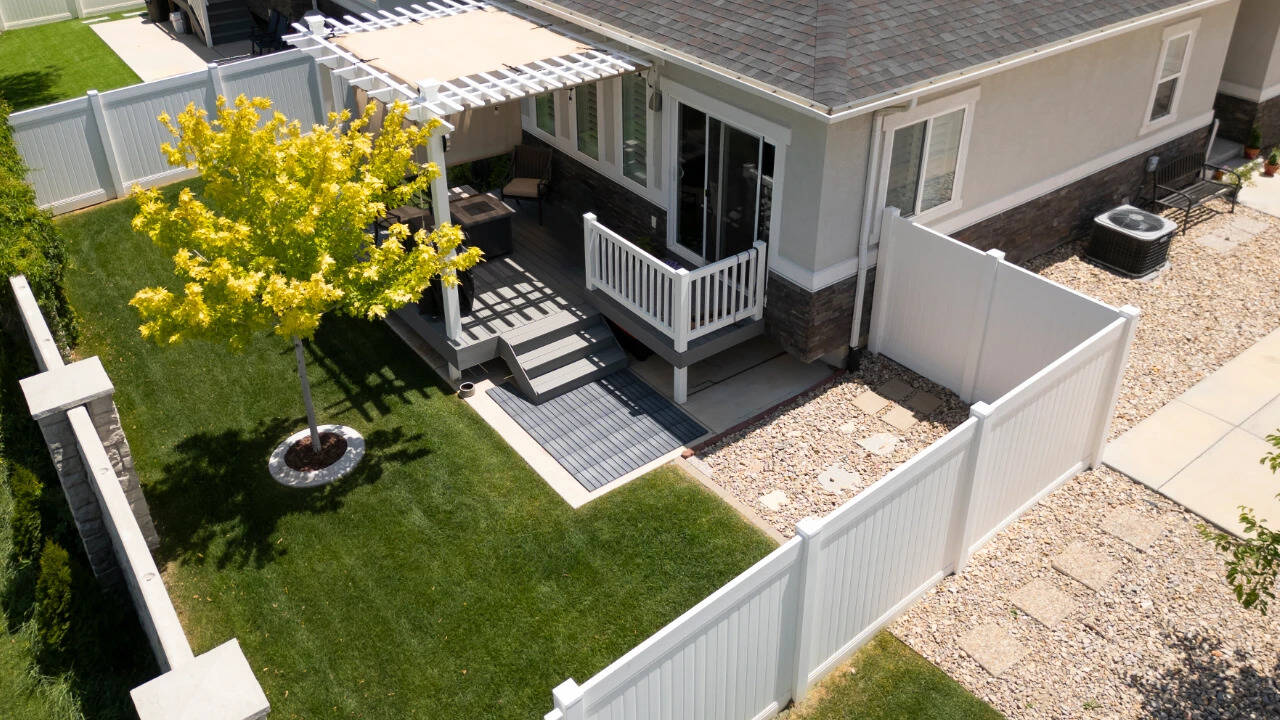
Meanwhile, the backyard fence—the simple physical structure at the root of five years of legal warfare—stands on the Newman property, doing the quiet, ordinary job it was always meant to do: keeping five children safe while they play.
Down the street, blinds are drawn a little tighter. Conversations at the mailbox end a little faster. Every time a white envelope drops through the mail slot, hearts skip a beat as homeowners wonder whether the price of living next door to one another has gone up again.


