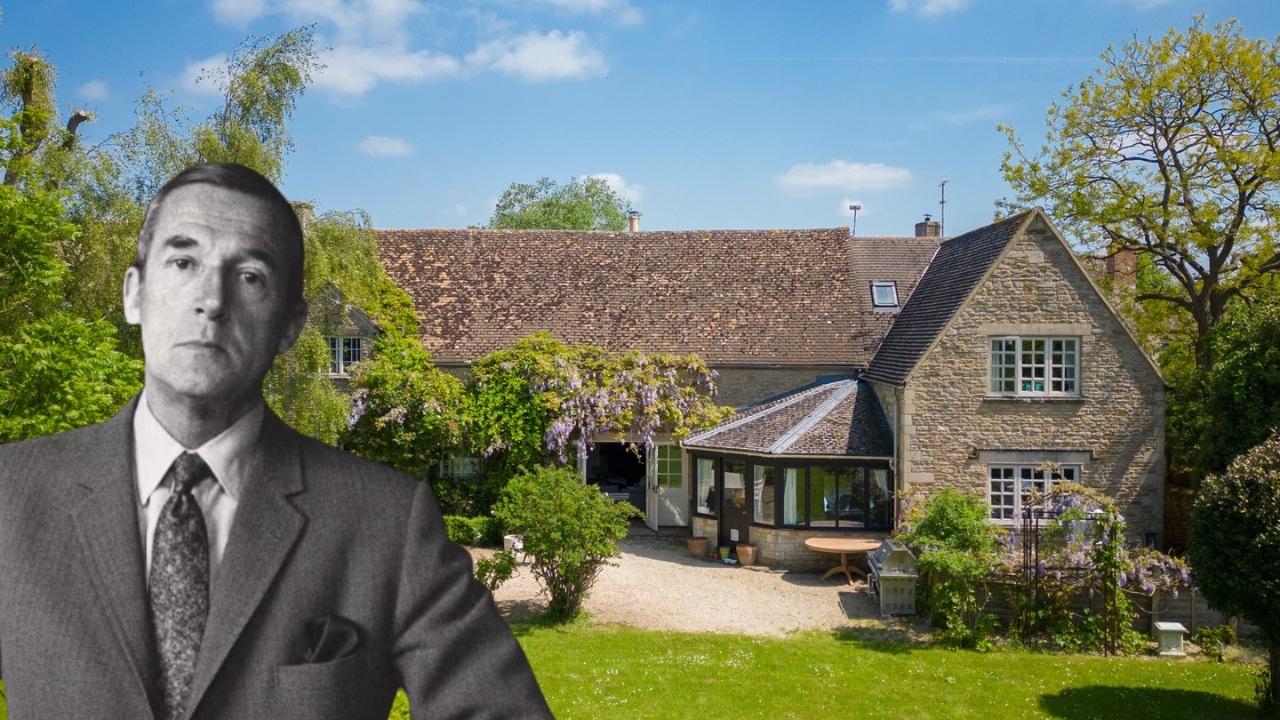
A converted agricultural barn in the English countryside, once owned as a weekend retreat by Queen Elizabeth II’s former personal dressmaker, is on the market for £1.5 million. While celebrity-adjacent property listings typically rely on royal nostalgia to justify inflated asking prices, this particular sale highlights a much broader, structural reality in the British rural housing market. The valuation reflects not merely a brush with palace history, but the aggressive financialization of converted farmsteads, the strict scarcity imposed by local planning boards, and the post-pandemic flight of London capital into the commuter belt.
To understand why an old timber-and-brick structure commands seven figures, you have to look past the satin gowns and fitting rooms of Buckingham Palace. The provenance certainly acts as an effective marketing hook. Properties linked to the late monarch's inner circle—particularly figures like Angela Kelly, who served as Personal Advisor and Curator to the Queen and famously designed many of her most recognizable ensembles, or predecessors like Norman Hartnell and Hardy Amies—carry an immediate veneer of establishment prestige. Yet in the cold calculus of estate agency valuations, royal pedigree alone rarely adds more than a 10 to 15 percent premium unless the property itself is an architectural masterpiece. The real driver behind a £1.5 million price tag is raw, unyielding market mechanics. In similar news, read about: Why Luigi Serafini Rejects Modern Taste (And Why Designers Are Listening).
The Anatomy of the Royal Provenance Premium
Real estate agents across the Home Counties and surrounding rural shires have spent decades perfecting the art of selling proximity to power. When a property comes to market with a documented connection to the royal household, the listing narrative shifts immediately from square footage and council tax bands to heritage and exclusivity.
Buyers at the upper end of the rural market are rarely purchasing shelter. They are purchasing a story to tell over dinner. Owning the quiet sanctuary where the woman responsible for the Queen’s wardrobe retreated from the pressures of state banquets and royal tours offers a subtle, understated form of status. Unlike the ostentatious mansions of Surrey's St George's Hill, a converted barn signals old-world taste, discretion, and a connection to British tradition. The Spruce has also covered this important issue in great detail.
However, seasoned property analysts know that provenance is a fragile asset. If a building lacks modern infrastructure, energy efficiency, or convenient transport links, royal dust will not save it from languishing on portals for years. A £1.5 million asking price requires the underlying bricks and mortar to stand entirely on their own merits. That means generous acreage, high-specification interior renovations, privacy from neighboring farms, and easy access to a mainline station into London. Without those fundamentals, the historical trivia is merely a footnote.
How Agricultural Ruins Became Luxury Assets
Forty years ago, a redundant stone or timber-framed barn in the English countryside was viewed by farmers as a maintenance liability and by mortgage lenders as unfinanceable. Today, these structures represent one of the most fiercely contested asset classes in British residential property.
The transformation began in earnest during the 1980s and accelerated dramatically after the introduction of Class Q permitted development rights in 2014. This legislative shift allowed agricultural buildings to be converted into residential dwellings without the grueling, multi-year battle for full planning permission, provided the structural shell remained intact and the footprint did not expand. Suddenly, derelict grain stores and cattle sheds became golden tickets for developers and wealthy self-builders.
Consider a hypothetical example of how this value creation works in practice. A working farmer sells an obsolete, leaky Dutch barn with two acres of scrubland for £350,000. A boutique developer spends £450,000 installing structural steelwork, triple-glazed floor-to-ceiling glass, underfloor heating, and bespoke joinery. Because local councils strictly forbid building brand-new isolated homes in the open countryside under the National Planning Policy Framework, that finished barn enjoys a legally protected monopoly on rural living. When it hits the market at £1.5 million, the buyer is paying for the legal impossibility of replicating the house next door.
The Hidden Economics of Barn Conversions
While the finished product photographs beautifully for glossy property supplements, the financial and physical realities of owning a high-end barn conversion are notoriously unforgiving. Buyers seduced by exposed oak beams and vaulted ceilings frequently underestimate the ongoing capital expenditure required to keep these buildings habitable.
- Thermal inefficiency: Vast open-plan volumes and expansive glazing create massive heat loss during British winters, rendering standard heating systems inadequate without expensive air-source heat pumps or biomass boilers.
- Bespoke maintenance: Nothing in a historic barn is a standard size. Replacing a single warped timber lintel, repairing hand-made clay roof tiles, or resealing custom-fabricated steel windows requires specialist heritage tradespeople who charge premium day rates.
- Financing friction: High-street mortgage lenders routinely apply stricter loan-to-value ratios on non-standard construction, particularly where timber framing, thatched roofs, or agricultural ties remain in the title deeds.
- Restrictive covenants: Many converted barns sit adjacent to active working farms, meaning buyers must legally accept the noise of combine harvesters at 4 AM, slurry spreading, and restricted rights of way.
The Weekend Retreat Phenomenon and Rural Displacement
The specific framing of this property as a "weekend retreat" touches a raw nerve in British housing policy. For decades, London’s financial and creative elites have treated the surrounding counties within a two-hour radius as a pastoral dormitory.
When a prominent figure from the royal household acquires a countryside barn as a secondary escape, it validates a pattern that has systematically reshaped rural demographics. Capital earned in the capital flows outward, bidding up the price of historic housing stock far beyond the reach of local agricultural workers, teachers, and small business owners. A £1.5 million price tag requires a household income upwards of £300,000 a year, alongside a substantial cash deposit, instantly pricing out virtually 99 percent of the local rural workforce.
The pandemic poured gasoline on this trend. Between 2020 and 2022, remote work severed the daily tether to Zone 1 offices, triggering a stampede for space, gardens, and rural isolation. Even as corporate return-to-office mandates have pulled workers back to London three or four days a week, the baseline floor for prime rural property has never retreated to 2019 levels. Sellers remain anchored to peak valuations, sustained by a chronic undersupply of turnkey country homes.
Why Estate Agents Lean on Celebrity History
In a cooler market, where higher interest rates have forced buyers to scrutinize every pound of debt, estate agents face a difficult task. Moving a £1.5 million property requires capturing attention in a crowded digital marketplace where buyers scroll past hundreds of pristine renovations every week.
A royal connection solves the attention problem immediately. It guarantees editorial coverage in national newspapers, driving thousands of eyeballs to a listing that might otherwise only attract a handful of serious local inquiries. This publicity is not aimed at the casual reader admiring the kitchen island. It is engineered to reach a very specific demographic: cash-rich buyers, often downsizing from larger country estates or relocating from abroad, who value heritage and are immune to fluctuations in the Bank of England base rate.
Yet veteran buying agents treat celebrity provenance with extreme skepticism during price negotiations. A seasoned negotiator will strip away the royal biography during a viewing and focus entirely on comparable sales per square foot within a five-mile radius. If similar four-bedroom barn conversions in the same postcode have sold for £1.25 million over the preceding twelve months, the agent will argue forcefully that the seller’s royal history has zero cash value at resale. The market frequently forces a quiet reality check, leading to discreet price reductions six months after the initial press fanfare dies down.
The Structural Reality Behind the Price Tag
Strip away the headlines about Queen Elizabeth II’s wardrobe, and this £1.5 million barn stands as a textbook case study in modern British wealth concentration. It demonstrates how tight land-use regulations, the scarcity of rural planning permissions, and the enduring cultural obsession with the English countryside combine to turn former farm buildings into high-value financial instruments.
For prospective buyers eyeing similar heritage conversions, the lesson is straightforward. Never pay a premium for who slept in the master bedroom ten years ago. Scrutinize the building survey for damp ingress along historic stone plinths, verify the EPC rating and heating costs, check the land registry for lingering agricultural access rights, and base your offer strictly on local land values. Heritage makes for a compelling story in a sales brochure, but structural integrity and local comparables are what protect your equity when the novelty wears off.