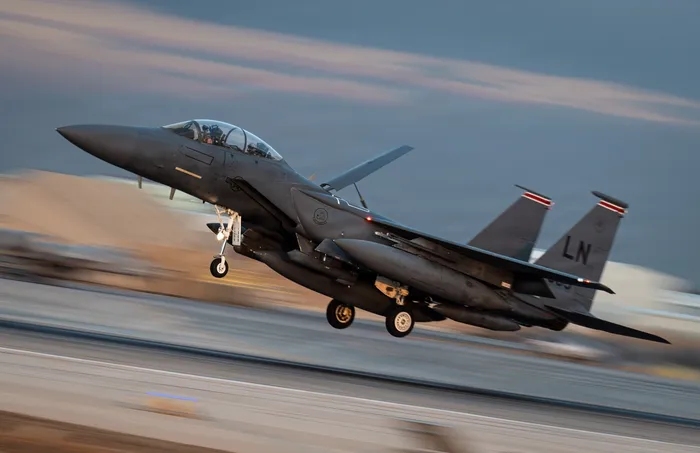
The headlines are predictable. They focus on the "rescue operation." They obsess over the "ongoing search." They treat the loss of a multi-million dollar airframe over Iranian soil as a tragic technicality or a daring pilot story.
They are missing the point.
The downing of a US fighter jet over Iran isn't a search-and-rescue story. It’s an obituary for the era of manned air superiority. While the Pentagon scrambles to spin a narrative of "crew safety first," the reality on the ground—and in the sky—suggests that our billion-dollar toys are becoming liabilities, not assets. We are playing a 20th-century game of checkers against a 21st-century wall of electronic and kinetic denial.
The Stealth Delusion
The media loves the word "stealth." They treat it like a magic cloak of invisibility from a fantasy novel. It isn’t. Stealth is merely a reduction in Radar Cross Section (RCS). It is a physics-based math problem, not a superpower.
When a jet goes down in contested airspace like Iran’s, the immediate assumption is a mechanical failure or a lucky shot. This is dangerous coping. Iran has spent decades refining one of the most dense Integrated Air Defense Systems (IADS) on the planet. They aren't looking for a "bird" in the sky; they are looking for the wake it leaves in the electromagnetic spectrum.
We have built an entire military doctrine on the assumption that we can operate with impunity. We can’t. The moment that jet hit the dirt, the "stealth" brand took a hit it might never recover from. If a non-superpower can pluck a top-tier interceptor out of the sky, the ROI on manned tactical aviation just hit zero.
The Human Error of Keeping Humans in the Cockpit
Why was there a crew to rescue?
In every simulation, the weakest link in a high-G, high-threat environment isn't the avionics. It’s the meat-bag in the seat. Humans have physiological limits. We black out at 9Gs. We get tired. We have families that make our capture a geopolitical nightmare.
- The Weight Penalty: To keep a human alive, you need oxygen systems, ejection seats, cockpit displays, and heavy armored glass.
- The Risk Multiplier: When a drone crashes, you lose hardware. When a manned jet crashes, you lose a decade of training and hand the enemy a propaganda goldmine.
The "One Crew Member Rescued" headline is being framed as a win. It’s not. It’s a logistical anchor. The entire regional fleet is now diverted to a "search and rescue" mission, exposing more assets to the same threat that downed the first one. We are risking more lives to save the ego of a branch that refuses to admit the pilot's seat is an anachronism.
The Cost Curve is Killing Us
Let’s talk about the math. A modern US fighter costs anywhere from $80 million to $150 million. That doesn't include the $30,000 to $100,000 it costs per hour to fly the thing.
Iran’s defensive strategy is built on asymmetry. They don't need a $100 million jet to kill a $100 million jet. They need a $2 million missile or a sophisticated electronic warfare suite that costs less than the fuel in our tankers.
$$C_{loss} = Cost_{Jet} + Cost_{Pilot_Training} + Cost_{Political_Capital}$$
Compare that to:
$$C_{intercept} = Cost_{Missile} \times P_{hit}$$
The math is brutal. We are spending ourselves into a grave. Every time we lose an airframe to a localized conflict, we prove to the world that our "high-tech" advantage is a house of cards held together by taxpayer money and nostalgia.
The Myth of "Technical Failure"
Whenever this happens, the "insiders" whisper about bird strikes or engine flameouts. They want you to believe the enemy didn't actually do it. This is the ultimate cope.
Even if it was a mechanical failure, it’s a condemnation of the complexity we’ve forced into these machines. We’ve made jets so complex they are "exquisite." In military terms, "exquisite" means "too expensive to lose and too fragile to use."
If your multi-billion dollar air wing can be grounded by a fuel line shimmy or a software glitch in a combat zone, you don't have a weapon. You have a museum piece that requires a temperature-controlled hangar and a team of 50 technicians to function. Meanwhile, the adversary is launching "dumb" assets that work every single time.
Stop Asking if They’re Safe, Ask if They’re Relevant
The "People Also Ask" sections are currently filled with: "Is the pilot okay?" and "What jet was it?"
Wrong questions.
The right question is: Why are we sending manned assets into a saturated SAM (Surface-to-Air Missile) environment in 2026?
If the mission was surveillance, a high-altitude drone or satellite would suffice. If the mission was a strike, a standoff cruise missile does the job without the risk of a televised hostage situation. The only reason to send a manned fighter is for "presence"—a fancy word for posturing.
We just found out what happens when the person you’re posturing against decides to stop being intimidated.
The Intelligence Goldmine in the Wreckage
The competitor articles are ignoring the most devastating part of this event: the wreckage.
Even a charred hull is a library for a foreign intelligence service. They get to see the weave of the composites. They get to scrape the RAM (Radar Absorbent Material). They get to analyze the processor architecture in the flight computer.
Every hour the "Search Ongoing" continues is an hour that Iranian or Russian engineers are potentially standing over a piece of American "superiority," realizing it’s just hardware. They are demystifying the ghost. They are learning how to kill the next one faster.
The End of the Top Gun Era
We have to stop romanticizing the cockpit. The rescue of one crew member is a relief on a human level, but a disaster on a strategic one. It validates the enemy's capability and highlights our own vulnerability.
The US Air Force is currently a lobbyist group for a bygone era of dogfights and "ace" pilots. But there are no aces in a world of autonomous S-400 batteries and AI-driven electronic jamming. There is only the target and the person who gets hit.
We are currently witnessing the transition of the fighter jet from a tool of war to a liability of statecraft. If we don't pivot to mass-produced, low-cost, expendable autonomous systems, we will continue to watch our national prestige—and our pilots—fall out of the sky in pieces.
The search for the remaining crew isn't just a mission. It's a frantic attempt to pick up the pieces of a broken military doctrine.
Move the pilots to the trailers. Get the humans out of the line of fire. Stop building Ferraris to do the job of a sledgehammer.
The jet didn't just go down. The era of manned air dominance died with it.



:max_bytes(150000):strip_icc():focal(999x614:1001x616)/kiss-9d4a8f3fa69941658d5596dcb342bf7d.jpg)