The Hundred-Million-Dollar Band-Aid
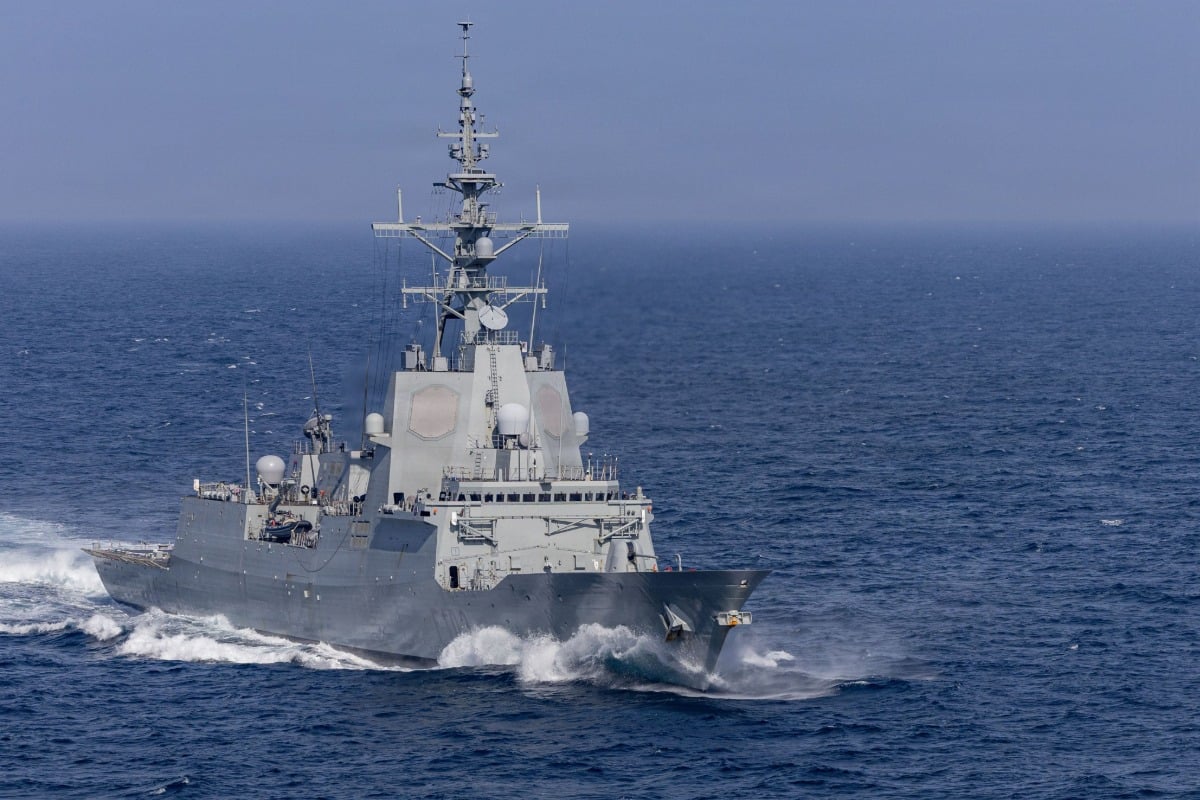
Lockheed Martin just bagged a $104 million contract to modernize the Aegis Weapon System on the Spanish Navy’s F-100 Alvaro de Bazán-class frigates. The defense press is covering this exactly the way the defense industrial complex wants them to: as a standard, prudent, mid-life upgrade. They call it a necessary step to keep Spain’s premier surface combatants relevant in an increasingly hostile maritime environment.
They are looking at the wrong map.
This $104 million allocation is not a forward-looking security investment. It is a premium paid to keep legacy architecture on life support. The defense establishment loves to celebrate these sustainment contracts because they validate the multi-decade lifecycle model. But in modern naval warfare, that model is dead. Spending nine figures to shoehorn updated software into a hull designed in the 1990s does not create a modern warship. It creates an expensive target with a faster processor.
The Core Deficit: Upgrading the Software Cannot Fix the Hull
The consensus narrative assumes that a warship is modular—that if you swap out the brains, the ship stays lethal. This logic fails to account for the physical realities of contemporary naval engagement.
The Spanish F-100 frigates utilize the Aegis baseline architecture. This contract aims to update those legacy baselines to integrate newer computational capabilities and potentially connect with the upcoming F-110 class.
Here is the flaw: you cannot download more electrical power. You cannot patch a hull's thermal signature.
Legacy Hull + Modern Software = Bottlenecked Capabilities
I have watched defense ministries spend hundreds of millions trying to upgrade surface combatants, only to hit the physical wall of the vessel’s original design limits. Modern radar arrays, advanced electronic warfare suites, and high-duty-cycle directed energy weapons require massive amounts of raw power and cooling capacity. The F-100 platform was not engineered to support the power-generation requirements of next-generation defensive systems. No software update from Lockheed Martin can change the diameter of the ship's generator pipes or the physical layout of its Vertical Launch System (VLS) cells.
By pouring money into upgrading the Aegis system on these aging hulls, Spain is committing to a platform that is physically incapable of hosting the hard-kill systems required to survive a modern swarm attack.
Dismantling the Fleet Commonality Myth
Naval planners justify this expense through the lens of interoperability. The argument goes: upgrading the F-100 ensures it can seamlessly share data with Spain’s future F-110 frigates and US Navy assets.
This sounds logical on paper. In practice, it creates a fragile dependency loop.
- The Single Point of Failure: When you standardize your entire fleet around a singular, legacy-derived data architecture, you simplify the enemy's electronic warfare problem set. A vulnerability discovered in the updated legacy code frequently translates to the newer platforms sharing that software DNA.
- The Integration Tax: A significant portion of that $104 million does not go toward new capabilities. It goes toward "regression testing"—making sure the new software does not accidentally break the legacy hardware it is supposed to control. You are paying a premium just to keep old valves and switches talking to new servers.
- The Innovation Chokehold: Relying on the traditional prime contractors for these monolithic upgrades locks navies into proprietary ecosystems. Once you pay Lockheed to upgrade the baseline, you are tethered to their proprietary pipeline for every minor patch, sensor integration, and missile compatibility update for the next decade.
What the Defense Analysts Get Wrong About Threat Profiles
If you read the standard industry analysis, the threat to European surface fleets is framed around traditional state-on-state blue-water engagements. The solution is always: more range, more integration, bigger radars.
They are preparing for the wrong war.
The black sea conflict demonstrated that multi-billion-dollar surface combatants are highly vulnerable to asymmetric, low-cost threats. Cheap, uncrewed surface vessels (USVs) and low-altitude anti-ship cruise missiles can overwhelm a sophisticated air defense ship not through technological superiority, but through simple economic attrition.
The F-100 carries a finite number of VLS cells. If Spain spends $104 million to give those cells better targeting data, they still face the fundamental math problem of modern naval warfare: using a multi-million-dollar interceptor missile to destroy a fifty-thousand-dollar drone. When those cells are empty, the ship is a liability.
Instead of optimizing the targeting software for a limited magazine, that capital should be divested from legacy hulls and reallocated into distributed, modular, uncrewed systems.
The Risk of the Contrarian Alternative
To be fair, walking away from mid-life upgrades carries its own severe risks. If Spain were to freeze the F-100 configuration today and redirect that $104 million into uncrewed platforms or distributed lethal architecture, they would face an immediate operational capability gap.
[Current Strategy] --------> Slow Decline into Obsolescence (High Cost)
[Contrarian Strategy] ----> Temporary Capability Gap ----> High-Tech Asymmetric Dominance
For a period of three to five years, the F-100 fleet would become increasingly disconnected from the newest NATO data links. It is a terrifying prospect for a naval commander to deliberately let a frontline asset age without an intervention. It requires political nerve to admit that a major surface combatant is nearing its expiration date and should be ridden into the sunset rather than gilded with gold-plated upgrades.
But the alternative is worse: spending billions across the life of a fleet to maintain a comforting illusion of capability, only to find out in the first sixty minutes of a real conflict that the platform is fundamentally obsolete.
The Real Procurement Question
Naval ministries continually ask: How do we make our existing ships smarter?
They should be asking: How do we make our fleet cheaper to lose?
The future of maritime denial does not belong to the $1 billion frigate that requires a nine-figure cash injection every ten years just to stay compatible with Washington's data standards. It belongs to the distributed network of smaller, attritable, sensor-bearing vessels that can be built, deployed, and replaced in months rather than decades.
Every dollar spent polishing the brass on an F-100 is a dollar stolen from the development of Spain's autonomous maritime future. Stop upgrading the past. Build the replacement.
:max_bytes(150000):strip_icc()/GettyImages-2192014718-e18efe654b3f4b769a45c8692acc5f39.jpg)