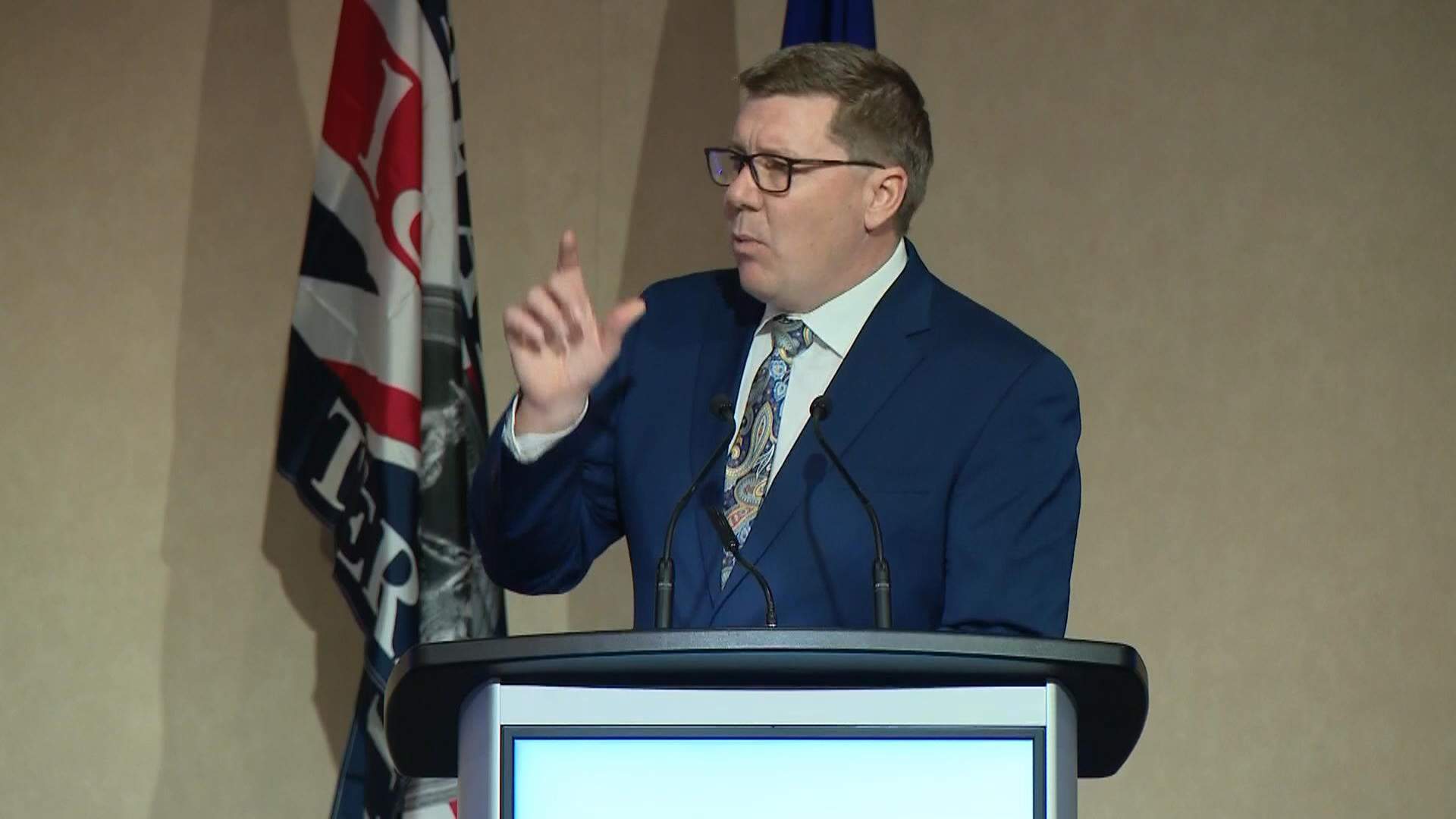
Saskatchewan’s mayors and councillors didn't travel to Regina this week just to trade business cards and drink lukewarm coffee. They came with a list of demands. At the 2026 Saskatchewan Urban Municipalities Association (SUMA) convention, the atmosphere was thick with the kind of tension you only get when local leaders realize they’ve been carrying too much of the province's weight on their shoulders.
The big takeaway? The old ways of funding cities and towns are breaking. Between the Premier's new healthcare promises and the Opposition's aggressive "Grid & Growth" pitch, the political theater in Regina wasn't just about rhetoric—it was about who’s going to pay to keep the lights on and the water running in 2026 and beyond.
Scott Moe and the ten percent solution
Premier Scott Moe took the stage on Monday, April 13, and he knew he had to offer more than a handshake. The provincial government is currently leaning hard into its "Patients First" plan. It sounds great on a brochure: better access to surgeries, more primary care providers, and shorter wait times.
But for years, the sticking point for small-town mayors has been the "community share." If you wanted a new hospital or a major clinic, your town had to cough up 20% of the capital costs. For a small community, that’s not just a line item; it’s a decade of property tax hikes.
Moe’s big olive branch was cutting that share in half. Starting now, municipalities only have to cover 10% of those builds.
It’s a smart move. By lowering the barrier, the province makes it easier to announce "new" projects. For leaders like Rosthern Mayor Dennis Helmuth, whose hospital dates back to 1952, this is a massive relief. It frees up millions of dollars that can now go toward paving the roads leading to those hospitals instead of just paying for the bricks and mortar.
Carla Beck is tired of the status quo
NDP Leader Carla Beck didn't let the Premier have all the oxygen. Her speech focused on the "Grid & Growth" plan, a strategy she’s been hammering since earlier this month.
Beck’s angle is straightforward: the province’s economy is stagnant because the infrastructure is crumbling. She’s betting that voters—and municipal leaders—are frustrated with the "middle of the road" approach the Sask Party took in the latest budget.
Interestingly, Beck is also spending a lot of time distancing herself from the federal NDP. She’s made it clear she won't even meet with federal leader Avi Lewis unless he backs off his "unrealistic" stance on fossil fuels. It’s a calculated play to show Saskatchewan mayors that she’s on the side of the 40,000 workers in the resource sector. She knows that in this province, if you aren't pro-industry, you aren't winning an election.
The record revenue sharing reality check
The government loves to tout the record $392.4 million in Municipal Revenue Sharing (MRS) for the 2026-27 year. On paper, an 8% increase looks like a win.
But talk to any city manager in Saskatoon or Regina and they’ll tell you the same thing: inflation doesn't care about records. When the cost of asphalt, pipes, and police cruisers goes up by double digits, an 8% bump in provincial funding barely lets you tread water.
SUMA delegates spent their time debating 11 different resolutions. They aren't just asking for more cash; they’re asking for "fiscal fairness." They want a seat at the table when the province decides how to tax and spend, especially when it comes to social issues that end up on the doorsteps of city halls.
The hidden costs of urban growth
- Policing: Municipalities are footing the bill for provincial gaps in mental health and addictions support.
- Infrastructure: The $392.4 million is spread thin across hundreds of communities.
- Housing: While the province talks about growth, the actual infrastructure—pipes and power—falls on the local taxpayer.
What this means for your property tax bill
If you live in a Saskatchewan town or city, the 2026 SUMA convention actually matters for your wallet. When the Premier drops the community share for hospitals to 10%, that’s less pressure on your local council to hike your taxes for a new facility.
However, don't expect a tax cut. Most of that "saved" money is already earmarked for "other community priorities"—which is political code for "all the stuff we’ve been ignoring because we couldn't afford it".
The friction between the province and the cities is only going to grow as we get closer to the next election. Local leaders are tired of being the ones who have to explain to you why the potholes aren't fixed while the provincial government takes credit for a balanced budget.
If you want to see where the real power lies, watch the "Bear Pit" sessions. That’s where the ministers have to stand up and answer direct questions from the people who actually run our towns. It’s usually a lot less polished than the keynote speeches, and it tells you everything you need to know about the state of the province.
Basically, the 2026 convention proved that municipalities aren't just "junior" partners anymore. They’re the front line, and they’re finally starting to act like it. Keep an eye on how these healthcare promises translate into actual shovels in the ground—that’s the real test.