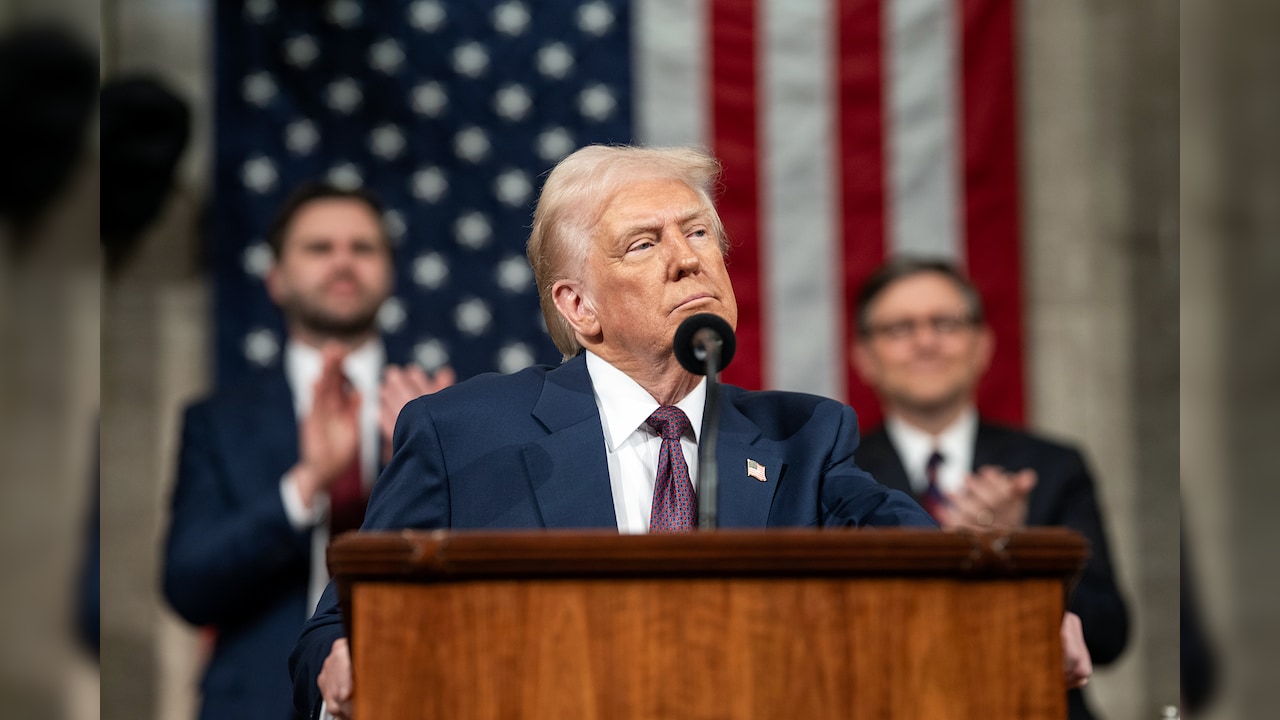
Two years into a second presidency, the honeymoon isn't just over—it's ancient history. If you're watching Washington right now, you already know that the 2026 US midterms are shaping up to be the ultimate stress test for Donald Trump's second term, and the results will dictate whether 2027 looks like a victory lap or a brick wall.
Most political commentary treats midterm elections like a simple scoreboard. One party wins, the other loses, and everybody moves on to the next presidential cycle. That's a massive misreading of how power actually functions in Washington. Depending on how the House of Representatives and the Senate shake out after the dust settles, Trump could spend 2027 either ramming through a historic second-term agenda with zero friction or fending off daily subpoenas while governing entirely through executive orders.
Let's break down what actually changes when the new Congress swears in this January.
Why Midterm Elections Almost Always Punish the White House
History doesn't care about partisan spin. Since the Civil War, the president's party has lost seats in the House of Representatives in almost every single midterm election—with only a tiny handful of exceptions like 1934, 1998, and 2002.
Why does this happen like clockwork? It comes down to basic voter psychology. The party out of power is angry, motivated, and desperate to put a check on the White House. Meanwhile, the voters who put the president in office two years earlier often stay home because they feel like they already won, or they're frustrated that campaign promises haven't materialized overnight.
Trump already lived through a brutal version of this dynamic in 2018. Democrats flipped 41 House seats that year, handed the gavel back to Nancy Pelosi, and immediately transformed the second half of his first term into an endless cycle of oversight hearings, document requests, and eventually impeachment.
Today, the math is even tighter. Razor-thin majorities in both chambers mean that even a modest shift of five or ten seats completely alters the balance of power. You don't need a massive wave election to flip the script in Washington anymore. A slight breeze in a dozen suburban swing districts does the exact same job.
What Happens in 2027 If Democrats Flip the House
If Democrats reclaim control of the House of Representatives, Trump's 2027 legislative agenda dies on arrival. Full stop.
The Speaker of the House controls the floor. Without a friendly Speaker, bills backed by the White House don't even get scheduled for a vote. Tax extensions, border enforcement packages, deregulation bills—none of it moves unless Trump cuts direct deals with Democratic leadership, which neither side has much appetite for in a hyper-polarized climate.
The real shift isn't just legislative gridlock, though. It's subpoena power.
When the opposing party takes the gavel, every committee chair changes hands overnight. Suddenly, the House Oversight Committee, the Judiciary Committee, and the Ways and Means Committee stop investigating the president's political rivals and start investigating the administration itself. Cabinet secretaries spend half their week prepping for hostile testimony instead of running their agencies. Every policy rollout, every tariff exemption, and every high-level appointment gets put under a microscope.
Does that mean Trump becomes powerless in 2027? Not even close.
Modern presidents have spent decades expanding executive authority precisely because Congress is so broken. If the House flips, expect Trump to lean heavily on unilateral tools. We're talking about aggressive tariff authorities under existing trade laws, sweeping regulatory rollbacks through federal agencies, and a relentless stream of executive orders. The catch is that executive actions are fragile. Anything done with the stroke of a pen can be undone by the next president—or frozen indefinitely by federal judges.
The Senate Factor and Judicial Confirmations
People obsess over the House, and honestly, they often miss where the most permanent power actually sits. The Senate doesn't just pass laws. It confirms judges and cabinet officials.
Even if Democrats win the House, holding onto the Senate gives Trump and Republicans a massive firewall for 2027. Look at what happened during the final two years of Trump's first term—while the House was launching investigations, the Republican-led Senate spent 2019 and 2020 confirming federal judges at a blistering pace. Those lifetime appointments reshape American law for thirty or forty years, long after the headlines fade.
On the flip side, if Democrats manage to pull off an upset and capture both the House and the Senate, 2027 becomes a pure defensive crouch for the White House. Judicial confirmations grind to a halt. Any cabinet official who resigns or gets fired becomes nearly impossible to replace with a loyalist, forcing the administration to rely on temporary "acting" officials who face strict legal time limits under the Federal Vacancies Reform Act.
The Economy and Cost of Living Decide Everything
When you strip away all the cable news noise, midterm voters care about their wallets. Period.
In 2024, inflation and the high cost of groceries, housing, and gas drove voters to demand change. By the time the 2026 midterms roll around, voters aren't grading the previous administration anymore—they're grading the current one. If interest rates stay stubborn, if tariffs push consumer prices higher, or if the job market starts cooling off, swing voters in states like Pennsylvania, Michigan, Wisconsin, and Arizona take it out on the party in the White House.
Here's the catch that strategists on both sides quietly admit behind closed doors—presidents have far less immediate control over inflation and interest rates than voters think. The Federal Reserve operates independently, global supply chains react to shocks nobody can predict, and housing prices are tied to decades of local zoning laws. None of that matters on Election Day. Voters reward or punish the person sitting in the Oval Office based on how expensive life feels at the checkout counter.
What Most People Get Wrong About Lame-Duck Presidents
There's a lazy assumption in political media that once a second-term president hits year three, they automatically become a lame duck. That might have been true in the 1990s. It isn't true anymore.
Trump holds a grip over the Republican base that few modern presidents have ever matched. Even with a hostile Congress, a president who commands total loyalty from his party's voters can still bend lawmakers to his will—especially Republicans running in safe red districts who fear a primary challenge far more than a general election opponent.
And then there's foreign policy. Congress has largely ceded war powers, trade negotiations, and diplomatic leverage to the executive branch over the last half-century. Whether Democrats control the House or not, Trump will still hold the primary steering wheel in 2027 when it comes to NATO funding, tariffs on China and European allies, negotiations over Ukraine, and Middle East diplomacy. Foreign leaders know this, which is why they watch midterm results just as closely as lobbyists on K Street.
How to Watch the Results Like an Insider
If you want to understand what 2027 is actually going to look like without getting drowning in pundit spin, stop looking at national generic ballot polls. National numbers don't elect a single member of Congress.
Instead, track three specific indicators as the midterm picture locks in:
- Suburban ticket-splitting in swing districts. Look at places like Orange County in California, the collar counties around Philadelphia, and the suburbs of Phoenix and Atlanta. If voters there back Republican governors or local officials while voting for Democratic House candidates, it signals a targeted pushback against Washington rather than a broad ideological shift.
- Retirement announcements in safe seats. Politicians are the ultimate self-preservationists. When senior members of the president's party suddenly announce they aren't running for re-election, it's usually because their internal polling tells them they're about to spend 2027 in the minority—and nobody wants to give up a committee chairmanship to sit on the sidelines.
- The margin of control, not just the winner. A three-seat majority in the House is basically ungovernable. Both parties have factions that refuse to compromise, meaning a razor-thin majority forces leadership to beg for every single vote on routine procedural bills. A twenty-seat majority, by contrast, gives the Speaker room to steamroll internal dissent.
The difference between a cooperative Congress and an adversarial one isn't just political theater. It determines whether 2027 is defined by major legislation and conservative judicial appointments, or by constitutional showdowns, government shutdown threats, and governance by executive fiat. Keep your eyes on the margins in those twenty-five true toss-up House districts—that's where the real script for 2027 gets written.