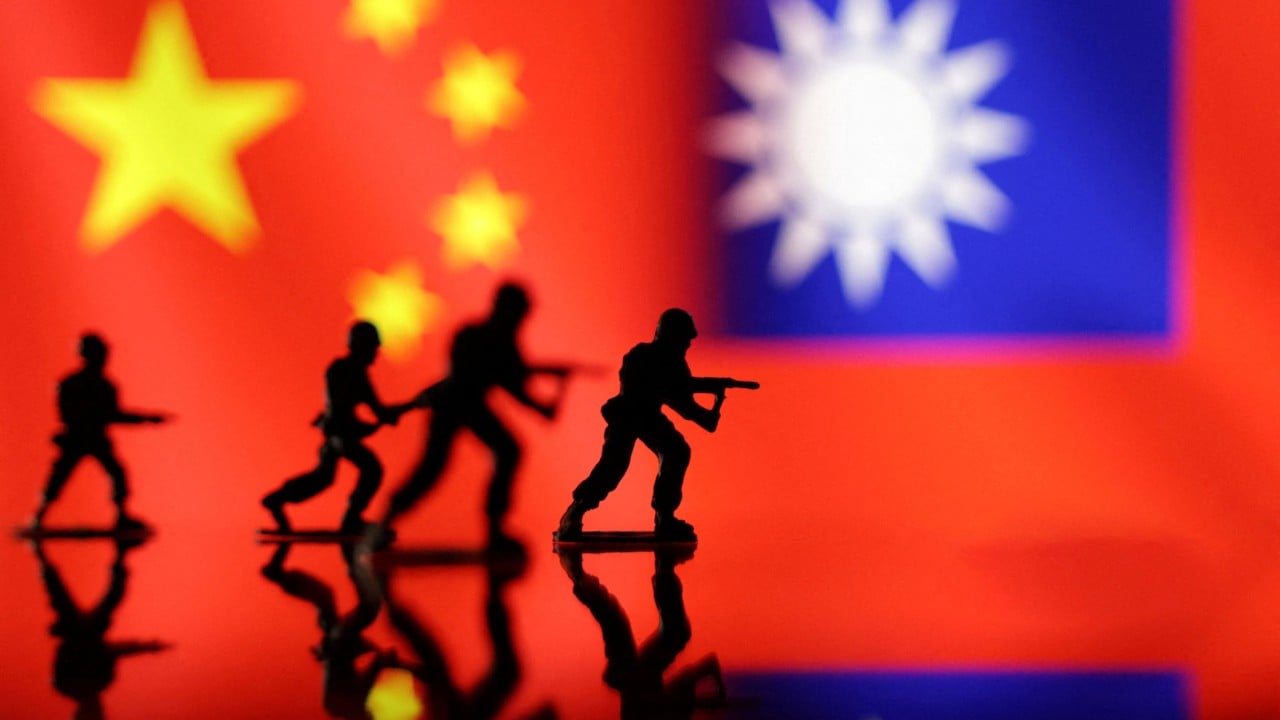
Washington loves a ticking clock. Nothing loosens Congressional purse strings quite like a neat, round year stamped onto a classified briefing slide.
For the last half-decade, the defense establishment has treated 2027 like the geopolitical equivalent of Y2K. Defense contractors salivate over it. Think-tank fellows build entire speaking tours around it. Mainstream outlets churn out breathless copy asking whether Beijing’s 2027 military modernization milestone has officially become a hard readiness deadline for the United States military over Taiwan.
The consensus is lazy. Worse, it is dangerously wrong.
Treating 2027 as an invasion deadline is a fundamental misreading of both Chinese military doctrine and American industrial reality. By obsessing over a single arbitrary year on the calendar, Washington is bankrupting its long-term deterrence to buy hardware for a Hollywood-style D-Day scenario that Beijing has zero intention of fighting.
The Anatomy of a Misquote
To understand how we got stuck in this analytical cul-de-sac, look at where the 2027 fixation actually started. It was never an invasion date.
In March 2021, Admiral Phil Davidson, then head of U.S. Indo-Pacific Command, told the Senate Armed Services Committee that Beijing might try to take Taiwan "in the next six years." The media instantly christened it the "Davidson Window."
Except Beijing never set 2027 as a D-Day. In the Chinese Communist Party’s own planning documents, 2027 is the centenary of the founding of the People’s Liberation Army. Xi Jinping ordered the PLA to achieve mechanization, informatization, and intelligentization by that date—specifically, to possess the capability to deter or defeat U.S. intervention if a crisis erupts.
Possessing a capability and scheduling an invasion are two entirely different animals. I have spent two decades watching defense procurement cycles and war-gaming sessions in the Beltway, and the pattern never changes. Intelligence analysts identify a foreign modernization benchmark. Defense lobbyists strip out the nuance. By the time the narrative hits Capitol Hill, a capability target becomes a countdown clock.
CIA Director William Burns and former Chairman of the Joint Chiefs Mark Milley both publicly clarified that having the capability by 2027 does not mean Xi has decided to invade in 2027. Yet the zombie narrative refuses to die because a fake deadline is too useful to give up.
Why Amphibious Invasion Is a Sucker’s Bet
The mainstream analysis assumes that the primary threat to Taiwan is a massive amphibious assault across 100 miles of turbulent water. That is fighting the last war.
Consider the sheer physics of an amphibious landing on Taiwan’s west coast. There are fewer than a dozen beaches suitable for heavy armor. Every single one is pre-sighted by Taiwanese artillery, mined, and backed by dense urban terrain that turns mechanized infantry into sitting ducks. To pull off a Normandy-style invasion across the Taiwan Strait, the PLA would need to assemble hundreds of thousands of troops and thousands of vessels in eastern ports for months.
Commercial satellites would spot that buildup before the first landing craft even lowered its ramp.
Beijing knows this. The PLA’s strategic thinkers at the Academy of Military Science aren't stupid; they read the same history books we do. Why gamble the survival of the Chinese Communist Party on the most difficult military maneuver in human history when you can strangle an island without landing a single boot on the beach?
Quarantine, not invasion, is the real threat.
Taiwan imports roughly 98 percent of its energy and over 70 percent of its food. Its economy runs on semiconductor exports that require uninterrupted maritime shipping lanes and undersea fiber-optic cables. Beijing doesn't need to storm Taipei. It can declare a "customs inspection zone," deploy coast guard cutters backed by the PLA Navy, sever undersea cables, and wait.
If you are a Pentagon planner spending billions on short-term readiness for a 2027 beach battle, you are preparing for the wrong fight.
The Industrial Mirage of "Readiness"
Here is the dirty secret inside the Pentagon: chasing a 2027 readiness deadline actually makes the United States weaker.
In military terms, "readiness" means having troops trained, fuel tanks full, and munitions stocked today. Every dollar spent keeping aging ships on deployment and buying legacy platforms right now is a dollar stolen from research, development, and industrial base expansion for 2032 and beyond.
Look at the math. During the 2022–2023 surge in weapons shipments to Ukraine, the U.S. burned through years of Javelin anti-tank missiles and 155mm artillery shells in months. War games run by the Center for Strategic and International Studies (CSIS) repeatedly show that in a high-intensity conflict over Taiwan, the United States would run out of long-range precision-guided munitions—specifically the Long-Range Anti-Ship Missile (LRASM)—in less than a week.
You cannot fix a hollowed-out industrial base by slapping a 2027 deadline on it. Building new solid-rocket motor plants, expanding shipyards, and training specialized welders takes a decade. When Congress panics over 2027, it forces the Pentagon into "sugar-high" spending: buying whatever is currently on the assembly line rather than retooling factories for autonomous systems, distributed sensors, and mass-produced attritable drones.
I have watched defense primes collect billions in cost-plus contracts under the banner of "urgent readiness," only to deliver over-budget platforms years late that are sitting targets for Chinese DF-21D and DF-26 ballistic missiles.
The Questions Nobody Asks
When pundits debate the 2027 milestone, they trap readers inside a binary choice: either the U.S. prepares for war by next year, or Taiwan falls. That framing hides the actual mechanics of deterrence.
Is China’s economy even capable of absorbing a Taiwan war in 2027?
No. China is grappling with a deflating property bubble, severe local government debt, youth unemployment, and a shrinking workforce. A conflict in the Taiwan Strait would trigger immediate Western sanctions, freeze trillions in foreign reserves, and cut off the maritime trade routes that keep Chinese factories running. Xi Jinping’s legitimacy rests on domestic stability and economic control, not rolling the dice on economic suicide while his banking sector is already wobbling.
What happens if the U.S. hits its 2027 readiness targets?
Nothing magical. Even if the Pentagon hits every single procurement goal on paper, the geography doesn't change. China is fighting 100 miles off its own coast under the umbrella of its land-based rocket force. The United States is projecting power across 6,000 miles of the Pacific. No amount of "readiness" repeals the tyranny of distance.
Does Taiwan actually act like 2027 is a deadline?
Look at Taipei’s actions, not Washington’s rhetoric. While Taiwan extended mandatory military service from four months to one year, its defense spending still hovers around 2.5 percent of GDP—less than what the U.S. spent during peacetime in the 1990s. Taiwan continues to sink billions into prestige assets like conventional fighter jets and surface ships that will be cratered on day one, rather than going all-in on mobile air defenses, sea mines, and decentralized drone warfare. If Taipei isn't treating 2027 as an existential cliff, Washington’s panic looks bizarre.
The Uncomfortable Truth About Deterrence
There is a massive downside to ditching the 2027 panic, and any honest strategist has to admit it: without an artificial crisis, democratic legislatures go to sleep.
Congress rarely funds long-term strategic competition without a monster under the bed. If the Pentagon admits that 2027 is just a routine milestone rather than an invasion deadline, lawmakers will immediately slash defense appropriations to fund domestic priorities. That is the exact trap that keeps defense officials quietly nodding along to the "Davidson Window" myth. They would rather get the money for the wrong reasons than get no money at all.
That cynicism has a shelf life. When 2027 comes and goes without an invasion—just as 2020 and 2025 passed without the apocalypse predicted by earlier pundits—public and legislative fatigue will set in. The "boy who cried wolf" effect will gut support for Pacific deterrence right when China’s military modernization actually reaches maturity in the early 2030s.
Stop Buying Calendars and Start Buying Asymmetric Mass
If Washington wants real deterrence instead of theatrical deadlines, it needs to dismantle its current playbook immediately:
- Kill the legacy surface fleet obsession. Stop pouring billions into massive, multi-billion-dollar surface combatants that cannot survive inside China's first island chain missile envelope. Shift capital aggressively toward nuclear attack submarines, unmanned underwater vehicles, and mobile coastal anti-ship batteries.
- Stockpile munitions, not platforms. A stealth bomber without standoff missiles is just an expensive hangar queen. Shift procurement dollars from shiny new hulls to multi-year block buys of long-range munitions, naval mines, and counter-drone interceptors.
- Harden the logistics tail. In a Pacific conflict, fuel tankers and logistics hubs in Guam, Japan, and the Philippines will be targeted before aircraft carriers. Spend the money on dispersed airfields, hardened fuel depots, and rapid runway repair kits.
- Force Taiwan into a porcupine posture. Stop selling Taipei expensive conventional hardware that flatters defense contractors. Condition every dollar of U.S. military financing on asymmetric, survivable systems: mobile air defense, smart sea mines, and decentralized command networks.
The 2027 deadline isn't a military reality. It is a Beltway marketing campaign designed to avoid hard industrial choices today by promising a showdown tomorrow. Beijing isn't watching the calendar—it is watching our shipyards, our munitions stockpiles, and our political will.
Stop preparing for a war on Washington's schedule, and start building a force that makes war impossible on Beijing's.


