The marble halls of the Russell Senate Office Building possess a specific kind of quiet. It is not the peaceful silence of a library, but the heavy, pressurized hush of a vault. Beneath the soaring ceilings, people in sharp suits move with calculated purpose, clutching briefing papers that can alter global markets with a single line.
Every year, a flood of capital washes through these hallways. It is silent. It is entirely legal. And it is corrosive.
When the public looks at Washington, they see a battleground of ideologies. Red versus blue. Left versus right. But beneath the televised shouting matches lies a much quieter, shared hobby that unites politicians across the aisle: playing the stock market.
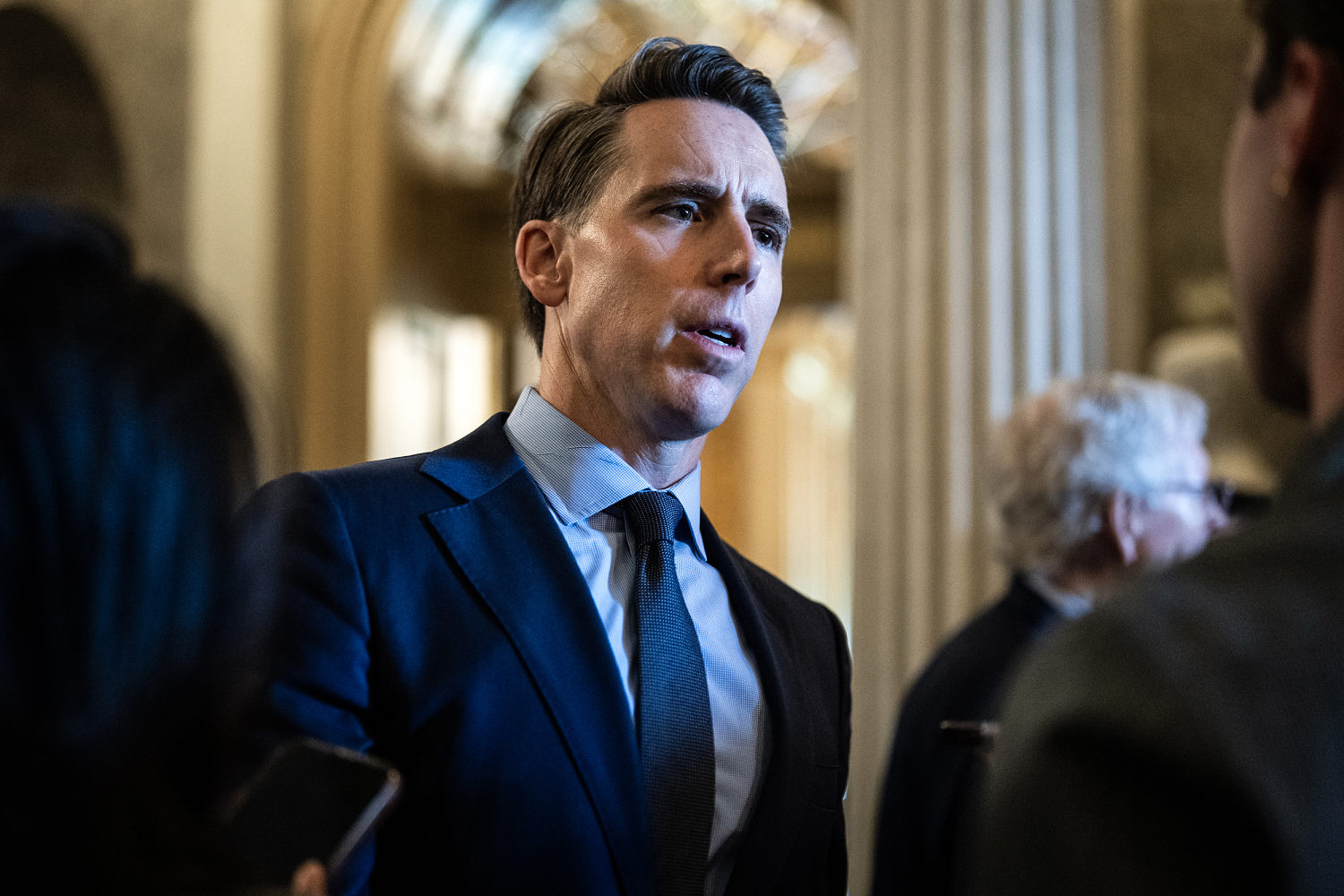
Missouri Senator Josh Hawley recently stepped into this quiet space with a proposal that aims to shatter the status quo. He announced his support for a sweeping ban on stock trading, one that would not just restrict rank-and-file lawmakers, but would extend all the way to the Oval Office. It is a move that cuts to the absolute core of how power operates in America. Because right now, the system relies on a premise that defies human nature: the idea that a person can possess the world’s most valuable secrets and choose not to profit from them.
Let us step outside the halls of Congress for a moment to understand how this plays out in the real world.
Imagine a hypothetical retail investor named Sarah. Sarah lives in Ohio. She watches the news, tracks her modest 401(k), and tries to save for her children's education. When Sarah wants to buy stock in a tech company or an energy conglomerate, she relies on public information. She reads quarterly reports. She looks at the tickers moving across the bottom of her television screen. She is playing a game where she sees only the cards in her own hand.
Now, consider the lawmaker who represents her.
This lawmaker sits on a sub-committee overseeing green energy subsidies. Weeks before the public learns which companies will receive billions of dollars in federal backing, this lawmaker watches the presentations. They read the classified briefs. They know which CEO stumbled in a private hearing and which technology actually holds promise.
They hold the entire deck.
When that lawmaker logs into a brokerage account and buys shares of the subsidized company, the law calls it public service. If Sarah’s neighbor did the exact same thing using whispered information from an insider source, the FBI would call it insider trading.
This is the invisible stakes of the debate. It is not about a few politicians making a quick buck on a pharmaceutical stock. It is about a fundamental asymmetry of information that breaks the social contract between the governed and the governors.
The current rules governing this behavior are defined by the STOCK Act, a piece of legislation passed in 2012 with immense fanfare. The law was supposed to fix the problem by requiring lawmakers to publicly disclose their financial transactions within 45 days.
It failed.
It failed because it misunderstood human temptation. A 45-day window means a politician can buy a stock, watch it soar on the heels of a bill they helped pass, and sell it before the public ever knows they held it. The penalties for failing to disclose these trades on time are laughably small—often just a $200 fine that is routinely waived by ethics committees. For a trade netting tens of thousands of dollars, a $200 fine is not a deterrent. It is just the cost of doing business.
Hawley’s proposal strikes at the root of this failure by removing the wiggle room. By advocating for a total ban that includes the president, the conversation shifts from how politicians should report their wealth to whether they should be allowed to build wealth through private markets while holding public trust.
The inclusion of the presidency is crucial. The American president wields unparalleled economic influence. A single tweet, an executive order, or a stray comment during a press conference can cause the valuation of a multi-billion-dollar corporation to plunge or skyrocket in seconds. To allow the person holding that weapon to also hold a portfolio of individual stocks is an extraordinary risk.
Critics of a total ban argue that such measures are too draconian. They claim it will deter talented, successful businesspeople from entering public service if they are forced to liquidate their holdings or lock them away in blind trusts. They argue that politicians should not be financially penalized for choosing to serve their country.
But this argument collapses under the weight of history. Public service was never intended to be a wealth-generation strategy. The founders envisioned a citizen legislature—individuals who stepped away from their private enterprises to serve for a time, then returned to the communities that sent them. Somewhere along the way, we normalized the idea that entering Congress is a golden ticket to a sprawling investment portfolio.
Look at the data. Multiple independent investigations have revealed that lawmakers regularly outperform the market. During the onset of the 2020 pandemic, while ordinary Americans were panic-buying groceries and watching their life savings tremble, several senators walked out of closed-door health briefings and immediately called their brokers. They sold off hospitality stocks and bought into remote-work tech companies.
They protected themselves using the data given to them by the public, while the public remained in the dark.
Trust is a finite resource. Once it leaks out of a system, it is incredibly difficult to pour back in. Every time a citizen reads about a politician timing the market perfectly ahead of a major policy shift, a little more trust evaporates. The cynicism hardens. People begin to view the law not as a collective agreement, but as a rigged game played by elites who write the rules to favor their own bottom lines.
The solution cannot be more paperwork. It cannot be another disclosure form buried on a clunky government website. The solution must be a clean break.
If you want to write the laws that govern the American economy, you should not be actively betting on the players within that economy. You choose the gavel, or you choose the ticker. You cannot hold both.
The push for a stock trading ban is gaining an unlikely momentum because it taps into a deep, latent frustration that cuts across every political demographic. It is a rare point of clarity in a fractured political landscape. Whether this momentum will be enough to overcome the immense internal resistance of a Congress that loves its portfolios remains to be seen.
Ultimately, the debate is not about finance. It is about a simple question of alignment. Who does a leader look out for when the markets open at 9:30 AM?
On a rainy Tuesday afternoon in Washington, the tourists still line up outside the Capitol, looking up at the great dome with a sense of reverence. They believe the people inside are debating the future of the nation. They want to believe that their voices matter. But down in the offices, as the computers hum and the trade confirmations roll in, the real tragedy is how easily that reverence can be bought and sold.