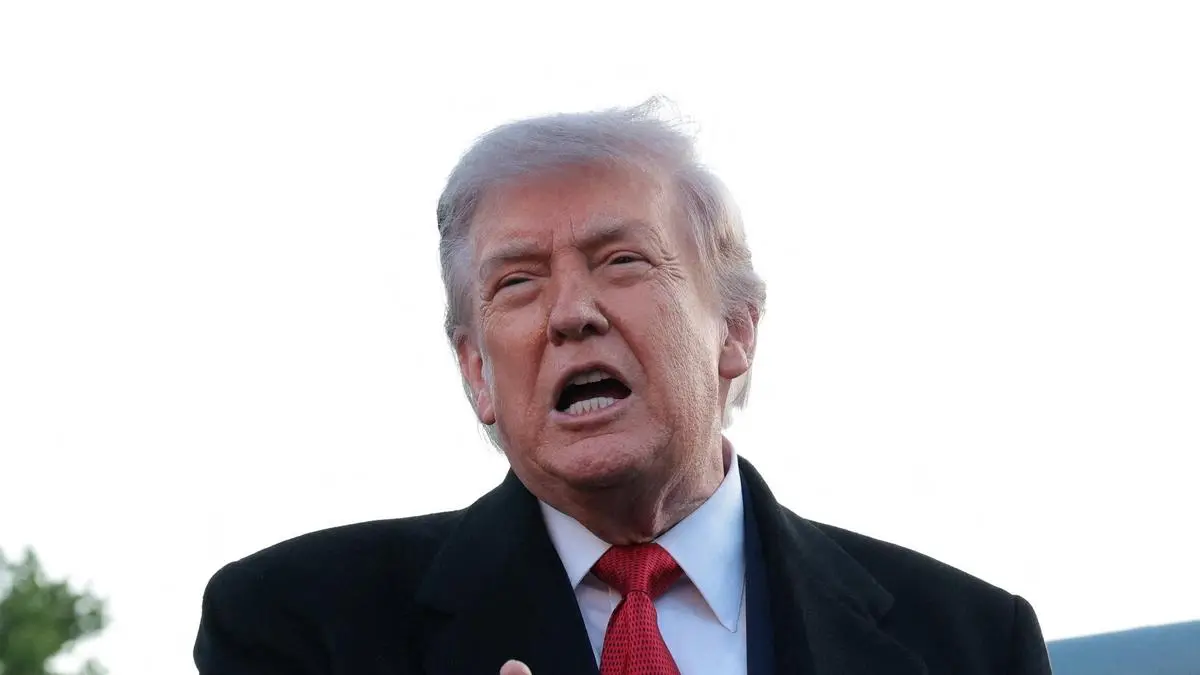
Donald Trump has delivered a final ultimatum to Brussels: ratify the Turnberry trade agreement by July 4, 2026, or face a "massive" escalation in import duties. By pegging the deadline to the 250th anniversary of American independence, the administration has moved trade policy out of the boardroom and into the theater of national identity. This is not just a standard negotiation tactic; it is an existential threat to the European automotive and industrial sectors that have already been reeling from a year of volatile "Liberation Day" levies.
The core of the dispute lies in the stalled implementation of a deal struck last summer in Scotland. While Washington claims it has already moved to lower its weighted average tariff rates toward a 15% ceiling, European lawmakers in the "trilogue" process—the negotiation between the Commission, the Council, and the Parliament—have remained deadlocked. For the EU, the hesitation is a mix of procedural molasses and a deep-seated refusal to be seen surrendering to what French President Emmanuel Macron has termed "economic blackmail."
The Turnberry Trap
The Turnberry agreement was supposed to be the "largest trade deal ever," a sweeping arrangement intended to simplify the chaotic tariff landscape of 2025. Under the terms, the U.S. agreed to cap tariffs at 15% on most goods, including the vital automotive sector. In exchange, the EU promised to slash its duties on American industrial goods and specific agricultural exports to zero.
However, the "zero" in that equation is where the friction lives. European negotiators, led by figures like German MEP Bernd Lange, have been dragging their feet on the final sign-off. The delay stems from a suspicion that the U.S. will use Section 232 or Section 122 "national security" probes to bypass the 15% cap whenever it feels slighted. These suspicions were validated earlier this year when the U.S. hiked car tariffs to 25%, effectively ignoring the spirit of the Scottish accord.
Why the EU Can’t Just Say Yes
European trade policy is not a monolith. The internal mechanics of the bloc are currently its own worst enemy. On one side, German Chancellor Friedrich Merz is desperate to finalize the deal. Germany’s economy is the most exposed; a 25% tariff on luxury vehicles like Audi and Porsche represents a multibillion-euro hit that could force production out of the EU entirely and into U.S.-based factories.
On the other side, the European Parliament has introduced "poison pill" clauses. These specify that the deal must be automatically suspended if the U.S. threatens EU security interests—a direct jab at previous rhetoric regarding the acquisition of Greenland. To the White House, these are not safeguards; they are insults.
The U.S. Supreme Court threw a wrench into the works in February 2026, ruling that the International Emergency Economic Powers Act (IEEPA) could not be used to impose broad, immediate tariffs. While this initially looked like a win for the EU, the administration quickly pivoted to Section 232 of the Trade Act of 1974. This move allows the President to target specific sectors like semiconductors and pharmaceuticals, ensuring the pressure remains high despite the court's intervention.
The Cost of the Clock Running Out
If July 4 passes without a signature, the economic fallout will be felt in every household from Berlin to Boston.
- German Automakers: Estimates suggest an additional annual tariff burden of 2.5 billion euros for German manufacturers who do not have a significant U.S. manufacturing footprint.
- The Euro: While the euro appreciated against the dollar in early 2026, a breakdown in trade talks would likely trigger a flight to safety, devaluing European currency and making imports more expensive for EU citizens.
- Consumer Pricing: In the U.S., the cost of European-made electronics, medical equipment, and high-end machinery will jump. History shows these costs are almost never absorbed by the corporations; they are passed directly to the consumer.
The Retaliation Instrument
Brussels is not entirely defenseless, but its weaponry is double-edged. The "anti-coercion instrument" allows the EU to fire back with its own targeted tariffs. We have seen this movie before. The EU targets symbolic American exports—bourbon, motorcycles, and orange juice—specifically aimed at the constituencies of influential U.S. lawmakers.
But this "eye for an eye" strategy is failing to produce the desired result in the current political climate. Instead of bringing the U.S. back to the table, it provides the political cover for Washington to declare a total trade war.
The strategy in Washington has shifted from seeking "fair trade" to demanding total market dominance. By setting a deadline on a symbolic national holiday, the administration has made it politically impossible to back down without a "win." For Ursula von der Leyen, the challenge is to find a way to give the U.S. that win without permanently crippling European industrial sovereignty.
The clock is ticking toward a 250th birthday celebration that might just be the funeral for the post-war trade order. The EU has eight weeks to decide if it would rather be humiliated by a signature or decimated by a percentage point.