The cabin of an Airbus A380 at 35,000 feet is a sensory deprivation chamber wrapped in a collective sigh. You know the sounds. The low, rhythmic thrum of the Rolls-Royce engines. The occasional plastic click of a seatbelt buckle. The soft murmur of a flight attendant offering ginger ale to a passenger three rows ahead. For the 496 passengers aboard Air France Flight 008, en route from Paris to Los Angeles, the world had shrunk to the width of their armrests. They were five hours into a grueling eleven-hour trek, suspended in that strange, purgatorial limbo of transatlantic travel where time loses all meaning.
Then, the nose of the aircraft dipped north. Learn more on a connected issue: this related article.
It was a subtle shift at first, unnoticed by anyone not staring intently at the digital flight tracker on their seatback screen. But the flight path was changing. The straight line cutting across the Atlantic toward the American heartland was bending sharply upward, aiming for the jagged coastline of eastern Canada.
When the captain’s voice finally crackled over the intercom, it carried that forced, hyper-calm cadence unique to commercial pilots. There was an administrative issue, he explained. A bureaucratic knot. The United States government had denied the aircraft entry into its airspace. Further journalism by National Geographic Travel explores comparable views on the subject.
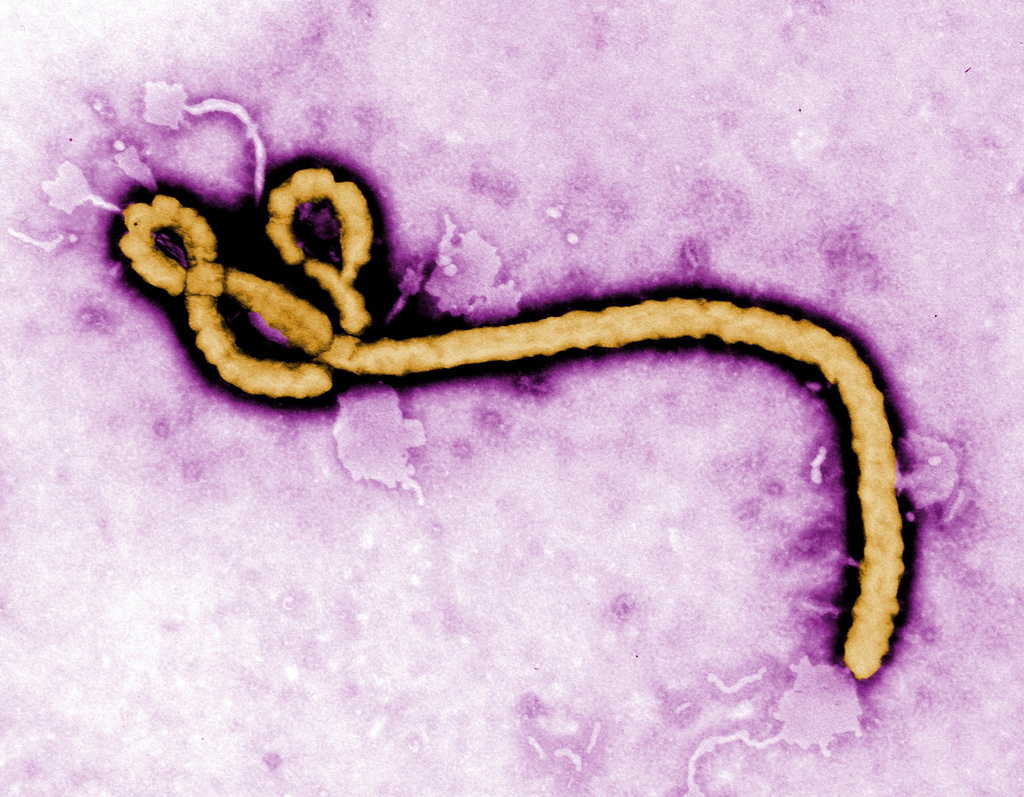
The reason wasn't weather. It wasn't a mechanical failure. It was a invisible line drawn in the sand by a spreadsheet thousands of miles away, triggered by a word that, in the mid-2010s, sent chills through global health agencies: Ebola.
To understand the panic inside that cabin, you have to understand how quickly a modern vacation can transform into a geopolitical standoff. The passengers weren't being grounded because they were sick. They were being grounded because of where someone on board had been.
Consider a hypothetical traveler named Marie. She is a consultant who had spent the previous week in Conakry, Guinea, working with an international NGO. She felt perfectly fine. No fever. No muscle aches. She had passed through multiple health screenings before boarding her connecting flight in Paris. But in the administrative eyes of the U.S. Department of Homeland Security, Marie was a walking compliance failure.
Under the travel restrictions active at the time, any passenger who had visited Guinea, Liberia, or Sierra Leone within the previous 21 days was strictly mandated to land at one of just five designated U.S. airports equipped with specialized CDC screening centers. JFK in New York. O'Hare in Chicago. Hartsfield-Jackson in Atlanta. Dulles in Virginia. Newark in New Jersey.
Los Angeles International Airport was not on that list.
Air France Flight 008 was a massive, double-decker behemoth flying toward a destination that legally could not open its gates to everyone on board. The mistake wasn't discovered on the ground in France. It was flagged mid-flight, somewhere over the freezing waters of the North Atlantic, when manifests were cross-checked by automated security databases in Washington.
The machine flagged a passport. The system triggered an alert. The airspace closed.
The sheer logistical nightmare of this realization cannot be overstated. An aircraft like the A380 consumes roughly 3,000 gallons of fuel every hour. You cannot simply pull over on the shoulder of the highway to sort out a paperwork error. The crew was caught in a vice between shrinking fuel reserves and rigid international law. They couldn't go back to Paris; they didn't have the fuel. They couldn't go forward to Los Angeles; they would be intercepted or fined astronomically, or worse, forced into an emergency containment protocol on a California tarmac.
So, they turned toward Montreal.
Pierre-Elliott-Trudeau International Airport is used to diversions. Snowstorms routinely send planes scuttling to its runways. But an international health diversion is a different beast entirely. When Flight 008 touched down in Quebec, it didn't taxi to a standard gate. It was directed to a remote de-icing stand, isolated from the main terminal like a ship flying a quarantine flag.
Inside the plane, the atmosphere shifted from mild annoyance to claustrophobic anxiety. Whispers spread. Rumors flew through the rows faster than any virus could. Is someone sick? Is it the person next to me? Why are there emergency vehicles on the tarmac?
This is where the psychological toll of global health panics becomes real. We live in an era of unprecedented connectivity, where you can breakfast in Paris and dine in Los Angeles. But that connectivity relies on a fragile web of trust. When that trust breaks, the veneer of modern comfort vanishes. Passengers stared out the thick acrylic windows at Canadian officials waiting on the asphalt below, suddenly feeling less like travelers and more like cargo.
Canadian health officials eventually boarded the aircraft. The process was agonizingly slow. Every passenger’s history had to be verified. Marie—or whoever the actual passenger was that triggered the system—was identified. She showed no symptoms of illness. She was not a patient zero. She was simply a person caught in the gears of a reactionary policy.
The irony, of course, is that the diversion didn't make anyone safer. It merely displaced the problem. By forcing a massive aircraft to land in Canada, the system concentrated hundreds of passengers from around the world into a confined space for additional hours, creating a logistical bottleneck in a city that wasn't prepared for them. Air France had to scramble to find hotel rooms for nearly 500 people on short notice, a task akin to checking an entire small town into lodging simultaneously.
The next day, a different aircraft had to be prepared to take the remaining, non-restricted passengers to Los Angeles. Plans were ruined. Business meetings were missed. Vacations were spoiled.
We often view global health policies as abstract shields designed to keep us safe. We read about travel bans and screening protocols in the news and nod approvingly, thinking of them as neat, orderly walls. But the reality is messy. It is loud. It looks like a frustrated family sleeping on airport chairs in Montreal because their flight manifest contained a single administrative anomaly.
By the time the passengers finally reached California, a full day late, the panic had faded back into statistics. The passenger from West Africa was monitored and cleared. The plane was eventually returned to service. The system worked, the authorities argued.
But for those 496 people, the sky would never feel quite as open again. They had seen the invisible walls that crisscross our global maps, walls that can materialize out of nowhere at 35,000 feet, turning a routine journey into a stark reminder of how fragile our freedom of movement truly is.