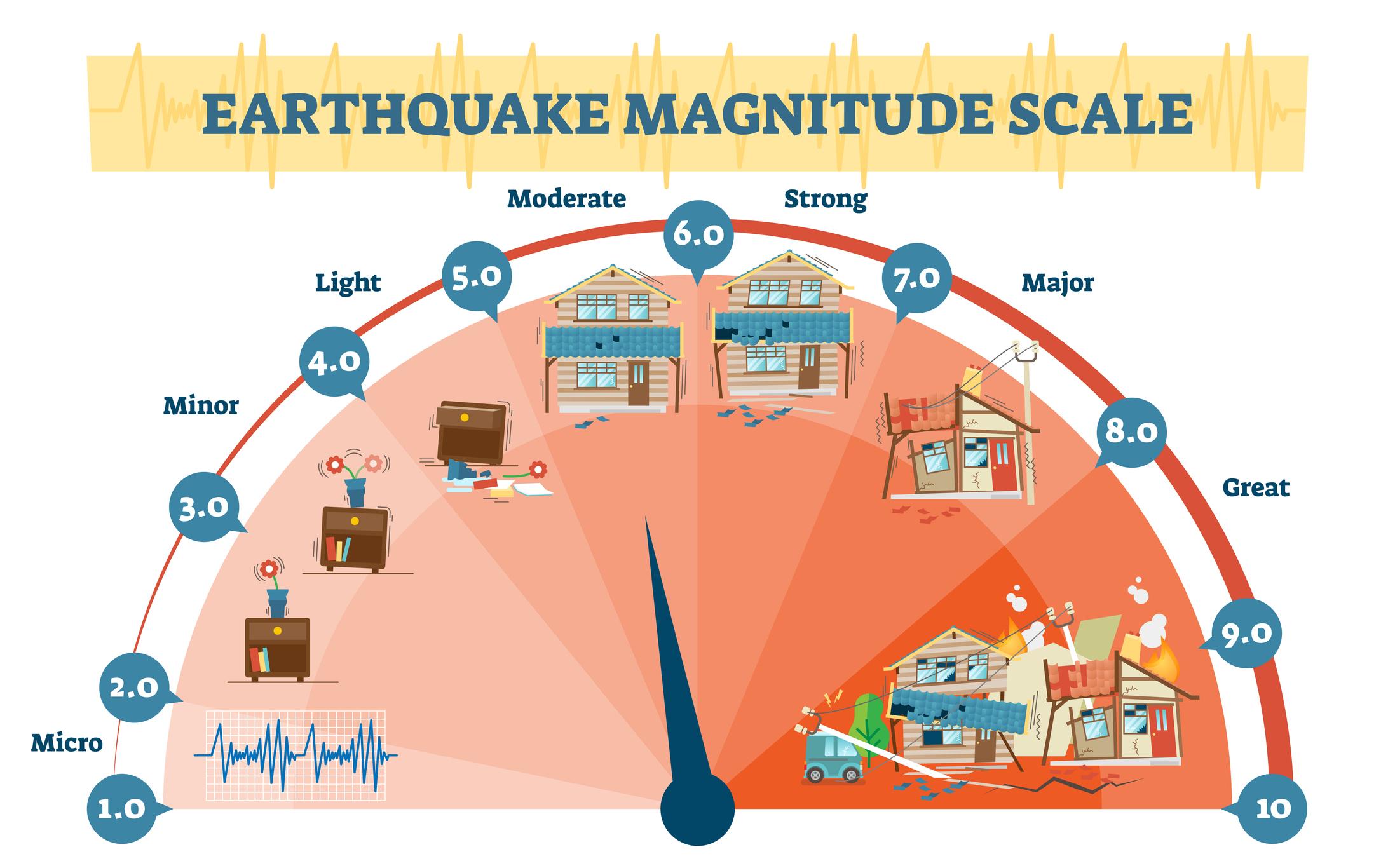
You probably didn't feel it. Most people didn't. A 3.8 magnitude earthquake is the kind of event that usually gets buried in a spreadsheet at a monitoring station, but when it happens under the "Roof of the World," it's a different story. On Friday, April 3, 2026, the National Center for Seismology (NCS) picked up a sharp, shallow jolt in Tibet. It wasn't a catastrophe, but it's a symptom of a much larger, more violent geological process that doesn't care about borders or human timelines.
The earthquake struck at 20:12 IST with an epicenter located at 28.110 N and 87.626 E. If you're looking at a map, that puts it right in the thick of the action near the Nepal border, not far from the Himalayan giants. It was shallow, just 10 kilometers deep. In the world of seismology, "shallow" is a word that should make you sit up. While a 3.8 is relatively minor, the fact that it happened so close to the surface means the energy didn't have much room to dissipate before hitting the air.
The mechanics of a mountain range under pressure
Tibet isn't just high up because of some geographic fluke. It's high because the Indian tectonic plate is currently slamming into the Eurasian plate at a rate of about 40 to 50 millimeters a year. Think of it like a slow-motion car crash that has been going on for 50 million years. This collision is what built the Himalayas, and it's what keeps them growing. It also means the entire Tibetan Plateau is essentially a giant pressure cooker.
When you see a 3.8 magnitude earthquake, you're seeing a tiny bit of that pressure being vented. In the southern part of the plateau, where this latest quake hit, the earth is literally being pulled apart in an east-west direction. This creates what geologists call "normal faults." It's counterintuitive—you'd think a collision would only push things together—but the plateau is so high and heavy that it’s actually spreading out under its own weight.
Why shallow quakes in Tibet are different
A common mistake people make is looking only at the magnitude. A 3.8 in the middle of a deep ocean is a non-event. A 3.8 at 10 kilometers depth in a region with fragile infrastructure is a wake-up call. We've seen this play out before. Earlier in 2025, a much larger 6.8 magnitude quake struck Tingri County, causing significant loss of life and destroying thousands of homes.
The lesson from these events is that the depth matters as much as the strength. Shallow tremors send seismic waves directly into the foundations of buildings. In remote parts of Xizang, where traditional stone and mud-brick construction is common, even a moderate shake can cause cracks that compromise a building's integrity over time. It's the cumulative effect that's dangerous.
Living on a geological fault line
If you live in this region, you don't just "deal" with earthquakes; you live with the constant knowledge that the ground isn't as solid as it looks. The NCS and the China Earthquake Networks Center (CENC) keep a 24/7 watch on this area because they know the history. The plateau has seen monsters—earthquakes with magnitudes of 8.0 or higher—usually along the massive strike-slip faults in the north.
While the April 3rd tremor didn't trigger any immediate reports of damage or casualties, it happened on the same day that a much larger 5.9 magnitude quake hit the Hindu Kush region in Afghanistan. This isn't a coincidence in the sense of a "chain reaction," but it highlights just how active this entire mountain belt is. From the Pamirs to the Himalayas, the earth is shifting.
What this means for the immediate future
Don't expect the shaking to stop. If anything, the frequency of these mid-range tremors is a reminder that the "Big One" is always a statistical possibility in the Himalayas. For travelers or those living in the region, the protocol hasn't changed, but the urgency has.
- Check the structures: If you're in an area that felt the 3.8, inspect your walls for new "stair-step" cracks. These are classic signs of foundation stress.
- Monitor the apps: The BhooKamp app from the NCS and other local seismic trackers are the fastest way to get data. Don't rely on word of mouth; it's usually wrong.
- Prepare for aftershocks: Even a small quake can have a tail. These aren't usually stronger than the main event, but they can bring down a wall that was already weakened.
The 3.8 magnitude earthquake in Tibet isn't a headline-grabbing disaster, and honestly, that’s a good thing. But ignoring it because it's "small" is a mistake. It's a clear signal from the planet that the collision under your feet is far from over. Keep your shoes near the bed and your emergency kit stocked. The plateau isn't done moving yet.