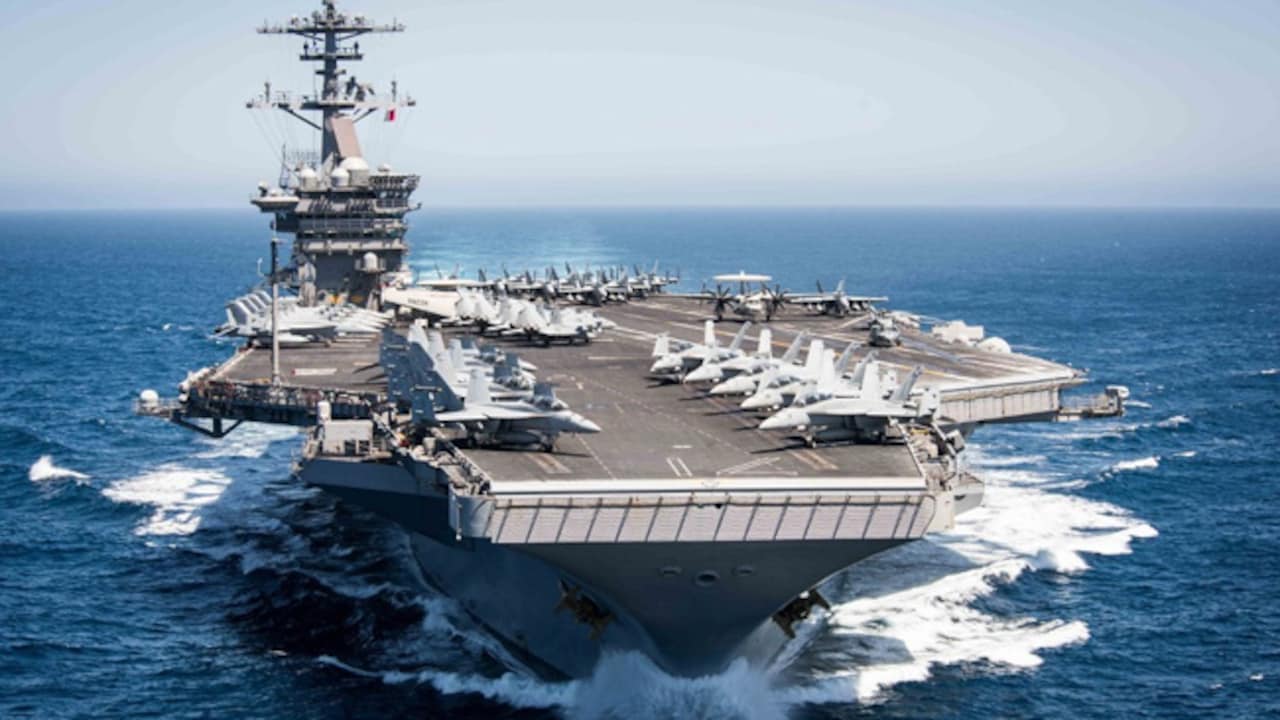
When news broke that a 3rd aircraft carrier and roughly 10,000 additional troops were heading to the Middle East after President Donald Trump's latest warnings to Iran, cable news went into overdrive. Pundits immediately started predicting an imminent, full-scale ground invasion.
They're misreading the chessboard. You might also find this connected coverage useful: Why State Backup Execution Plans Usually Fail When They Matter Most.
Yes, the arrival of the USS Theodore Roosevelt alongside the USS George H.W. Bush and the USS George Washington puts three American carrier strike groups under U.S. Central Command (CENTCOM) at the same time. That hasn't happened since April 2026—and before that, you have to go all the way back to the 2003 invasion of Iraq to see that kind of naval concentration. With the 13th Marine Expeditionary Unit and the Makin Island Amphibious Ready Group also moving in, total U.S. troop strength across the region sits around 53,000.
Those numbers sound terrifying on paper. Yet if you actually look at how naval rotations, maritime blockades, and post-election politics work in Washington, this massive buildup tells a very different story than the headlines suggest. As extensively documented in detailed reports by BBC News, the implications are notable.
The Real Numbers Behind the 3rd Aircraft Carrier Deployment
Let's strip away the hype and look at the actual hardware floating in the Arabian Sea right now.
The USS Theodore Roosevelt (CVN 71) left San Diego back on September 27, carrying roughly 6,000 sailors. Right behind it, on September 28, the Makin Island Amphibious Ready Group departed with the 13th Marine Expeditionary Unit—adding another 4,200 personnel to the ledger. Combine those two movements, and you get the "10,000 troops" figure dominating the news cycle.
Once the Roosevelt entered the CENTCOM area of responsibility in mid-November, it joined a massive existing flotilla. The Navy currently has 13 destroyers, two cruisers, a littoral combat ship, and the USS Boxer amphibious readiness group operating alongside the three carriers. In total, more than 20,000 sailors and Marines are now packed onto ships off the Iranian coast.
Here's what most people miss about carrier deployments. Having three carriers in theater doesn't automatically mean all three are staying for months to launch an offensive.
The USS George H.W. Bush has been operating in the region since April. The USS George Washington arrived in August to relieve the exhausted USS Abraham Lincoln. Navy crews and nuclear-powered carriers have hard maintenance limits. When you maintain a continuous blockade of a hostile coastline for over eight months, overlapping deployments happen naturally during scheduled relief windows.
The Pentagon gets a massive strategic bonus out of that overlap. For a few critical weeks, Washington holds overwhelming strike capacity without having to declare a brand-new mobilization.
Why Trump's Mixed Messaging Makes Sense Strategically
If you've been following President Trump's public statements on the Iran conflict, the whiplash is real.
One week, he threatens devastating new military strikes against Tehran. The next week, he insists that the eight-month-old war "militarily is effectively over" and claims a formal peace deal isn't even necessary. Most commentators treat this as erratic behavior. I don't buy that explanation for a second.
Look at the domestic political calendar. On November 3, the Republican Party suffered major losses in the midterm congressional elections. Both Trump and Vice President JD Vance openly blamed those losses on the economic pain caused by the war—specifically higher energy and consumer prices driven by shipping disruptions. Voters are tired of paying a war tax at the gas pump and the grocery store.
Launching a massive new bombing campaign right after voters punished your party for an unpopular war would be political suicide.
At the same time, Trump cannot look weak while Iranian forces are still firing drones at U.S. bases in Bahrain and strangling global trade. By parking a 3rd aircraft carrier right off Iran's coast while simultaneously downplaying the need for major new combat operations, the White House is playing a classic game of coercive diplomacy.
As Middle East analysts have pointed out, maintaining maximum visible military pressure allows the administration to tell domestic voters that the war is winding down while reminding Tehran that Washington still holds a loaded gun to its head.
The Strait of Hormuz Chokehold and Task Force Iron Gate
To understand why 53,000 troops are sitting in the Middle East right now, you have to stop looking at air strikes and start looking at shipping lanes.
Ever since joint U.S. and Israeli strikes kicked off the conflict in late February, the real battleground has been economic suffocation. Iran blockaded the Strait of Hormuz, choking off one of the world's most vital energy arteries. According to independent maritime tracking from Lloyd's List, commercial traffic through the strait has plunged to less than a third of prewar levels.
Washington's response hasn't been an invasion. It's been a counter-blockade.
The U.S. Navy is actively intercepting and blocking Iranian maritime shipping in the Arabian Sea. When Tehran tried to bypass the sea blockade by pushing cargo across land borders into neighboring countries like Pakistan, the congestion grew so severe that border crossings ground to a halt. To close those remaining loopholes, CENTCOM stood up Task Force Iron Gate—an interagency operation designed to extend the blockade from the water onto land routes and up toward the Caspian Sea.
Enforcing a naval and land blockade across thousands of miles of coastline and smuggling corridors eats up massive amounts of manpower and hardware. You need destroyers to patrol shipping lanes, helicopters and surveillance drones to track smaller vessels, and carrier air wings to maintain total air superiority over the water.
Tehran is clearly feeling the squeeze. Iranian officials have stated they're willing to reopen the Strait of Hormuz within 48 hours if Washington lifts sanctions, releases frozen foreign assets, and ends the naval blockade of Iranian ports. That's not the negotiating posture of a regime preparing to conquer the region—that's a government desperate to restore basic trade revenue.
What Military Analysts Say Is Missing for a Major Offensive
If you want a reliable reality check on whether Washington is actually preparing to launch a massive new air or ground war against Iran, stop listening to politicians and look at open-source intelligence (OSINT) on airbases.
According to assessments from the Institute for National Security Studies (INSS), the current U.S. posture in the Middle East—even with the Roosevelt arriving—still lacks the heavy air assets required for an offensive campaign on the scale of what we saw back in March.
Why Carrier Air Wings Aren't Enough on Their Own
Aircraft carriers are incredible tools for power projection, sea control, and localized strikes. They carry dozens of fighter jets, electronic warfare planes, and early-warning aircraft.
However, sustained, large-scale bombing campaigns deep inside a massive country like Iran require heavy long-range bombers—like B-52s, B-1Bs, and B-2s—along with massive fleets of land-based aerial refueling tankers and cargo planes. Right now, OSINT tracking shows the Pentagon hasn't surged those land-based bomber fleets back into regional bases.
The Drone Threat Reality Check
There's also a serious defensive problem that keeps military planners awake at night.
Earlier in the conflict, U.S. troops on the ground were dangerously exposed to low-cost Iranian one-way attack drones. Just days ago, Iranian forces launched a six-drone attack targeting a U.S. airbase in Bahrain, forcing local and American air defenses to scramble and intercept incoming threats. CENTCOM also had to shoot down two Iranian drones near naval assets in the same week.
Putting tens of thousands of additional ground troops into fixed bases inside Iran's missile and drone range without ironclad air defense creates massive casualties with very little strategic upside. Keeping troops offshore aboard Amphibious Ready Groups and aircraft carriers keeps them mobile, harder to target, and able to withdraw without looking like a retreat.
Israeli Pressure vs. American Restraint
You also can't ignore the friction between Washington and Jerusalem over what "winning" actually looks like.
Israeli Prime Minister Benjamin Netanyahu has been blunt about his goal—toppling the Iranian regime entirely. Speaking after consultations with U.S. officials, Netanyahu described Iran's leadership as "battered, wounded and beaten," arguing that leaving the current government in power guarantees they'll eventually rebuild their nuclear program and proxy networks. Israel's Security Cabinet has held extended meetings to align its military leadership on potential next steps.
Washington's appetite for regime change looks far smaller right now.
Trump is scheduled to meet with Chinese President Xi Jinping and Russian President Vladimir Putin for trilateral discussions where the Middle East conflict is squarely on the agenda. China buys the vast majority of Iran's sanctioned oil and relies heavily on stable shipping through the Persian Gulf. Beijing has enormous economic leverage over Tehran, and Trump knows it.
Sending a 3rd aircraft carrier right before sitting down with Xi and Putin gives the U.S. president maximum leverage at the negotiating table. He can point to the Arabian Sea and show Beijing that Washington has the naval power to keep Iran's economy locked in a vice indefinitely unless China helps pressure Tehran into a settlement.
How to Read Middle East Military Headlines Without Getting Played
When major geopolitical crises flare up, sensational headlines thrive on fear and vague numbers. If you want to separate real escalation from routine military posturing over the coming weeks, track these specific indicators instead of cable news panels:
- Watch land-based bomber deployments, not just ships. Carrier strike groups rotate on predictable schedules. If you suddenly see squadrons of B-52s or B-1 bombers deploying to Diego Garcia or bases in the Gulf, that's a real signal of imminent large-scale strikes.
- Track Strait of Hormuz tanker traffic and oil futures. Markets react faster than politicians. Until maritime trackers like Lloyd's List report commercial vessels moving past that 30% prewar baseline, energy prices will remain vulnerable to sudden spikes.
- Follow the diplomatic calendar around Beijing and Moscow. Major military offensives rarely kick off while a president is actively sitting down with rival superpowers to broker leverage. Pay close attention to whether China pressures Tehran to ease its blockade conditions following trilateral talks.
- Ignore vague troop-count roundups. Whenever you see "10,000 troops deployed," check whether those personnel are embarked Marines and sailors staying offshore on ships versus infantry brigades establishing new forward operating bases on land. Offshore deployments preserve options—ground deployments lock a country into a war.