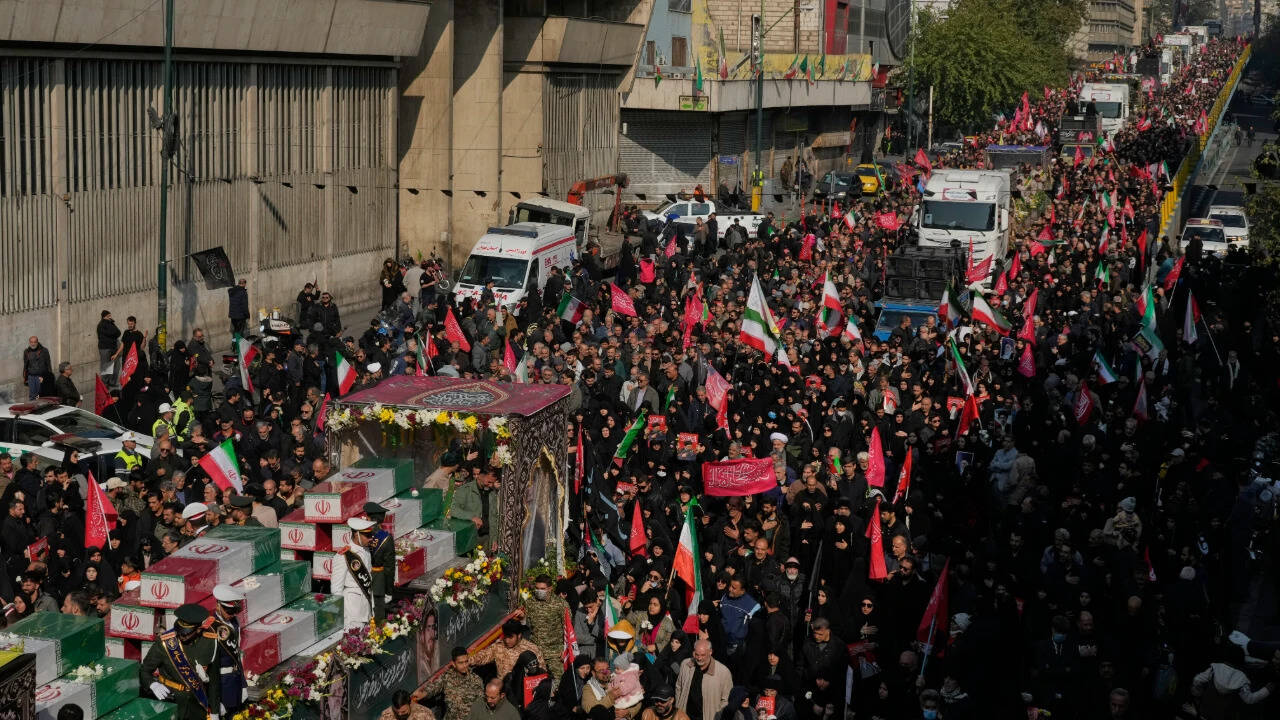
Iranian officials report that 428 children have been killed across two separate military conflicts, prompting the head of the Iranian Red Crescent Society to demand an immediate, independent international investigation into the deadly attack on a school in Minab. That single figure sits at the center of an escalating diplomatic and humanitarian firestorm, forcing international observers to confront the gap between official casualty reports and verifiable forensic evidence on the ground.
Numbers in wartime are rarely just statistics. They are weapons. When Tehran releases a specific death toll of 428 minors spanning two distinct theaters of conflict, the announcement serves dual purposes: documenting human devastation while applying maximum diplomatic pressure on adversaries and international bodies. Yet behind the headlines lies a much harder journalistic reality. Independent verification inside active conflict zones, particularly within restricted regions of southern Iran like Hormozgan Province where Minab is located, remains notoriously difficult.
The Anatomy of the Minab School Incident
Minab is not a random dot on a map. Situated in southern Iran near the strategic Strait of Hormuz, the city occupies a sensitive corridor where civilian infrastructure and high-alert military assets exist in uncomfortable proximity. When reports emerged of an attack striking a school in Minab, the outrage was instantaneous, driven by the universal revulsion toward strikes on educational facilities.
Under International Humanitarian Law (IHL), specifically the Geneva Conventions and their Additional Protocols, schools enjoy explicit protected status. They are civilian objects. Targeting them directly constitutes a grave breach of the laws of war unless an adversary can prove the facility was actively being used for military purposes—a threshold known as losing protected status through "effective contribution to military action." Even then, the principle of proportionality strictly prohibits attacks expected to cause incidental loss of civilian life excessive in relation to the concrete and direct military advantage anticipated.
The Iranian Red Crescent Society’s call for an independent probe highlights a critical friction point in modern warfare. Humanitarian organizations operate under mandates of neutrality and access, yet they often lack the forensic mandate or technical capability to conduct ballistics attribution. Calling for an external investigation signals that domestic documentation alone will not satisfy international skepticism, nor will it compel accountability at the United Nations Security Council or the International Criminal Court.
Why "Two Wars" Complicates Casualty Accounting
The phrasing used by Iranian authorities—attributing the 428 child fatalities to "two wars"—requires careful deconstruction. Rather than a single isolated skirmish, Tehran frames its losses within a broader continuum of overlapping regional hostilities and historical or ongoing cross-border engagements.
Combining casualty figures across different conflicts creates immediate methodological challenges for independent monitors:
- Attribution Ambiguity: Aggregating deaths across separate campaigns blurs which specific strike, weapon system, or belligerent caused each fatality.
- Temporal Overlap: Without granular date-by-date and location-by-location registries, external analysts cannot distinguish between recent acute escalations and cumulative casualties accumulated over prolonged periods of tension.
- Access Restrictions: International human rights monitors, independent journalists, and UN fact-finding missions frequently face visa denials or severe movement restrictions when attempting to inspect blast sites in sensitive Iranian provinces.
War correspondents who have covered conflicts from the Levant to the Persian Gulf recognize this pattern immediately. State authorities announce sweeping cumulative figures to establish moral urgency. Adversaries dismiss those numbers as unverifiable propaganda. Meanwhile, the actual names, ages, and burial records of the victims get trapped in a geopolitical stalemate.
The Mechanics of an Independent Probe
Demanding an independent investigation is easy. Executing one is an operational nightmare.
For an inquiry into the Minab school attack to carry legal and diplomatic weight, it cannot rely solely on witness testimonies curated by state media or photographs distributed by local officials. Modern conflict forensics demands a rigorous chain of custody and multidisciplinary verification.
Satellite Imagery and Chronological Verification
Before a single investigator sets foot in Hormozgan Province, commercial satellite providers and open-source intelligence (OSINT) analysts examine high-resolution synthetic aperture radar and optical imagery. Analysts compare pre-strike and post-strike timestamps to confirm the exact window of structural collapse. They measure crater geometry, roof penetration angles, and blast radius dispersion to determine whether damage resulted from an aerial munition, a surface-to-surface projectile, or secondary internal explosions.
Munition Fragments and Metallurgical Tracing
Physical remnants recovered from the rubble tell the most definitive story. Guidance fins, seeker heads, circuit boards, and casing alloys carry manufacturing lot numbers and distinct engineering signatures. However, once a blast site is cleared by local rescue crews—often out of urgent necessity to pull survivors from concrete—the forensic scene is compromised. If international investigators are granted access weeks or months later, critical trace evidence has usually been swept away, weathered, or relocated.
Medical and Coroner Documentation
Establishing that 428 children died requires standardized death certificates, hospital intake logs, and forensic pathology reports confirming blast trauma or shrapnel wounds consistent with military ordnance. In past regional conflicts, disputes have repeatedly erupted over whether casualty lists clearly differentiate between non-combatant minors and older teenagers who may have been affiliated with paramilitary youth wings or local defense auxiliaries. Transparency in age demographics and civil status is the bedrock of credible casualty recording.
The Geopolitical Stakes Behind the Numbers
Why has the Red Crescent stepped forward so forcefully on this specific incident? Unlike military commanders or foreign ministry spokespeople, the Red Crescent operates within the International Red Cross and Red Crescent Movement. Its institutional credibility depends on adherence to international humanitarian norms.
When a national society leadership demands an independent inquiry, it leverages a moral framework recognized across Geneva and New York. It shifts the conversation from military deterrence to humanitarian compliance. Yet this move carries inherent risks for Tehran as well.
An genuinely independent probe—such as a UN Human Rights Council Commission of Inquiry or an International Humanitarian Fact-Finding Commission (IHFFC) deployment—does not accept selective access. Investigators require unrestricted entry to the school site, unhindered interviews with surviving teachers, parents, and first responders, and full transparency regarding the surrounding neighborhood. If military installations, air defense batteries, or munitions storage sites were operating adjacent to the Minab school, an independent team would document that proximity alongside the civilian casualties.
Consider a hypothetical scenario illustrating this investigative dilemma. Suppose a team of international ballistics experts arrives at a damaged school building six weeks after an explosion. They find structural damage consistent with a precision-guided munition, confirming the building was struck. However, if local authorities refuse to let the team inspect a walled compound two hundred meters down the road, the final report will contain a glaring caveat: investigators could confirm the strike on the school, but could not verify whether legitimate military targets were co-located nearby. Adversaries immediately seize on such caveats to deflect legal responsibility.
Historical Precedents in Conflict Accountability
The demand for answers in Minab echoes decades of contested investigations across the Middle East and beyond. History offers sobering lessons about what actually happens after high-profile strikes on schools and hospitals.
- The Yemen School Bus Strike (2018): When an airstrike hit a bus carrying children in Saada, Yemen, killing dozens of minors, intense international outrage and physical evidence of munition fragments forced a coalition-backed review to admit "mistakes" and cite failures to follow rules of engagement. Even then, criminal prosecution of decision-makers remained elusive.
- UN Board of Inquiry Investigations in Gaza: Across multiple conflict cycles, UN-mandated boards investigated strikes on UN-run schools sheltering displaced civilians. While these inquiries produced detailed forensic timelines assigning responsibility for specific impacts, their findings rarely translated into binding enforcement mechanisms at the international level.
- Syrian Civil War Hospital and School Probes: The UN established specialized investigative mechanisms to document attacks on civilian infrastructure in northern Syria. Despite overwhelming radar data, flight logs, and witness accounts, geopolitical vetoes at the Security Council systematically blocked referrals to international courts.
The lesson from every one of these precedents is blunt. Forensic truth and legal accountability operate on entirely different timelines. You can prove a school was hit, identify the weapon used, and establish the exact number of children killed—and still watch diplomatic paralysis prevent a single indictment.
What Genuine Accountability Actually Requires
If the call from the Iranian Red Crescent chief is to move beyond diplomatic rhetoric, several concrete thresholds must be met immediately by both the host government and the international community.
First, site preservation is non-negotiable. Every piece of ordnance debris, structural steel, and electronic component recovered from the Minab school must be cataloged with geolocation metadata and held under neutral seal.
Second, unfettered access must be granted to recognized neutral bodies—not sympathetic delegations or hand-picked media tours, but accredited UN special rapporteurs and independent forensic engineers operating without state minders present during witness interviews.
Third, disaggregated casualty data must be published. Grouping 428 child deaths across "two wars" obscures the specific evidentiary trail needed for legal action. Publishing verified names, ages, dates of death, and locations allows independent demographers and human rights organizations to cross-reference claims against local hospital and civil registry records.
Until those three steps happen, the figure of 428 dead children will remain trapped in the fog of information warfare—cited by one side as indisputable proof of atrocity, dismissed by the other as unverified messaging, while the families in Minab bury their dead without a single binding verdict on who pulled the trigger.



