The clock in the Oval Office is ticking toward a deadline that could rewrite the map of the Middle East, or burn it to the ground. Within 48 hours, the Iranian government must choose between a complete surrender of its nuclear infrastructure or the total destruction of its energy sector and the permanent closure of its most vital trade artery. This isn't just another round of "maximum pressure" bluster. This is the endgame of a conflict that has already claimed the lives of Iran’s Supreme Leader, gutted its military leadership, and sent global oil prices screaming past $100 a barrel.
The Brink of the Abyss
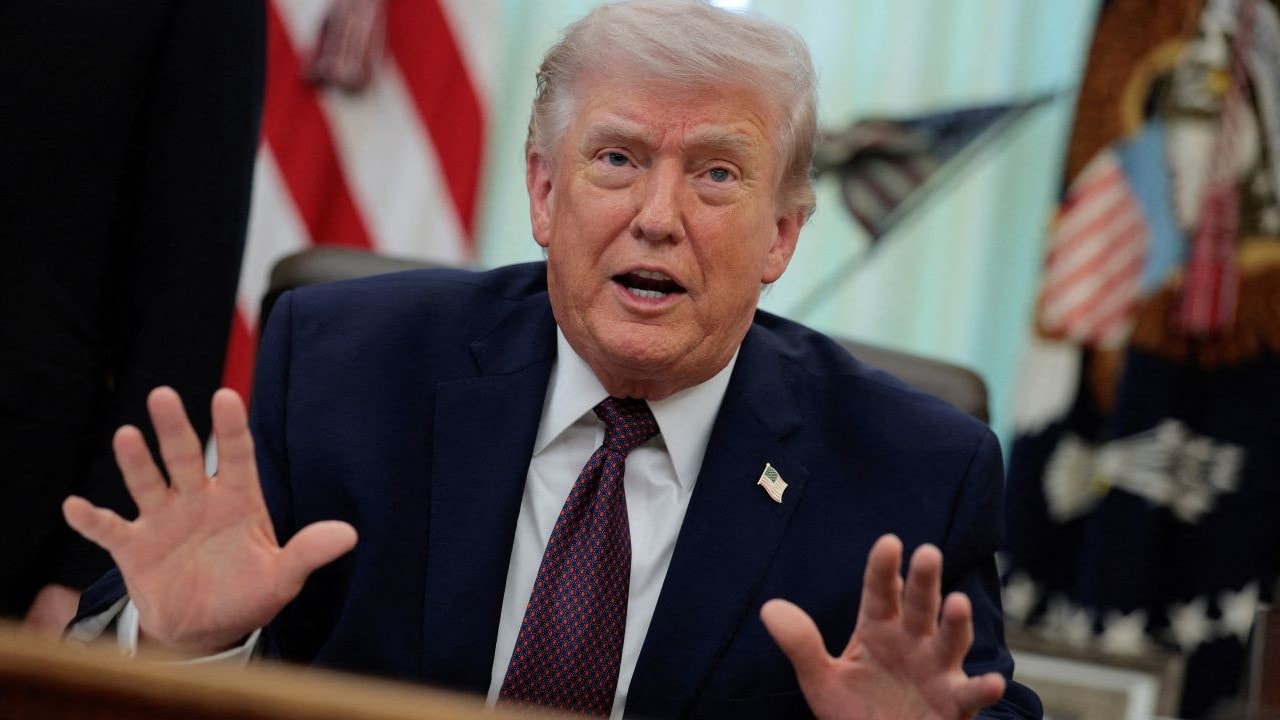
Donald Trump’s latest Truth Social post was anything but subtle. He gave Tehran two days to "make a deal or open up the Hormuz Strait" before "all hell" breaks loose. To the uninitiated, this might look like the same transactional poker Trump played in 2018. It isn't. The leverage has shifted fundamentally because the red lines have already been crossed and the missiles have already flown.
Since the joint U.S.-Israeli strikes began on February 28, 2026—a campaign codenamed Operation Epic Fury—the Iranian regime has been operating in a state of decapitated chaos. The assassination of Ali Khamenei didn't just remove a figurehead; it shattered the theological and political glue holding the Islamic Republic together. The "new" decision-makers in Tehran, a desperate collection of second-tier pragmatists and terrified IRGC holdovers, are now staring at a U.S. demand that goes far beyond the original 2015 JCPOA.
Trump isn't asking for a freeze. He is demanding a full dismantlement of every centrifuge, the removal of all enriched material, and a 20-year moratorium on any activity that even smells like a nuclear program.
Why Diplomacy Failed and War Began
The current crisis wasn't inevitable, but it was predictable. When Trump returned to office, he found an Iran that had spent years creeping toward "breakout capacity"—the ability to produce enough weapons-grade uranium for a bomb in a matter of days. The Biden-era attempts at resuscitation had left the gears of sanctions grinding against a shadow economy that Iran had learned to navigate with the help of Chinese "tea houses" and Russian hardware.
By early 2025, the U.S. intelligence community warned that Tehran was no longer just hedging; they were sprinting. The response was a 15-point plan that essentially asked Iran to cease being a revolutionary state. When the Iranian delegation balked, Trump didn't return to the table. He moved a second aircraft carrier into the Persian Gulf.
The situation spiraled when Iran attempted to use its old playbook: harassing tankers in the Strait of Hormuz to spike oil prices and force a Western retreat. This time, the calculation was wrong. Instead of a cautious naval escort, the U.S. and Israel launched a preemptive strike that took out the heart of the regime's command structure.
The Cost of the Deadlock
The world is currently feeling the "Iran War" at the gas pump and in the supermarket.
- Oil Volatility: Brent crude has been whipped by every tweet, dropping 4% one day on rumors of a ceasefire and spiking the next when the IAEA declared Iran in breach of its non-proliferation obligations.
- Regional Devastation: The conflict has spilled into Lebanon, effectively reigniting a full-scale war between Israel and Hezbollah, with over 2,000 casualties reported in the last few months alone.
- The Humanitarian Toll: Inside Iran, the economy isn't just recessed; it is evaporating. Rolling blackouts are the norm. The domestic opposition, emboldened by the regime’s weakness, is facing a brutal crackdown even as the government tries to negotiate its own survival.
The U.S. Treasury has moved to suffocate the remaining life out of the Iranian Rial by targeting six Chinese chemical companies and a network of shell companies in the UAE and Hong Kong. The goal is "Zero Oil," and for the first time in forty years, it looks physically achievable through a naval blockade.
The Negotiating Table in Islamabad
Despite the bombs, the talking hasn't stopped—it has just moved to more neutral ground. In Islamabad and Muscat, diplomats like Abbas Araghchi have been trying to trade a "moratorium" for a "comprehensive economic settlement."
The sticking point is simple. The U.S. wants Zero Enrichment. Iran wants a civilian nuclear program for "energy security." In a country where the lights go out every four hours, that argument has some domestic weight, but it holds zero water in Washington. Vice President JD Vance has been clear: the U.S. will not accept any "tools" that enable a quick breakout.
The Terms on the Table
| U.S. Demand | Iranian Counter-Offer |
|---|---|
| Full dismantlement of all centrifuges | Dilution of 60% enriched uranium |
| 20-year enrichment ban | 5-year pause with "research" rights |
| Permanent access for IAEA inspectors | Managed access to military sites |
| Termination of ballistic missile program | Limits on range, but not production |
The Shadow of the Strait
The Strait of Hormuz remains the ultimate hostage. Iran has threatened to "open the gates of hell" if the U.S. blockade continues. Meanwhile, the U.S. Navy is prepared to treat any Iranian naval movement as an act of war.
This isn't just about nukes anymore. It’s about who controls the flow of energy for the next decade. If Trump gets his "Big Deal," he secures a Middle East where Iran is a neutered middle power. If he fails, and the 48-hour deadline passes without a signature, the next phase won't be a targeted strike. It will be a systematic dismantling of Iran’s ability to function as a modern state.
The Iranian leadership is currently debating whether they fear the "Great Satan" more than they fear their own people. With a temporary two-week ceasefire set to expire, the pragmatists in Tehran are running out of excuses to give the hardliners in the IRGC. They have 48 hours to decide if the nuclear dream is worth a national funeral.
The 2026 Iran War Explained
This video provides critical context on the shifting red lines and the specific diplomatic hurdles currently stalling the ceasefire negotiations in Islamabad.
http://googleusercontent.com/youtube_content/1