The screen flickers in the dim corridor of a metropolitan hospital at 3:14 AM. Dr. Elena Vance rubs her eyes, staring at a blinking cursor. Behind it sits an unread mountain of medical charts, lab results, and referral letters that stretches across digital folders like an endless brick wall. She is not a machine. She is a cardiologist who has been awake for nineteen hours. Her mind, once sharp enough to trace the fragile electrical pathways of a failing human heart, now feels like it is wading through wet cement. Every click of her mouse is heavy. Every chart is a minefield of missed details.
This is the silent crisis of modern medicine. It is not a lack of brilliance or a shortage of compassion. It is paperwork.
For decades, we built our healthcare systems around the assumption that human endurance is infinite. We asked physicians to act as data entry clerks, compliance officers, and clinical detectives all at once. The cost of that delusion is measured in chronic burnout, delayed diagnoses, and the quiet, heavy exhaustion that hangs over the nursing stations of every hospital on Earth.
Then came a shift. Not a noisy revolution of science fiction robots, but a quiet, well-funded bet on a different kind of partner.
Europe just poured five billion euros into a venture fund with a singular, urgent focus: artificial intelligence in healthcare. At the center of this massive capital wave stands Tandem Health, an AI medical assistant designed not to replace the healer, but to lift the anchor dragging down their spirit.
To understand why a five-billion-euro war chest matters, you have to step inside the exam room.
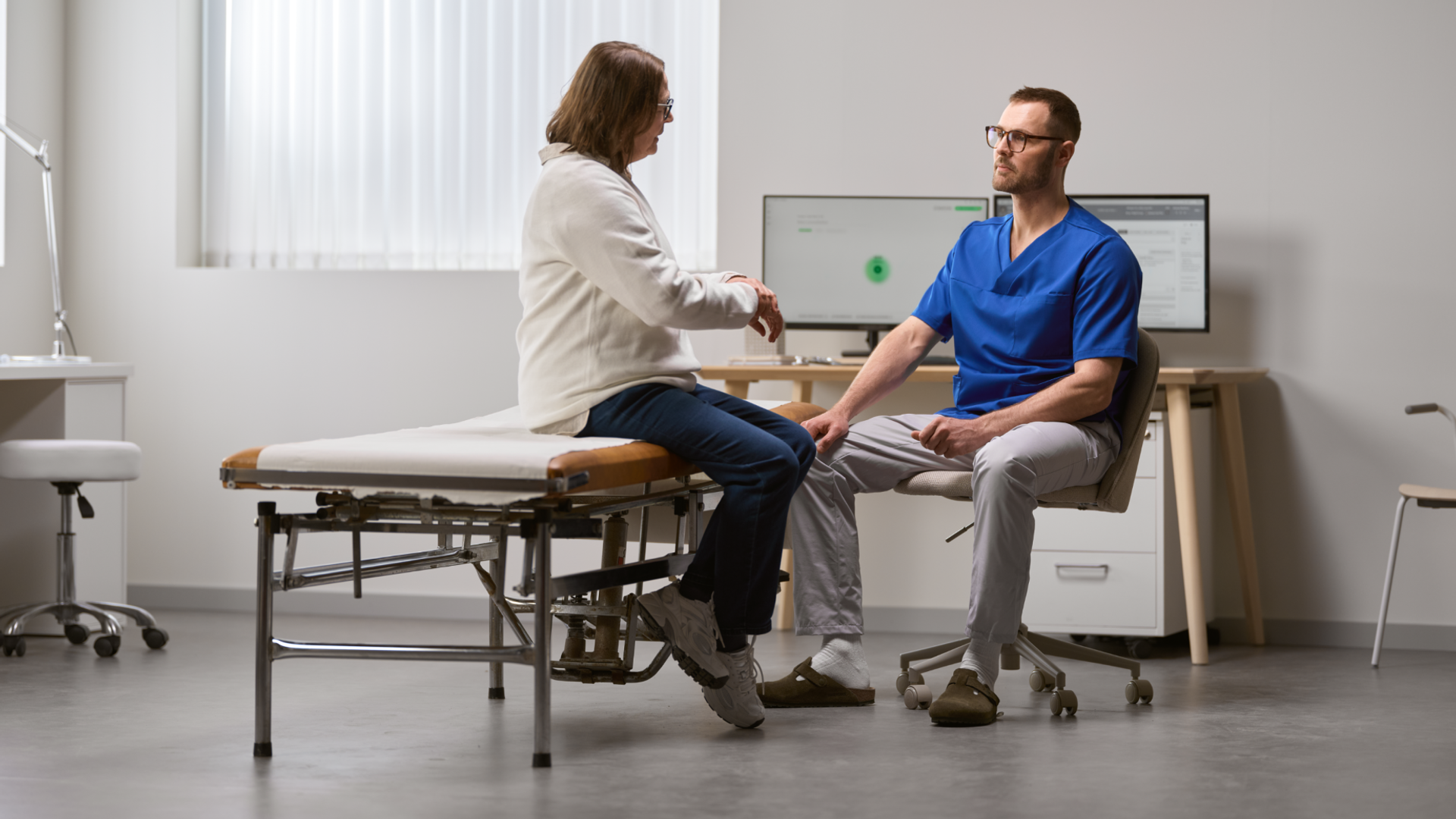
Imagine Dr. Vance sitting across from Marcus, a sixty-two-year-old carpenter with a stuttering pulse and a portfolio of vague chest pains. In an ideal world, she looks him in the eye, catches the subtle tremor in his hands, and listens to the cadence of his voice. In the real world, her fingers fly across a keyboard, capturing every syllable for the electronic health record because insurance companies and legal frameworks demand a digital paper trail. She is looking at glass, not at Marcus.
Burnout is born in that gap. Physicians spend up to half their working hours wrestling with administrative chores. They are drowning in documentation.
Tandem Health approaches this friction point with radical simplicity. It listens. Operating quietly in the background, the AI listens to the natural dialogue between doctor and patient, translating spoken conversation into structured, accurate clinical notes in real time.
Note the distinction here. This is not a distant chatbot prescribing pills from a server farm. It is a digital stenographer that understands medical terminology, contextualizes symptoms, and structures a clinical narrative while the human physician focuses entirely on the human being in front of them.
When a venture fund of this magnitude backs a technology like Tandem Health, venture capitalists are not just chasing financial returns. They are betting on the recovery of human attention.
Money talks, but in technology, capital shouts its intentions from the rooftops. A five-billion-euro commitment signals that the friction between clinical care and administrative overload has reached an unsustainable breaking point. For years, digital health tools were clumsy, forcing doctors to click through twenty different menus just to record a blood pressure reading. They added to the burden instead of lightening it.
The market has matured. The investors funding this new wave understand that software must be invisible to be effective. It must work the way human beings actually talk and think.
Consider what happens next. When a doctor saves two hours of typing every single shift, those hours do not vanish into thin air. They reappear as an extra minute of eye contact with a frightened patient. They materialize as a careful, unhurried review of a complex lab panel that might have otherwise been glossed over in a haze of fatigue. They translate into a clinician driving home at a reasonable hour with enough mental energy left to remember what joy feels like outside the hospital walls.
Yet, skepticism is not just healthy; it is essential. Whenever silicon enters the sanctuary of the exam room, alarm bells ring. Who owns the data? Can an algorithm truly capture the subtle nuance of human pain, the unspoken dread behind a nervous laugh? What happens when the system misinterprets a phrase?
These are valid, haunting questions. The transition to AI-assisted medicine is fraught with ethical hazards. Privacy is not a luxury feature; it is the bedrock of the doctor-patient bond. If a patient believes their most vulnerable confessions are feeding a faceless corporate data harvest, the trust collapses.
This is why the architecture of tools like Tandem Health matters so profoundly. The focus must remain tethered to utility and security. The AI is a tool, no different in moral weight than a stethoscope or an MRI machine. A stethoscope does not diagnose the patient; it amplifies the heartbeat so the trained ear can listen. An AI assistant does not practice medicine; it captures the noise so the trained mind can think.
We have watched too many technological gold rushes promise utopia and deliver administrative nightmares. Remember the initial rollout of electronic health records two decades ago? We were promised efficiency. Instead, we got endless drop-down menus, carpal tunnel syndrome, and a wall between doctor and patient.
We must not repeat that mistake. The difference this time is that the technology is finally learning our language, rather than forcing us to learn computer code.
Back in the hospital at 4:00 AM, Dr. Vance finishes her final file. Her eyes sting. Her shoulders ache. She closes her laptop and walks out into the cool morning air, wondering how much longer she can sustain this pace.
She does not need a savior from Silicon Valley or a flashy press release about multi-billion-euro funds. She just needs a little bit of her time back. She needs the freedom to look her patients in the eye without a screen mediating every single interaction.
The five billion euros moving through the European venture ecosystem right now will not solve every problem in modern medicine. It will not cure cancer, and it will not fix fractured healthcare bureaucracies overnight. But it might just buy enough breathing room to let doctors be doctors again.
And in a world that often measures progress in speed and scale, the most radical innovation of all might simply be giving a tired physician the space to listen.