When a military broadcast turns into a flashpoint for political warfare, you know reality has taken a backseat. CBS launched its seasonal return with an exclusive recount of a downed US airman surviving behind enemy lines in Iran, but the aftermath revealed a deeply fractured public narrative.
The segment featured an F-15 weapons system operator, identified by the call sign Bravo, detailing how he ejected from his jet, crashed into an Iranian mountain ridge at terrifying speeds, and evaded capture for roughly 50 hours. While military survival stories usually command universal sympathy, this broadcast triggered an immediate media firestorm. Critics and media analysts didn't just question the production choices; they branded the entire broadcast as state-adjacent messaging designed to prop up an unpopular conflict.
The Anatomy of a High-Stakes Ejection
To understand the controversy, you have to look at what was actually reported. Bravo described the terrifying seconds of his ejection, stating his parachute failed to deploy properly on the first try, causing a catastrophic impact with the ground estimated between 70 and 100 miles per hour. Left with severe injuries in a hostile region near Isfahan, he relied on SERE training—Survival, Evasion, Resistance, and Escape—to hide from roughly 1,500 opposing forces tracking his movements like points on a radar map.
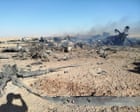
US Central Command chief Admiral Brad Cooper and other high-ranking defense officials walked viewers through the massive rescue operation. It wasn't just a simple extraction. Over 90 elite special operators deployed into hostile territory, backed by dozens of aircraft, to pull the service members out before destroying their marooned jet to protect classified technology. President Donald Trump famously hailed the successful extraction as an Easter miracle.
Why Viewers Saw Propaganda Instead of Journalism
Despite the dramatic details, the public reception split down raw political lines. Social media platforms flooded with accusations that the feature functioned as a public relations tool for Defense Secretary Pete Hegseth and the administration's military strategy. Critics pointed to the heavy emphasis on divine intervention, emotional family reunions, and heroic framing as classic ingredients of wartime narrative-building.
Reports later surfaced indicating that defense leadership and administration associates heavily encouraged the participating airmen to take part in the interview. For skeptics, this collaboration crossed the line from objective journalism into managed perception. Media commentators didn't hold back, arguing that the interview sidestepped hard questions about the broader strategic reality of the war in favor of emotional theater designed to soften public opposition.
The Clash Between Personal Valor and Political Optics
The fundamental tension of the broadcast lies in a jarring disconnect. On one hand, you have a genuine human story of extreme physical trauma, tactical survival, and military camaraderie. Enduring a high-speed crash and fifty hours of isolation in enemy territory requires a staggering amount of grit.
On the other hand, media consumers are exhausted by conflicts that lack clear resolutions. When a network prime-time slot focuses intensely on a dramatic rescue while the wider geopolitical strategy remains deeply controversial, viewers smell a whitewash. The backlash highlights a modern crisis of trust in institutional reporting. When citizens assume every uplifting military broadcast has a hidden political agenda, even authentic acts of courage get dragged into the mud of partisan debate.
Look past the glossy production and the fierce online arguments. The reality of modern military engagements involves real people facing brutal physical consequences, regardless of how aggressively politicians try to spin the headlines for domestic gain.
Extended Interview: Air Force officer shot down in Iran on surviving behind enemy lines
This video provides the extended primary source interview of the downed airman detailing his survival and rescue operations behind enemy lines.