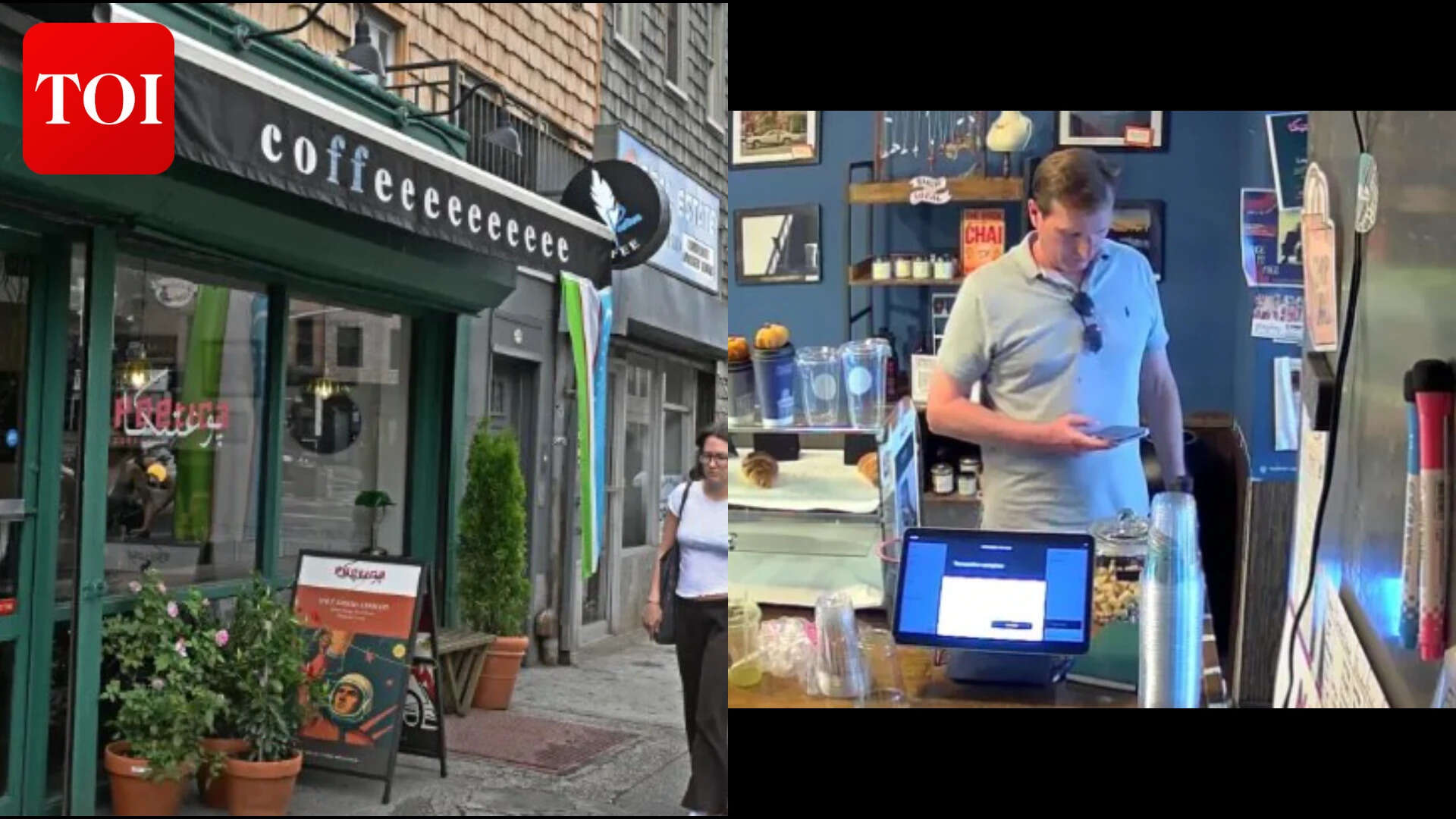
The door was never supposed to close on anyone.
If you wandered onto Lorimer Street in Brooklyn and looked up Poetica Coffee online, you would find a digital manifesto invoking mehmon—the traditional Uzbek concept of the sacred guest. The shop prided itself on unconditional dignity. In their own words, it was a place where tea gets poured before anyone asks who you are. For another view, read: this related article.
Then the world rushed in.
On a Sunday afternoon, a father and his seven-year-old daughter walked into the cafe. The girl needed a restroom. The barista, wearing a hijab, was exceptionally kind. She unlocked the door for the child, asking for nothing in return. Grateful for this small piece of human grace in a friction-filled city, the father bought a coffee to say thank you. He left a generous tip. Further insight regarding this has been published by BBC News.
The transaction totaled $9.82.
But the father wasn't just a neighbor running errands. He was Representative Dan Goldman, an openly centrist, Jewish congressman representing New York's 10th district. And in the fractured sociopolitical climate of 2026, a cup of coffee is rarely just a cup of coffee.
Hours later, the warmth of that counter interaction evaporated. The cafe’s management checked their security footage, recognized the lawmaker, and took to Instagram. They posted a screenshot of Goldman standing at the register.
The caption read: "Do you see how it doesn't taste like genocide juice? Or are you still having a hard time telling the difference?"
The business announced it had retroactively refunded his $9.82. They added that they didn’t want money that was "probably coming from AIPAC anyways," labeled him a "genocide enabler," and told him never to return.
With a few keystrokes, a moment of mutual neighborhood kindness was weaponized into a viral ideological boundary line.
The Disappearing Common Ground
We are living through an era where public spaces are being rapidly stripped of their neutrality. Consider what happens when the local grocery store, the neighborhood bookstore, or the corner espresso bar decides that their primary product is no longer sustenance, but absolute ideological alignment.
The digital backlash was instantaneous and predictable. The cafe’s social channels blew up. Death threats flooded the owner's inbox, prompting an NYPD notification. Online review platforms were bombarded with one-star reviews from people who had never set foot in Brooklyn. By Monday, the cafe's Instagram account was completely deactivated.
The federal government moved even faster. Assistant Attorney General Harmeet Dhillon announced that the US Department of Justice’s Civil Rights Division had opened a formal probe into the incident to see if federal public accommodation laws—which bar businesses from discriminating against patrons based on race, religion, or national origin—were broken.
The legal machinery is massive. But the psychological impact hits closer to home.
Mark Treyger, CEO of the Jewish Community Relations Council of New York, captured the quiet dread lingering beneath the headlines. He asked a question that goes straight to the heart of our current cultural anxiety: “If an identifiable Jewish customer walks into a coffee shop wearing a kippah or Magen David, are they expected to first disclose their views on Middle East policy before being served?”
The Nuance Lost in the Noise
The bitter irony of the internet's public shaming ritual is how severely it flattens the people it targets.
To the internet activists controlling the cafe's account, Goldman was a caricature—a monolith representing a foreign military campaign. But the reality of political identity is messy, layered, and deeply human. Goldman has repeatedly described the war in Gaza as a "humanitarian catastrophe" and publicly called out Prime Minister Benjamin Netanyahu’s coalition as an "extremist government" that "unjustly hurts Palestinians".
Yet, because he supports the baseline existence of Israel as a Jewish state, he failed the purity test.
When the transactional spaces of our lives require a geopolitical screening process, the social fabric doesn't just fray—it tears completely. The barista and the congressman had already solved the problem. They had interacted as two humans in a room: one helping a child, the other expressing gratitude. They didn't need a peace treaty to share a moment of decency.
Goldman reflected on this later, calling the situation profoundly sad. He noted how jarring it was that a face-to-face human connection could be so utterly diametric to the digital venom that followed it.
The $9.82 was returned to Goldman's bank account. The point had been made, the digital borders drawn, and a small neighborhood business swallowed by the very rage it sought to wield.
We are left standing on a very cold street corner, wondering exactly where we are allowed to sit down, look across the table at someone we don't understand, and just pass the sugar.


