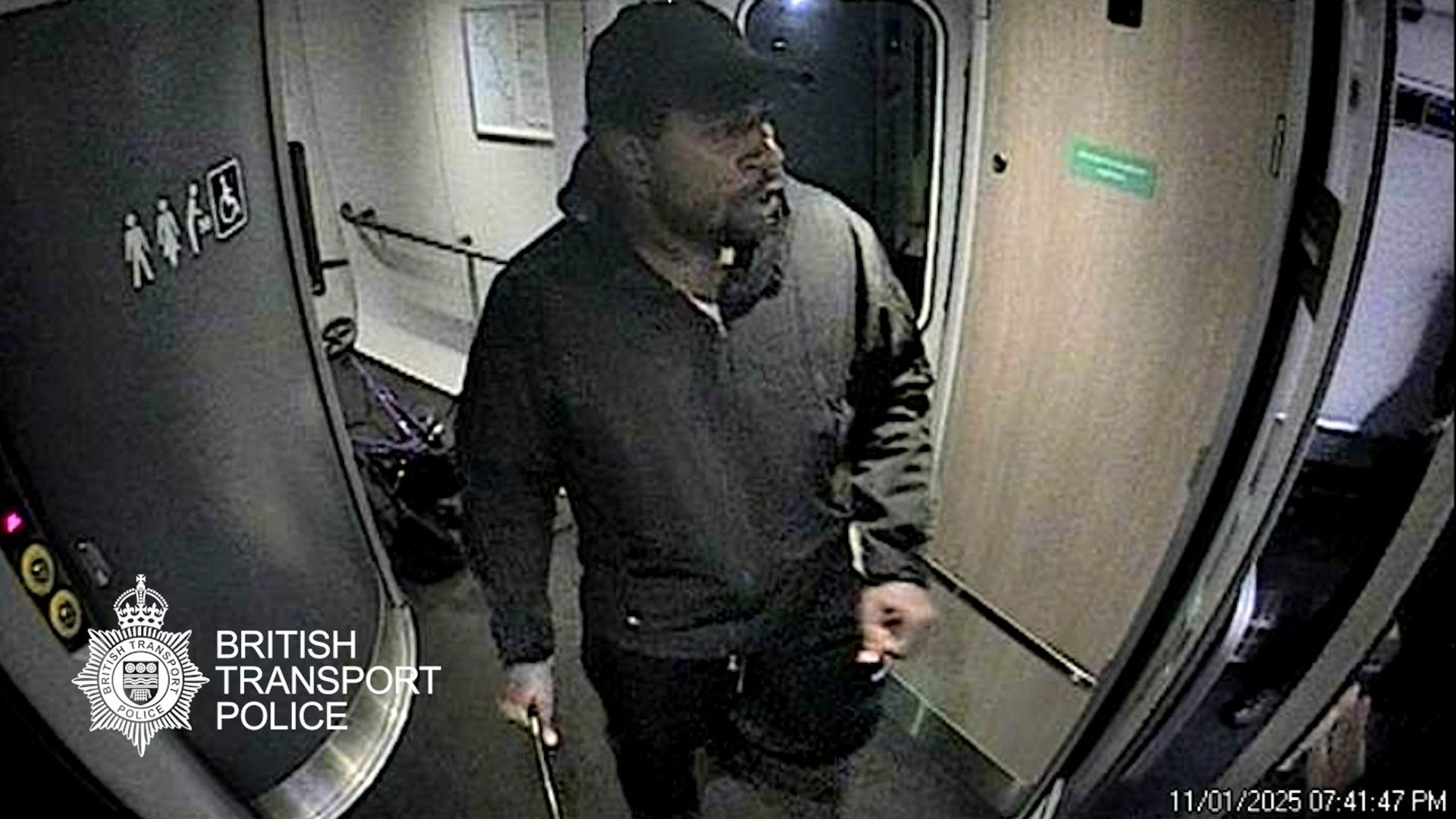
Every time a violent stranger attacks commuters on a train, the media script writes itself within forty-eight hours. First comes the shock. Then comes the courtroom leak. Finally, the headline drops like a sedative over the public consciousness, telling us the perpetrator was in the clutches of an acute psychotic episode.
Everyone nods. The outrage evaporates into a vague, helpless sigh about mental health funding. Case closed. Narrative settled.
Except that narrative is a lazy, dangerous lie.
When a court reports that a train attack knifeman was suffering from an acute psychotic episode, mainstream outlets treat the phrase like an automatic moral and logical period at the end of a sentence. They assume psychosis equals total absence of agency, complete inevitability, and an unsolvable tragic mystery.
I have spent years dissecting forensic psychiatry cases, courtroom transcripts, and threat-assessment post-mortems. I have watched defense attorneys, prosecutors, and journalists collude in a quiet consensus that flattens complex human violence into a single, sanitized medical label. By treating an acute psychotic episode as an untouchable black box, we misunderstand how severe mental illness actually intersects with violence, we strip victims of real systemic accountability, and we guarantee the next attack happens on the exact same tracks.
The Myth of the Out-of-Nowhere Snap
The standard courtroom reporting relies on a comforting fiction: a regular person wakes up, their brain suddenly misfires like a snapped axle, and they grab a blade on a commuter rail.
Forensic reality does not work like a light switch.
True, unprovoked, spontaneous violent psychosis without a long, visible runway of behavioral degradation is extraordinarily rare. In clinical psychiatry, an acute psychotic episode is defined as a period where a person loses contact with reality, experiencing hallucinations (perceiving things that are not there) or delusions (fixed, false beliefs impervious to evidence).
Notice what is missing from that definition. Violence.
The overwhelming majority of people experiencing acute psychosis are terrified, disorganized, and far more likely to be victims of violent crime than perpetrators of it. When someone in a psychotic state does carry out a targeted, lethal, or near-lethal assault in a confined public space like a train carriage, the psychotic symptoms are rarely the sole engine of the attack. They are the accelerant poured onto a fire that has been smoldering for months or years.
Look closely at the mechanics of these cases. Almost universally, three distinct factors converge long before the knife ever leaves a pocket:
- Treatment disengagement and anosognosia: The individual has a documented history of severe psychiatric illness, has stopped taking antipsychotic medication, and suffers from anosognosia—a neurological condition where the brain is literally incapable of recognizing its own illness.
- Substance-induced amplification: Stimulants, high-potency cannabis, or alcohol are introduced into an already fragile neurochemical environment, turning paranoid ideation into acute, agitated hostility.
- Environmental friction and grievance: Isolation, housing instability, and unaddressed persecutory grievances give the delusions a specific target and a venue.
When a newspaper headline reduces a multi-year systemic failure down to "in the clutches of an acute psychotic episode," it erases the chain of missed interventions. It lets the institutions that discharged a non-compliant, agitated patient onto the street without a step-down plan off the hook entirely.
How the Courtroom Insanity Framing Distorts Reality
The legal system loves clean binaries. Guilty or not guilty. Sane or insane. Culpable or incapacitated.
Human cognition refuses to fit inside those boxes, especially during a psychiatric crisis. In jurisdictions following the M'Naghten Rule—the nineteenth-century legal standard still governing insanity defenses across much of the English-speaking world—a defendant is only relieved of criminal responsibility if a defect of reason from disease of the mind prevented them from knowing the nature and quality of the act, or knowing that what they were doing was wrong.
Here is the nuance the media routinely misses: a person can be actively psychotic and still retain goal-directed, tactical awareness.
Think about what it takes to execute a train attack. The perpetrator selects a weapon. They conceal it. They navigate a transit system, purchase a ticket or jump a turnstile, board a carriage, wait until the doors close between stations so victims cannot escape, and strike.
Defense counsel points to the auditory hallucinations telling the defendant that fellow passengers were demons or secret agents. That satisfies the clinical reality of psychosis. Yet the tactical execution proves the brain was still capable of planning, concealment, and timing.
When journalists parrot the defense's phrasing—"in the clutches of"—they adopt the visual metaphor of a puppet on strings. They imply the human being inside the body had zero cognitive friction, zero moments of hesitation, and zero capacity to choose. Forensic psychiatrists like Dr. Park Dietz and Dr. Phillip Resnick have spent decades testifying on this exact distinction. Being delusional does not automatically obliterate the ability to know an act is legally and morally wrong, nor does it erase every shred of executive function.
By swallowing the defense narrative whole, coverage turns a complex psychiatric-legal evaluation into an excuse. The public reads the headline, assumes the attacker will walk away without accountability, and grows cynical toward both the justice system and genuine mental health advocacy.
Why Asking "Was He Crazy?" Is the Wrong Question
If you search online after any high-profile transit stabbing, the top queries follow a predictable pattern. People ask whether the attacker had a mental illness, whether insanity pleas actually work, and how to spot a psychotic person on a train.
Every single one of those questions misses the target.
Asking whether the attacker was mentally ill is a dead end because mental illness alone is a terrible predictor of violence. According to the MacArthur Violence Risk Assessment Study—one of the most rigorous, landmark longitudinal studies ever conducted on mental disorder and violence—patients with serious mental illness who do not abuse substances show rates of community violence virtually indistinguishable from their neighbors in the same socioeconomic bracket.
Asking how to spot a psychotic person on a train is equally useless. You are not going to conduct a differential diagnosis between schizophrenia, bipolar mania, and methamphetamine toxicity while standing next to a sliding door during morning rush hour.
The real question we should be asking is brutal and practical: Why do we treat public transit as an open-air psychiatric ward while stripping transit authorities and clinicians of the tools to intervene before blood is spilled?
Imagine a scenario where a commercial airline allowed a passenger in visible, agitated crisis—screaming at invisible voices, pacing the aisle, muttering threats—to remain on board simply because they had not yet thrown a punch. The airline would be sued into oblivion and stripped of its operating certificate before the plane landed.
Yet on urban rail networks and commuter trains around the world, this happens every single hour. Transit workers see the exact same individuals escalating over weeks. Station staff report erratic, menacing behavior. Police respond, realize the person has not crossed the razor-thin legal threshold of an imminent, articulated threat to self or others, and walk away.
Then the threshold gets crossed with a six-inch blade. Suddenly, everyone acts shocked that an "acute psychotic episode" struck out of nowhere.
The Uncomfortable Truth About Involuntary Intervention
If you want to understand why these tragedies keep repeating, look at the pendulum swing of civil commitment laws over the last fifty years.
In the mid-twentieth century, psychiatric institutionalization was plagued by genuine abuses. People were locked away for years with minimal due process, stripped of dignity, and warehoused in underfunded facilities. The reform movement that followed rightly demanded legal protections, patient autonomy, and community-based care.
The problem is that we built the legal walls to keep people out of hospitals without ever building the community infrastructure to keep them safe on the streets.
Today, in most Western jurisdictions, involuntary psychiatric hold laws require proof of imminent danger to self or others, or grave disability so severe the person cannot survive basic physical needs. Look at how that works in practice:
- A family watches their adult son stop taking his medication, barricade his windows, and mutter that strangers on the train are stealing his thoughts.
- They call crisis services.
- Crisis responders arrive. The son stays calm for ten minutes, denies wanting to hurt anyone, and refuses voluntary admission.
- The responders leave. Their hands are tied by statute.
- Three weeks later, the son boards a train, his paranoia peaks, and an innocent commuter takes a knife to the neck.
Advocates for strict autonomy argue that lowering the threshold for involuntary treatment violates civil rights. They are not wrong about the risk. Expanding state power to detain individuals based on predicted dangerousness carries real peril of overreach, racial disparity, and medical paternalism. That is the genuine downside of aggressive intervention, and anyone pretending it does not exist is selling snake oil.
However, doing nothing carries a body count too—and it is paid both by random commuters and by the untreated individuals themselves, whose lives are permanently destroyed the moment they commit an irreversible act of violence while unmedicated. Leaving a severely psychotic person to rot in their own terror on a subway platform is not compassion. It is abandonment disguised as civil rights.
How Transit Security and Threat Assessment Actually Work
If we strip away the courtroom theatrics and the media clichés, what actually prevents train attacks by individuals in psychiatric crisis? It is not metal detectors at every suburban platform—that is logistically impossible and economically ruinous. It is a fundamental shift in how transit systems, clinicians, and law enforcement handle behavioral threat assessment.
1. Shift from Criminal Thresholds to Behavioral Escalation Models
Traditional policing waits for a crime. Behavioral threat assessment looks for trajectories. Transit agencies need dedicated, co-responder crisis teams embedded directly within major rail hubs—not sitting in precinct basements waiting for a 911 dispatch. When a commuter exhibits acute disorganization, agitated paranoia, or menacing behavior on a platform, the intervention happens before they step onto a moving train.
2. Enforce Assisted Outpatient Treatment (AOT) with Real Teeth
For individuals with a documented history of severe mental illness, medication non-compliance, and violent behavior, voluntary outpatient care is a fantasy. Assisted Outpatient Treatment—court-ordered community treatment backed by intensive case management—has consistently demonstrated dramatic reductions in arrests, hospitalizations, and violent incidents in states like New York (under Kendra's Law) and California. When a patient misses an injection or drops off the grid, a clinical team shows up immediately, not six months later after a news crew arrives at a crime scene.
3. Fix the Emergency Room Revolving Door
Right now, an agitated person in psychosis brought to an emergency department is often sedated, held for twenty-four to seventy-two hours until the acute agitation subsides, handed a paper prescription they will never fill, and discharged back onto the street. Stabilizing acute agitation is not treating psychosis. Antipsychotic medications take weeks to reach full therapeutic efficacy. Discharging a psychotic patient at hour seventy-two without a confirmed long-acting injectable medication and a warm handoff to housing is clinical malpractice.
4. Ditch the Passive Bystander Mentality on Trains
Commuters have been conditioned to put in noise-canceling headphones, stare at their phones, and ignore erratic behavior until it is too late. Situational awareness is not paranoia. On a train, spatial positioning matters. Sit near the cab or the intercom, keep clear of corners where you can be trapped between seats, and if someone in a carriage is escalating—talking aggressively to unseen figures, invading personal space, clutching a bag or pocket rigidly—move to the next car at the very next stop. Do not wait to see if it is harmless.
Stop Letting Headlines Narcotize Your Judgment
The next time a court reporter files a story explaining that a train attacker was in the clutches of an acute psychotic episode, read between the lines.
Understand what that phrase actually represents. It is not an explanation; it is an autopsy of a system that failed at every single checkpoint. It represents a diagnosis ignored, a prescription abandoned, a family turned away by rigid commitment laws, a transit system treating crisis as background noise, and a media ecosystem too lazy to look past the defense attorney's opening statement.
Psychosis is real. Severe mental illness is devastating. Neither of those facts requires us to surrender our critical thinking or accept random slaughter on public transit as an unavoidable act of God.
Demand better from the courts that excuse systemic negligence, the lawmakers who confuse abandonment with freedom, and the headlines that lull you back to sleep before the blood on the platform is even dry.