Airspace security protocols surrounding high-value political figures operate on a strict matrix of proactive deterrence and reactive intercept mechanics. When the North American Aerospace Defense Command launched F-16 fighter jets to intercept civilian aircraft violating Temporary Flight Restrictions over Bedminster, New Jersey, the action highlighted the fragile interface between general aviation and high-security presidential perimeters. Deconstructing this event requires analyzing three core variables: the mechanics of Notice to Air Missions distribution, the operational cost function of intercept scrambles, and the structural vulnerabilities inherent in decentralized general aviation tracking.
The Mechanics of Temporary Flight Restrictions
Temporary Flight Restrictions, commonly designated as TFRs, establish a sovereign bubble around protected individuals. For a presidential site like the Bedminster golf club, the Federal Aviation Administration maps out a concentric multi-mile exclusion zone divided into inner core and outer ring tiers.
[ Outer Ring: Communication Required ] ---> [ Inner Core: Absolute Exclusion ] ---> [ Target Asset: Presidential Presence ]
Pilots operating general aviation aircraft are legally mandated to ingest Notice to Air Missions data before every flight plan filing. Failures at this stage typically stem from three operational bottlenecks:
- Inadequate pre-flight briefing software utilization by independent pilots.
- High density of localized general aviation fields surrounding the New York metropolitan approach vectors.
- Temporal lag between dynamic schedule updates and static aeronautical chart caching.
When a pilot launches without checking real-time advisories, they enter an information vacuum. The aircraft transitions from a neutral civilian asset into an unidentified radar return crossing a sovereign boundary.
The Cost Function and Intercept Sequence
The North American Aerospace Defense Command operates a continuous continental defense posture handled by the Continental U.S. Region. When radar systems flag an unauthorized penetration of a presidential TFR, the response escalation follows a strict algorithmic timeline:
- Detection and Identification: Ground radar and airborne warning systems classify the transponder signature and trajectory vector relative to the protected asset.
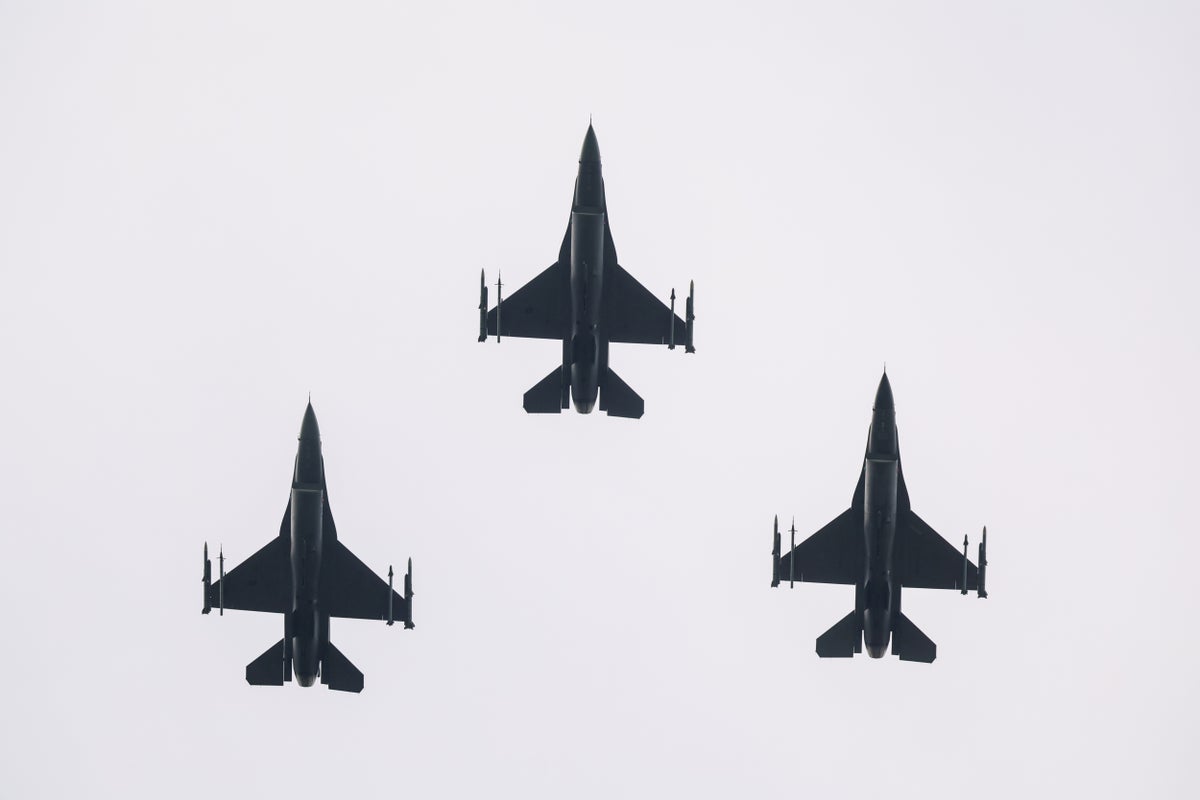
- Scramble Authorization: Tactical commanders order quick-reaction alert fighter assets into the air. In the Bedminster incidents, F-16 Fighting Falcons deployed to intercept the stray aircraft.
- Visual Identification: Fighter pilots execute a standard intercept maneuver, approaching the civilian cockpit to assess pilot intent, verify cockpit behavior, and establish radio contact on emergency frequencies.
- Escort or Kinetic Resolution: If communication fails or hostility is suspected, the interceptor uses standardized signaling, including wing rocks and tactical flares, to force compliance and escort the aircraft out of the restricted tier.
The marginal cost of deploying supersonic military jets for civilian navigation errors is exceptionally high. Fuel burn, airframe wear, and pilot hours represent a direct systemic inefficiency caused by minor pilot negligence. Furthermore, secondary disruptions ripple through regional logistics, such as the thirteen-minute departure delay experienced by presidential transport assets during subsequent alert triggers.
Structural Vulnerabilities in General Aviation Oversight
The recurrence of airspace violations near high-profile locations points to a systemic breakdown in pilot situational awareness rather than coordinated malice. General aviation relies heavily on voluntary compliance. Unlike commercial airliners managed by professional dispatchers and automated flight management systems, small private aircraft often operate with minimal avionics redundancy.
To eliminate these friction points, airspace management must shift from reactive military interdiction to predictive digital geofencing. Integrating real-time TFR polygons directly into consumer cockpit GPS units via automatic dependent surveillance-broadcast networks would provide immediate audio-visual warnings before a pilot crosses a restricted boundary. Until such systemic upgrades become mandatory, military assets will remain the primary enforcement mechanism for administrative oversight failures.
F-16s intercept two aircraft near Trump's New Jersey golf club
This video provides primary broadcast footage of the aerial intercept mechanics and visual context of the security perimeter surrounding the Bedminster airspace.
http://googleusercontent.com/youtube_content/1
:max_bytes(150000):strip_icc()/ar-American-Cheese-taste-test-horizon-4x3-54cc339550cd44b9a818c17bdfd5428d.jpg)