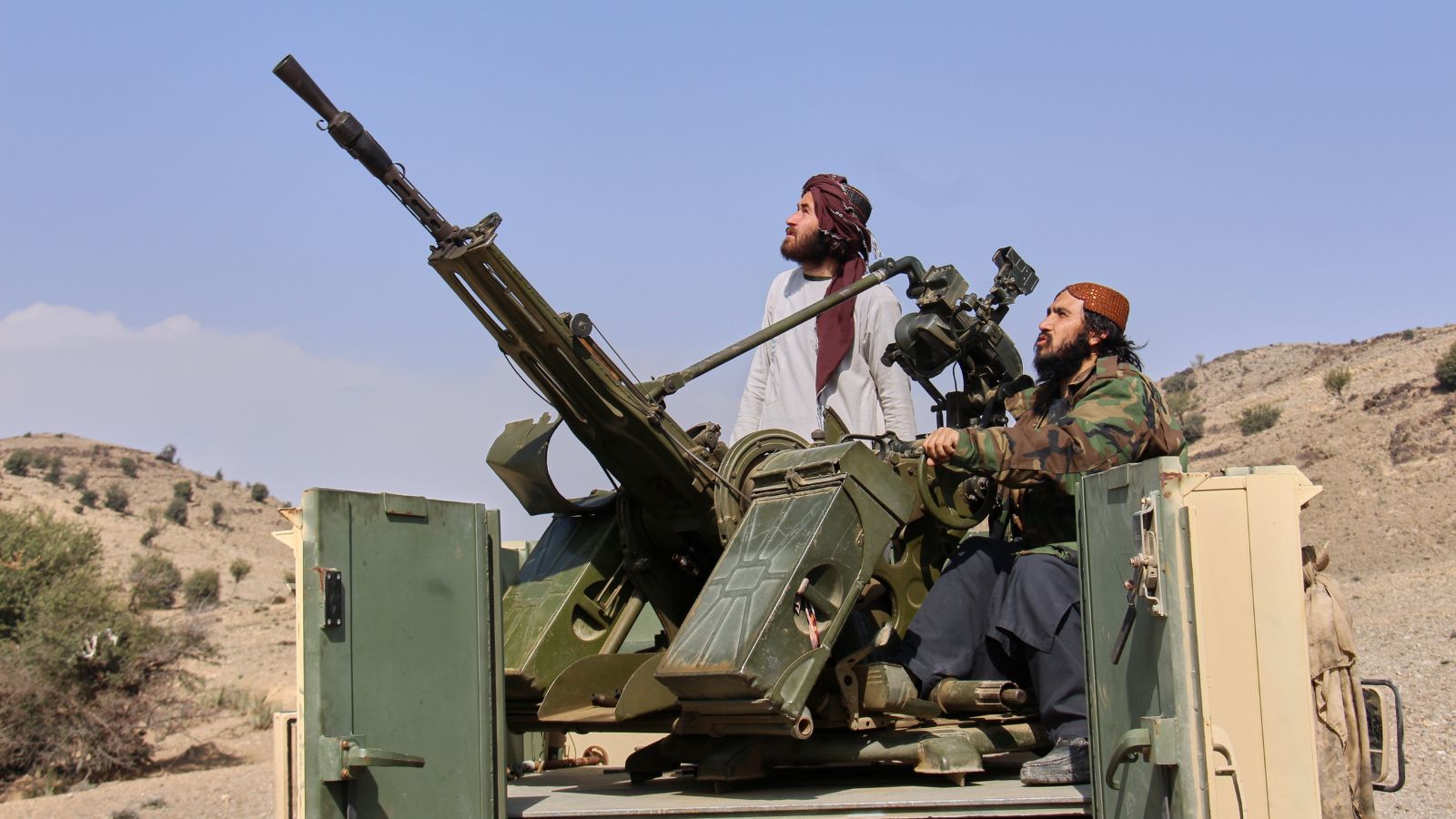
Western media loves a predictable script. When Pakistani jets cross the Durand Line and bombs drop on Khost and Paktika provinces, the mainstream press instantly rolls out its favorite template: "Why Are Pakistan and Afghanistan Fighting Again?" They point to the tragic loss of civilian lives, tally up the casualties, blame the Pakistani Taliban (TTP), and wring their hands over a "sudden escalation" between neighbor states.
It is an exhausting, lazy consensus. If you liked this piece, you might want to look at: this related article.
Pakistan and Afghanistan are not "fighting again" because they never stopped. More importantly, they are not two coherent nation-states locked in a standard geopolitical border dispute. To view this conflict through the lens of Westphalian sovereignty—where government A fights government B over a defined line on a map—is to completely misunderstand the tribal, economic, and military realities of the region.
The mainstream narrative treats the Durand Line like the 38th Parallel. It is not. The narrative treats the Taliban in Kabul and the military apparatus in Rawalpindi like rational state actors experiencing a diplomatic breakdown. They are not. If you want to understand why children are dying in border airstrikes, you have to stop asking why these two countries are fighting and start acknowledging that the border itself is an artificial construct holding up two failing political experiments. For another angle on this event, see the latest coverage from TIME.
The Myth of the Taliban Breakup
The most pervasive lie circulating in newsrooms is that Pakistan is shocked—shocked!—that the Afghan Taliban is harboring the TTP.
For two decades, mainstream analysts told us that Pakistan’s Inter-Services Intelligence (ISI) was playing a masterclass of double-dealing: backing the Afghan Taliban to oust the Americans, all while pretending to be Washington’s ally. The implicit assumption was that once the Taliban took Kabul, Pakistan would have its compliant, strategic depth on its western flank.
Now, those same analysts write articles filled with academic bewilderment. They ask how the Afghan Taliban could possibly turn on their old benefactors by letting the TTP launch cross-border raids that kill Pakistani soldiers.
Let’s dismantle this premise immediately. The Afghan Taliban and the TTP are not separate entities operating on distinct ideological planes. They are branches of the same ideological tree, bound by blood, intermarriage, and a shared Deobandist worldview. Expecting Hibatullah Akhundzada to hand over TTP chief Noor Wali Mehsud to Islamabad is like expecting a cartel boss to arrest his own brother because the neighbor complained about the noise.
I have spent years analyzing the cross-border militant networks in the Pashtun belt. The reality on the ground is brutally simple: the Afghan Taliban cannot crack down on the TTP even if they wanted to. To do so would cause a massive internal mutiny within their own ranks. Rank-and-file Afghan Taliban fighters view the TTP as brothers-in-arms who helped them defeat NATO. If the Kabul regime betrays the TTP to appease Pakistan, those battle-hardened fighters will simply defect to Islamic State Khorasan Province (ISKP).
Pakistan’s military leadership knew this. Or at least, they should have. The airstrikes inside Afghanistan are not a sign of strategic strength or a new foreign policy doctrine. They are an act of blind, tactical desperation by a Pakistani state that realizes its twenty-year proxy strategy completely backfired.
Dismantling the Deceptive Questions
When a border flare-up occurs, search engines spike with predictable queries. The answers provided by standard news outlets are usually sanitized nonsense. Let’s answer them honestly.
What triggered the recent Pakistani airstrikes?
The mainstream media will tell you it was a specific TTP attack on a military post in North Waziristan that killed seven Pakistani soldiers. That was merely the pretext. The real trigger is the absolute collapse of Pakistan's internal security matrix.
When the Pakistani military launched operations like Zarb-e-Azb and Radd-ul-Fasaad in the mid-2010s, they claimed they had broken the back of terrorism. They lied. They merely pushed the militants across an imaginary line into Afghanistan. Now that the U.S. is gone, those militants are coming home. The airstrikes are an attempt by Islamabad to project power to a domestic audience that is losing faith in the military’s ability to protect them.
Why won't Afghanistan recognize the Durand Line?
Mainstream explainers love to dive into the history of 1893, Sir Mortimer Durand, and the British Raj. They frame it as a historical grievance.
Here is the unvarnished truth: No Afghan government—whether it was the Soviet-backed communists, the Western-backed republics of Hamid Karzai and Ashraf Ghani, or the radical Islamist Taliban—has ever recognized the Durand Line. Why? Because to recognize the border is to politically sanction the bisection of the Pashtun nation.
Imagine a scenario where a foreign empire drew a line through the middle of Texas, told the people on both sides they were now different nationalities, and then walked away. The local population would ignore it. That is the Durand Line. It is a 1,600-mile scar through tribal lands. The Taliban refuse to recognize it not because they are stubborn religious zealots, but because no Afghan leader can sign away Pashtun inheritance and survive politically.
The Economics of Border Violence
Follow the money, and the "ideological" war looks a lot more like a corporate turf battle. The border between Pakistan and Afghanistan is one of the most lucrative smuggling corridors on the planet. We are talking about billions of dollars annually in untaxed consumer goods, electronics, narcotics, and weapons flowing through crossings like Torkham and Chaman.
+--------------------------------------------------------+
|             THE CROSS-BORDER SMUGGLING LOOP            |
+--------------------------------------------------------+
|                                                        |
|   [Pakistani Seaports] -> Karachi Transit Trade        |
|            |                                           |
|            v                                           |
|   [Duty-Free Goods] Entering Afghanistan               |
|            |                                           |
|            v                                           |
|   [Smuggled Back] Across Durand Line into Pakistan     |
|            |                                           |
|            v                                           |
|   [Black Market Revenue] Funds Militants & Corrupt     |
|                          Border Officials              |
+--------------------------------------------------------+
When Pakistan announced its massive deportation drive to expel 1.7 million undocumented Afghans, the media framed it purely as a counter-terrorism measure. It wasn't. It was an economic weapon.
By choking off the transit trade and tightening border controls, Pakistan tried to starve the Taliban regime of customs revenue. In response, the Taliban weaponized the TTP to increase the cost of business for the Pakistani military along the border.
The skirmishes we see are frequently the result of localized disputes over smuggling routes and extortion rackets. A local commander on the Pakistani side wants a bigger cut of the coal trucks coming out of Afghanistan; a Taliban commander on the other side retaliates with mortar fire. Rawalpindi and Kabul then wrap these criminal turf wars in the flags of national sovereignty.
The Hypocrisy of Sovereignty
The international community loves to lecture about the violation of sovereignty when Pakistani jets bomb Afghan territory. But sovereignty in this region is a fiction.
Pakistan has spent decades treating Afghanistan as its backyard, utilizing proxy groups to prevent Indian encirclement. Afghanistan, conversely, has used its territory as a safe haven for anti-Pakistan separatists and Islamists whenever it needed leverage against Islamabad.
Look at the actors involved:
- Pakistan: A nuclear-armed state facing an unprecedented balance-of-payments crisis, political instability, and an existential crisis of legitimacy regarding its military leadership.
- The Taliban: A militant group turned insurgent government that cannot pay its civil servants, cannot feed its population without UN handouts, and lacks international recognition.
When these two entities talk about "sovereignty," they are using the language of international law to mask internal weakness. Pakistan bombs Afghanistan because it cannot secure its own police stations in Peshawar and Quetta. The Taliban condemn the bombs because they cannot provide basic economic security to the people of Khost. It is a theater of distraction.
Stop Trying to Fix the Border
The conventional policy advice from Western think tanks is mind-numbingly repetitive: Both sides must engage in bilateral diplomacy, implement border fencing, and build institutional mechanisms for counter-terrorism cooperation.
This advice is worse than useless; it is dangerous because it sustains the illusion that a technocratic fix exists.
You cannot fence a border when the people living on both sides refuse to accept its existence. Pakistan has spent over $500 million fencing the Durand Line, installing fortresses, and deploying biometric scanning systems. The result? The TTP crosses it at will. They don't jump the fence; they cut it, bypass it through underground tunnels, or simply bribe the poorly paid border guards who are trying to survive inflation.
If you want to understand the grim reality of this conflict, you have to accept a deeply uncomfortable truth: The instability is the equilibrium.
The Pakistani military elite benefits from a perpetual, controlled threat on the western border. It justifies their outsized share of the national budget and their dominance over domestic politics. The Taliban benefits from having an external enemy to blame for the country's economic ruin under their medieval governance.
The civilian populations trapped in the middle—the families in Waziristan and the children in Khost—are not collateral damage in a temporary misunderstanding between two states. They are the permanent casualties of a system designed to keep both regimes alive.
The airstrikes will happen again next month. The press will rewrite the same article. The diplomats will express the same concern. And nothing will change, because everyone is looking at a map instead of looking at the regimes holding the crayons.