The coffee cups were still warm on the tables. Conversations drifted over the clatter of porcelain and the low hum of afternoon traffic just outside the frosted glass. In a city accustomed to the weight of history, an ordinary Tuesday afternoon usually offered a brief, quiet truce. People hurried between meetings, checked their phones for the weather, and planned their evenings. No one expected the air to turn to shrapnel.
Then came the detonation.
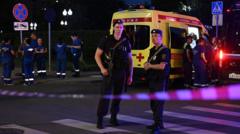
State media reports would later confirm the stark, brutal geometry of the event: a bomb tore through a restaurant in Moscow, leaving three people dead and several others wounded. Sirens quickly sliced through the chill, cutting off the city's usual rhythm. Flashing red lights painted the snow and the pavement in stark, erratic strokes. Emergency responders moved with practiced, grim urgency, cordoning off the block as smoke drifted lazily into the grey sky.
Numbers on a screen are easy to digest. Three dead. Several injured. An investigation underway. But statistics possess a cold insulation that keeps the human mind safely detached from reality. They protect us from feeling the true weight of a sudden, violent rupture.
Consider what happens inside a room when safety vanishes in a fraction of a second.
Before the blast, there was mundane routine. A waiter carrying a tray. A patron laughing at a whispered joke. A chef checking orders on a steel counter. These are the fragile threads that hold human life together, spun out of habit and the quiet assumption of tomorrow. When a device planted by human hands tears through that space, it doesn't just destroy wood and glass. It severs those threads instantly.
We live in an era where violence often arrives as disembodied headlines flashing across our pocket screens. We swipe past them while waiting for the subway or standing in grocery lines. We read the location, note the casualty count, and file the tragedy away into the vast, accumulating architecture of global unrest. It feels distant. Abstract.
Yet, every single digit in that casualty report represents a universe extinguished. It represents a phone that will ring unanswered tonight. It represents a kitchen table with an empty chair that nobody knows how to address yet.
The investigation in Moscow is ongoing. Investigators comb through twisted metal and ash, searching for triggers, signatures, and motives. Intelligence analysts pore over security footage, tracing the steps of whoever walked into that establishment and left behind an instrument of death. Security protocols will tighten across the capital. Checkpoints will multiply. Public spaces will feel a little more guarded, a little more fragile.
This is the hidden cost of such events. Beyond the immediate grief of the families and the trauma etched into the survivors, a quiet paranoia settles over millions. Trust is a heavy currency, and once spent, it is nearly impossible to recover. Every crowded venue, every cafe, every routine gathering suddenly carries an invisible asterisk.
We are left staring at the aftermath, forced to reconcile the fragility of our daily lives with the cold malice that sometimes walks among us. The smoke clears. The broken glass is swept away. The headlines eventually shift to the next developing crisis. But for those whose lives were touched by the sudden violence of that Moscow afternoon, the world has permanently changed shape.
Silence follows the sirens. The street grows cold. And the ordinary world tries, awkwardly and anxiously, to remember how to breathe again.