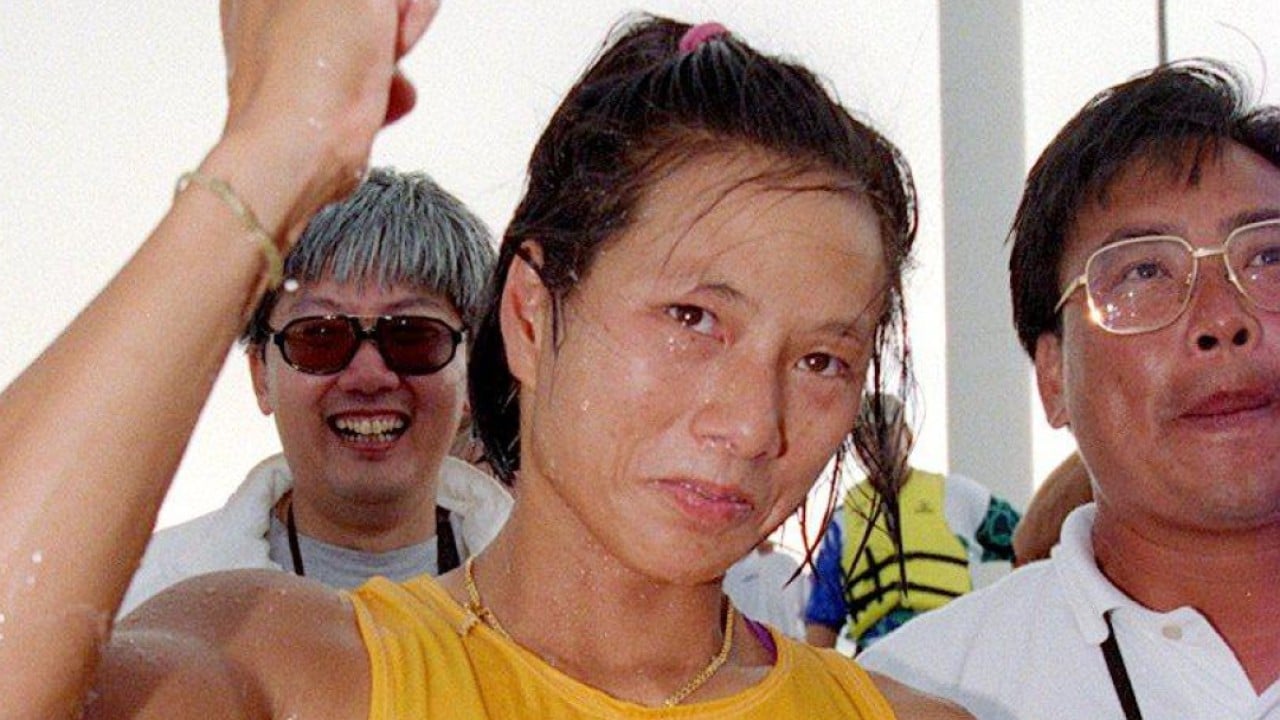
The air did not move. It sat heavy over the concrete and the acrylic courts, a thick blanket of trapped humidity and radiating glare that turned every breath into an act of negotiation.
Ninety-three degrees Fahrenheit. Thirty-four degrees Celsius. But numbers on a weather app are sterile things. They do not tell you how the heat behaves when it is compressed inside a stadium bowl, trapped by towering stands, bouncing off hard-pressed white lines, and rising in shimmering waves that distort the baseline. They do not tell you what it feels like to chase a bouncing yellow sphere across that surface for two hours, lungs burning, sweat stinging eyes, heart pounding against the ribs like a trapped bird.
Then came the moment when the body simply said: enough.
Ekaterina Alexandrova did not fall dramatically, like an actor in a tragedy. There was no sweeping gesture. There was only the sudden, terrifying arithmetic of exhaustion. The legs simply stopped answering the brain's frantic commands. The knees buckled. The racket slipped from fingers that had lost their grip, clattering against the court.
Silence swept through the stands. That sudden, collective intake of breath when a crowd realizes they are no longer watching a sport; they are watching a human being reach the absolute breaking point of physical endurance.
To understand what happened on that court, you have to step inside the skin of an elite athlete under siege.
Imagine standing on a surface that absorbs and radiates thermal energy long after the sun has peaked. Your core temperature begins to climb. Your cardiovascular system shifts into overdrive, pumping blood frantically to the skin in a desperate attempt to cool you down, stealing precious oxygen away from the working muscles in your thighs, your calves, your shoulders. Every stroke feels heavier than the last. A tennis racket, normally a featherweight extension of the arm, begins to feel carved from lead.
Athletes train for this. They spend hours in heat chambers, running on treadmills surrounded by heaters, forcing their sweat glands to adapt, building a tolerance to discomfort that would break an ordinary person in minutes. They monitor their hydration down to the ounce. They swallow ice slurry before stepping onto the court.
Yet biology has hard limits.
When the wet-bulb temperature crosses a critical threshold, the human body loses its primary cooling mechanism. Sweat stops evaporating because the air is already saturated. The engine overheats.
The collapse on the court was not a failure of will. Alexandrova is a fighter, a competitor who has battled through countless grueling three-set marathons on the professional tour. This was something entirely different. It was the brutal collision between elite athletic ambition and the unyielding laws of thermodynamics.
Medical staff rushed to the baseline. Umbrellas went up to create a small island of shade. Ice packs were pressed against pulse points at the neck and wrists. The crowd waited, suspended in that uncomfortable space between anxiety and helplessness.
We watch sports for the triumph, for the fierce joy of the winner raising a trophy beneath the lights. We crave the narrative of human supremacy—the idea that through sheer grit, talent, and preparation, a person can conquer any obstacle.
But sometimes the court teaches a different, more humbling lesson.
It reminds us that beneath the branding, the sponsorships, the broadcast graphics, and the relentless drive for victory, these athletes are fragile flesh and bone. They bleed, they cramp, they break. They bleed the same salt and sweat as the rest of us.
When Alexandrova was helped off the court, supported on either side, her head bowed against the cruel weight of exhaustion, the match statistics instantly became irrelevant. The scoreline vanished from memory. What remained was the indelible image of a limit being reached.
As climate patterns shift and summer tournaments around the globe face escalating temperature extremes, the conversation within sports governance has to evolve. This is no longer just about scheduling matches during the coolest hours of the day or enforcing mandatory heat breaks. It is about acknowledging a changing reality where the environment itself has become an active, sometimes dangerous opponent.
The stadium lights eventually dimmed. The groundskeepers swept the lines. The crowd filtered out into the warm evening air, murmuring about what they had witnessed.
Out on the center court, the ghosts of the afternoon heat still lingered in the air, a silent reminder of the invisible stakes every athlete carries onto the court, and the fragile line that separates human triumph from human endurance.