The Outrage Machine Got Airline Delays Completely Backwards
Every time the Federal Aviation Administration hits the emergency brake and grounds national airspace, the media runs the exact same story.
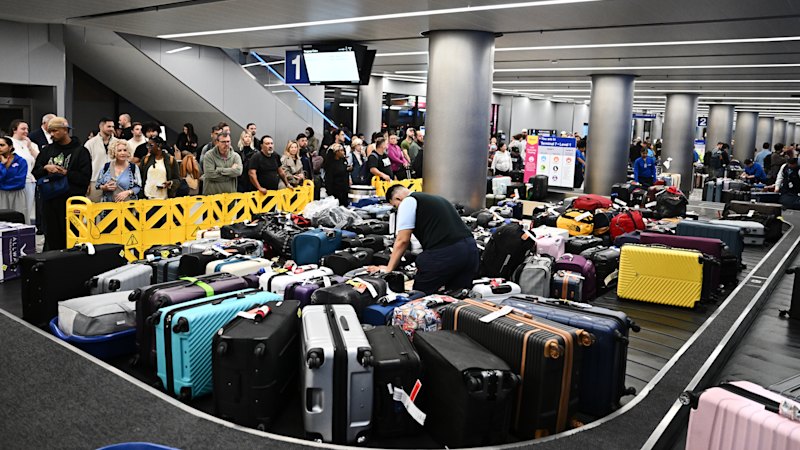
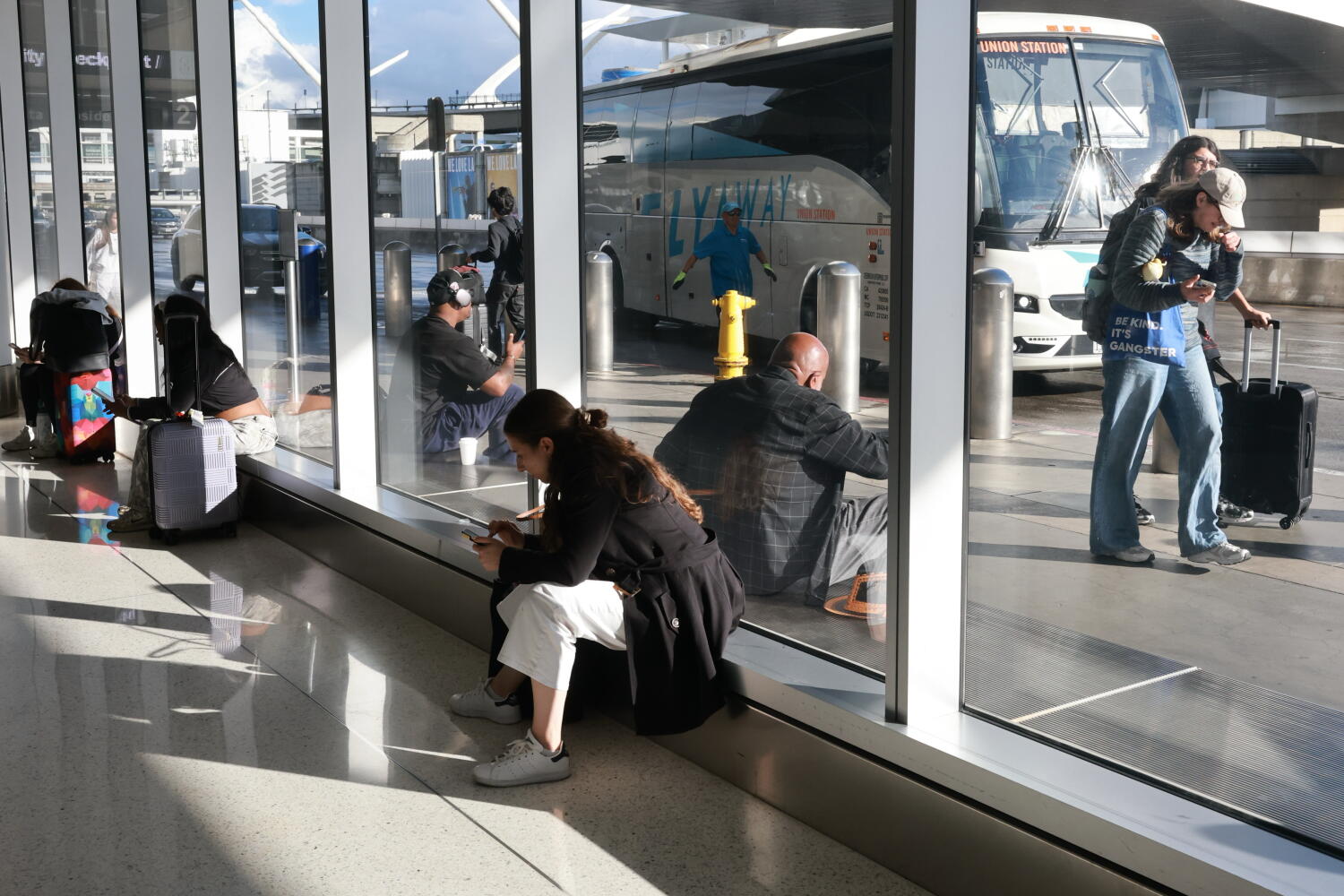
Camera crews rush to Los Angeles International Airport. They find a tired passenger sitting on a carry-on bag, broadcast a tearful quote about a ruined vacation, and blast airline executives for corporate incompetence. The outrage narrative is automatic, predictable, and fundamentally wrong.
The public views a nationwide ground stop as a systemic collapse. In reality, a ground stop is a brutal, high-stakes trade-off where human convenience is sacrificed to prevent mid-air disaster. The real scandal is not that thousands of passengers are stuck near a gate in terminal three. The real scandal is that commercial aviation relies on a digital infrastructure so fragile that bringing it to a standstill is the only safe option available.
When FAA systems like the Notice to Air Missions fail, or severe weather fronts paralyze regional hubs, the system does not break down. It halts on purpose. Grounding aircraft is not the failure mode; it is the containment strategy.
The Myth of Smooth Logistics vs. The Math of Air Traffic Safety
The average traveler operates under a massive misconception: that airlines sell guaranteed schedules.
They do not. Airlines sell access to a hyper-optimized, probabilistic network operating at near 100% capacity.
When you book a ticket, you purchase a seat inside a tightly choreographed sequence of physical assets. A single Boeing 737 flies four to six routes a day with minimal turn times. Flight crews rotate under strict federal duty-hour limits. Airport gates are leased down to precise minute blocks.
This optimization keeps ticket prices historically low, but it eliminates every margin for error.
+-----------------------------------------------------------------------+
|                       THE DOMINO SYSTEM                               |
|                                                                       |
|  [System Outage / Weather]                                            |
|             │                                                         |
|             ▼                                                         |
|  [FAA Halts Flights Grounded at Hubs]                                 |
|             │                                                         |
|             ├───────────────────────────────┐                         |
|             ▼                               ▼                         |
|  [Crew Hours Expire]              [Aircraft Out of Position]          |
|             │                               │                         |
|             └───────────────┬───────────────┘                         |
|                             ▼                                         |
|               [Network Cascading Shutdown]                            |
+-----------------------------------------------------------------------+
When an outage triggers a ground stop, air traffic control isolates the risk at the origin rather than managing a crisis in the sky. If 500 planes depart into controlled airspace without real-time safety data, controllers face an operational nightmare. Keeping those 500 planes on the tarmac transfers 100% of the operational pressure to airport terminals.
It looks like chaos to a passenger staring at a departure board. To an air traffic strategist, it is controlled risk management.
Why You Are Asking the Wrong Questions at the Gate
Passengers stranded at LAX invariably ask the wrong questions:
- Why can't they just fly around the issue?
- Why didn't the airline have a backup plane ready?
- Why is customer service taking so long to rebook us?
Asking these questions betrays a lack of understanding regarding how modern aviation functions.
You cannot "just fly around" a blacked-out digital notification grid. Backup planes do not exist in meaningful quantities because holding tens of millions of dollars in idle aircraft on the tarmac wrecks the economics of low-cost air travel. Customer service desks stall because three days of flight schedules cannot fit into two days of remaining seats.
The correct question is far uncomfortable: How much extra are you willing to pay on every ticket to build operational slack into the system?
If airlines maintained spare planes, idle backup crews, and half-empty flight schedules to absorb ground stops smoothly, your $300 domestic ticket would instantly cost $1,200. Consumers systematically vote with their wallets for ultra-lean operations, then express shock when a lean system lacks shock absorbers.
The Battle Scars: What Industry Insiders Know About Recovery Operations
Having spent years tracking dispatch operations and observing hub management during system shocks, one truth becomes obvious: restarting a halted airline network is exponentially harder than stopping it.
When a ground stop lifts, the general public expects planes to start taking off immediately. They do not realize that the network has turned into a giant, scrambled puzzle.
- Crew Timeouts: Pilots and flight attendants are governed by Federal Aviation Regulations Part 117. If a ground stop delays a flight by three hours, the crew may cross their maximum duty limit. They cannot legally fly the aircraft, even if the plane is fully functional and the weather clears.
- Asymmetric Dislocation: The planes are in the wrong cities. A flight stuck in Chicago was scheduled to handle an evening route out of Dallas. Until that plane reaches Texas, the Dallas flight is canceled—hours after the original ground stop ended.
- Physical Gate Bottlenecks: Airports are spatial finite resources. If 30 inbound flights land as soon as the airspace opens, but 30 delayed outbound flights are still parked at the gates, arriving planes sit on the taxiways for hours waiting for physical space to clear.
This cascading disruption is why operational recovery often takes 48 to 72 hours after an FAA system outage lasts only two hours.
The Downside of Truth: The Hard Reality of Air Travel
Exposing this reality does not mean defending corporate negligence or outdated legacy tech.
The FAA has delayed critical infrastructure modernization for decades, relying on legacy codebases and patch-worked IT architectures that invite these catastrophic single-point failures. Major carriers have repeatedly mismanaged inventory and failed to update their internal crew-rescheduling software, compounding national delays into regional meltdowns.
Acknowledging that ground stops are necessary safety measures does not make sitting on an airport floor for 14 hours any less awful.
The uncomfortable truth is that modern mass transit prioritizes absolute safety first, statistical efficiency second, and passenger comfort a distant third. If those priorities were reversed, planes would fly through unverified airspace, and accident rates would surge.
Stop Waiting for the System to Fix Itself
If you travel regularly, relying on airlines to manage your itinerary during a national disruption is a recipe for frustration. You must manage your own exposure to systemic risk.
- Never book the afternoon connection through a major hub. Delay risks compound as the day progresses. The first flight out at 6:00 AM carries a fraction of the disruption risk because the aircraft and crew are already on site.
- Bypass the terminal customer service line entirely. When a ground stop hits, thousands of people line up at the counter. Open your carrier’s app immediately, call the international phone line of the airline (which often has zero wait time compared to the domestic line), or message support directly on social platforms.
- Track the inbound tail number, not the flight number. Use public tracking platforms to see where the physical aircraft assigned to your flight currently is. If your plane is sitting three states away under a ground stop, your flight is delayed—regardless of what the terminal screen claims.
- Carry a survival strategy, not just a carry-on. Treat high-density travel days like an exercise in self-reliance. Pack extra medication, hard currency, portable power banks, and flexible hotel options.
The system is not going to fundamentally change tomorrow. The FAA will continue to run on tight budgets, airlines will continue to sell every available seat, and ground stops will continue to freeze airports whenever safety metrics slip.
Stop expecting a hyper-optimized network to treat you like an individual. Learn the rules of the system, accept its structural flaws, or stay on the ground.