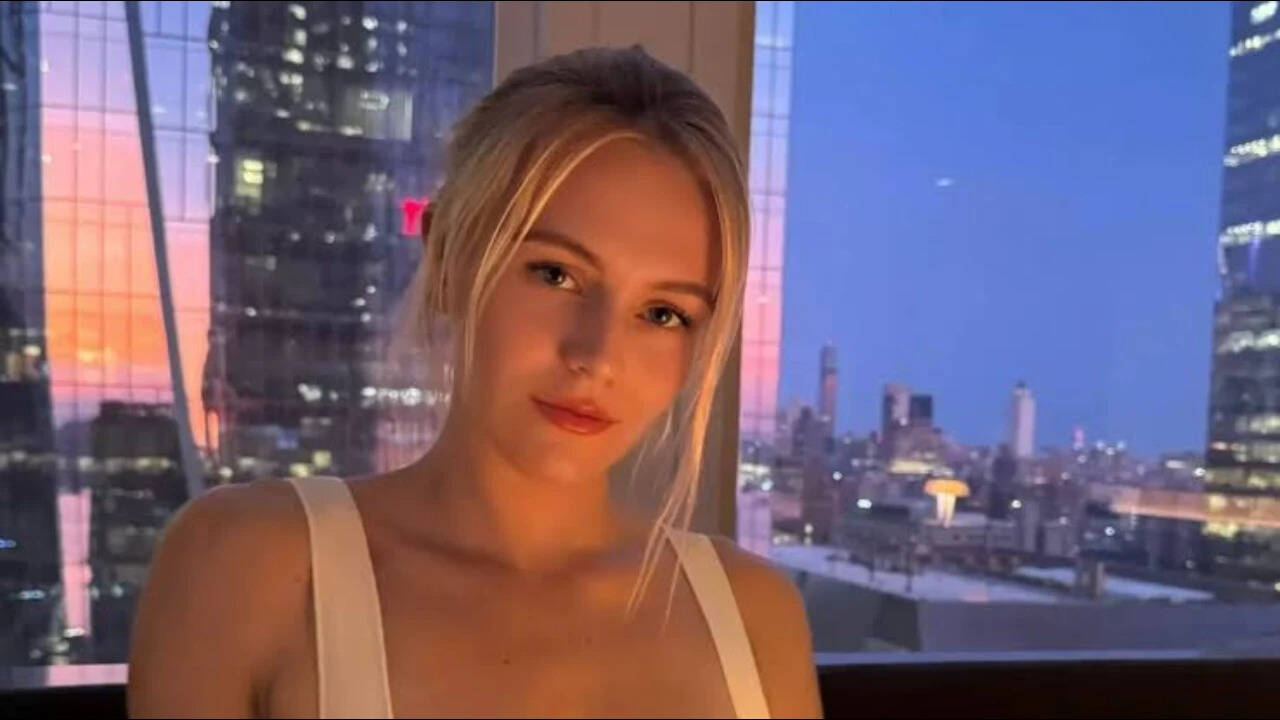
Silence.
You do not expect silence when you are accustomed to the constant, low-grade hum of millions of people watching you breathe, eat, walk down a sunlit boulevard, or casually apply lip gloss in the backseat of a rideshare. For years, the digital attention economy has operated on a deceptively simple bargain: give the screen enough of your life, make yourself glossy enough, desirable enough, and algorithmically legible enough, and the world opens its doors to you. You become borderless. You become an idea people consume over morning coffee in London, during lunch breaks in Toronto, or late at night in Los Angeles.
Then comes the fluorescent hum of a federal holding facility.
That sudden, jarring collision between hyper-visible internet fame and the cold, unyielding machinery of immigration enforcement is precisely what unfolded when Dutch model and OnlyFans creator Vera Dijkmans—a woman the tabloid press had nicknamed the "world's most wanted girlfriend"—was taken into custody by U.S. Immigration and Customs Enforcement. To anyone scrolling past the initial headlines, the story looked like standard internet absurdity, another fleeting piece of viral trivia destined to be replaced by a new scandal before dinner. Yet beneath the clickbait nickname and the glossy Instagram grid lies a deeply human, unsettling truth about the fragility of modern digital careers, the invisible tripwires of visa law, and what happens when a lifestyle built on boundless online reach runs straight into a physical border.
The Architecture of a Digital Mirage
To understand how someone with millions of followers ends up inside a detention center, you first have to understand the illusion that modern creator culture sells to everyone—including the creators themselves.
Consider a hypothetical young creator we will call Elena. Elena grows up in a mid-sized European city where the rain falls sideways for half the year and local career paths feel narrow. At twenty-one, she starts posting photos online. At first, it is a hobby, a way to test the light in her bedroom window. Within eighteen months, the algorithm catches her face, holds it up to the light, and decides she is magnetic. Brand deals arrive in her inbox. Subscription platforms turn her likeness into a six-figure revenue stream. Suddenly, the physical geography of her hometown feels obsolete. Her audience is predominantly American. Her collaborators live in Miami and Los Angeles. Her income arrives in U.S. dollars, deposited neatly into digital accounts that care nothing for time zones or national borders.
So Elena buys a plane ticket. She packs two suitcases of designer activewear, steps onto American soil with a tourist waiver or a short-term business visa, and begins living the life her followers already assume she inhabits. She shoots content on Malibu beaches. She attends launch parties in West Hollywood. She rents a sleek apartment through a short-term luxury broker. To the millions of people watching her stories, Elena lives in Los Angeles. To the Department of Homeland Security, however, Elena is merely a visitor who has quietly crossed an invisible legal line.
This is the exact fault line where Vera Dijkmans’s American dream fractured.
Before her arrest made international news, Dijkmans had engineered a viral persona that practically guaranteed tabloid fascination. Born in the Netherlands, she built a massive following across Instagram, TikTok, and OnlyFans by leaning into a specific, high-gloss brand of aspirational glamour. In 2023, she captured widespread media attention—and earned that tongue-in-cheek "world's most wanted girlfriend" moniker—after publicly announcing she was accepting applications for a boyfriend, complete with a structured questionnaire screening out men who still lived with their parents or lacked ambition. Thousands of men applied. Morning shows discussed it. Internet commentators dissected whether it was genuine loneliness, brilliant marketing, or performance art.
It was, above all, proof that she knew how to command the attention economy. When you can generate headlines across continents from your phone screen, it becomes dangerously easy to believe that you exist outside ordinary bureaucratic gravity.
The Paperwork Trap Beneath the Glamour
Immigration law, however, does not read press clippings, and it certainly does not care about follower counts.
When Department of Homeland Security officials clarified why Dijkmans had been detained and placed into removal proceedings, the explanation stripped away every ounce of internet glamour and replaced it with stark administrative reality. According to federal authorities, Dijkmans had entered the United States legally years earlier—initially arriving in 2021 under the Visa Waiver Program, which allows citizens of participating countries like the Netherlands to visit the U.S. for tourism or limited business for up to ninety days without obtaining a traditional visa.
Ninety days. Three months to see the sights, take a few meetings, and board a flight home.
Instead, like countless digital nomads and influencers who mistake remote income for legal residency, she stayed. Years ticked by. The ninety-day window closed, vanished into the rearview mirror, and turned into an unlawful overstay. Even more critically, federal officials pointed to unauthorized employment—the daily reality of monetizing content, shooting commercial material, and operating a lucrative online business while physically present on American soil without work authorization.
Think of a tourist visa like a museum day pass. The pass lets you walk through the galleries, admire the paintings, buy a coffee in the courtyard, and take photos for your personal album. What it does not allow you to do is set up an easel in the main hall, paint portraits of other visitors, and sell them out of your backpack for cash. The moment you start generating commercial labor inside the building, security does not care how talented an artist you are or how many people admire your work. You broke the terms of entry.
For years, the internet blurred that boundary beyond recognition. If your office is an iPhone and your customers are scattered across the globe, does filming a video in a Miami penthouse count as "working in the United States"? Under U.S. immigration statutes, the answer has always been an unambiguous yes. Physical presence dictates jurisdiction. Where your feet stand when you create commercial value matters infinitely more than where your bank account is registered or where your subscribers live.
Yet in the sun-drenched ecosystem of influencer culture, almost nobody talks about the lawyers, the visa backlogs, or the silent panic of living out of status.
The Invisible Weight of Living Unmoored
I have watched friends in creative industries navigate the slow-motion dread of visa limbo, and the psychological toll rarely matches the confident facade people project in public. There is a specific kind of background static that takes over your nervous system when you know your legal footing is compromised. Every time a police cruiser pulls up beside you at a red light, your shoulders tighten. Every time you book a domestic flight, you stare at the TSA podium wondering if today is the day a database flags your passport. You avoid routine errands. You hesitate before signing a standard lease, buying a car, or walking into a government building.
Outwardly, life looks effortless. You post photos from rooftop pools and oceanfront cafes. Inwardly, you are living inside a gilded cage where a single traffic stop, a lost wallet, or an anonymous tip can collapse your entire existence in an afternoon.
That tension is what makes the human reality of Dijkmans’s detention so compelling—and so deeply relatable to anyone who has ever built a life on precarious ground. Whatever one thinks of her online persona, of OnlyFans culture, or of viral boyfriend applications, being taken into federal custody is a profoundly disorienting human experience.
One hour, you are choosing outfits, answering messages, and planning next week's shoot. The next hour, your phone is confiscated. Your shoelaces are removed. The curated lighting of your life is replaced by cinderblock walls, cold institutional meals, and the slow, grinding uncertainty of detention center schedules. In ICE custody, fame carries zero currency. Nobody cares about your engagement rate. You become an alien registration number printed on a wristband, waiting in line to use a monitored payphone while attorneys scramble to file motions across time zones.
Why This Story Hits a Raw Cultural Nerve
When news of Dijkmans’s arrest broke, the internet reacted with its usual cocktail of schadenfreude, curiosity, and confusion. Scroll through any comment section covering the story and you will see the same questions surfacing over and over again, driven by a public trying to reconcile two worlds that rarely overlap in headlines.
People wanted to know why she was actually arrested—whether there was some hidden criminal scandal, fraud, or violent offense behind the headlines. The truth was far more mundane and far more common: immigration violations tied to overstaying her authorized entry and working without proper documentation. In an era of heightened federal enforcement, immigration authorities have increasingly scrutinized foreign influencers, models, and content creators who treat tourist entries as open-ended residency permits.
Readers also wondered how someone with substantial financial resources could end up in that position in the first place. Why didn't she simply buy a visa? Why didn't a team of high-priced lawyers sort it out years ago?
That question exposes one of the biggest misconceptions about U.S. immigration. Money alone does not buy instant legal status. While pathways exist—such as the O-1 visa for individuals with extraordinary ability in the arts, entertainment, or business, or investor visas for those launching job-creating enterprises—they require meticulous documentation, formal sponsorships, clean immigration histories, and strict compliance before you overstay. Once a person remains in the country past their authorized window, options narrow dramatically. Overstaying a Visa Waiver Program entry carries particularly harsh consequences, because travelers entering under that system explicitly waive their right to contest removal before an immigration judge in most circumstances, leaving them with virtually no room to maneuver once detained.
And then there is the question of what happens next. When someone is held by ICE on overstay and unauthorized work grounds, the trajectory typically moves toward deportation—formally known as removal—back to their country of citizenship, accompanied by multi-year or even decade-long bars from re-entering the United States. A career built around American proximity can be severed with a single stamp on a travel document.
The End of the Borderless Fantasy
For the past decade, Silicon Valley and social media platforms sold a seductive myth: that geography was dead. We were told that anyone with a ring light, a reliable Wi-Fi connection, and enough charisma could transcend the old rules of work, citizenship, and nation-states. Influencers became modern aristocrats of the feed, gliding between Los Angeles, Tulum, London, and Dubai as if passports were mere formalities.
Vera Dijkmans’s story punctures that fantasy with surgical precision.
It reminds us that beneath the cloud servers, the viral trends, and the millions of followers, we still live in bodies governed by physical laws and sovereign borders. You can monetize your image across every continent on earth, capture the imagination of millions of strangers, and turn your romantic life into global entertainment—and still find yourself sitting on a cold metal bench in a holding facility because a ninety-day stamp in your passport expired years ago.
Perhaps the most haunting image in this entire saga is not the mugshot released by federal authorities, nor the glamorous photos that still populate her social media profiles while she sits behind locked doors. It is the image of her digital empire continuing to run on autopilot in the outside world—likes still ticking upward, old videos still circulating in algorithmic feeds, strangers still leaving comments on her photos—while the real woman behind the screen waits inside a quiet room for a government plane to take her back to where she started.