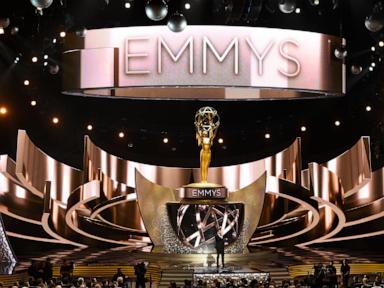
The announcement of a six-year agreement transferring the broadcast and streaming rights of the Emmy Awards to Amazon Prime Video starting in 2027 represents a structural realignment of prestige television economics. Traditional linear television networks historically used live awards broadcasts as high-cost loss leaders to anchor upfront advertising sales and cross-promote upcoming seasonal slates. For Amazon, the acquisition of a legacy cultural institution functions differently. It serves as an infrastructural asset designed to reduce churn within a multi-tiered commerce and subscription ecosystem, converting transient cultural moments into recurring engagement data.
Examining the mechanics of this agreement requires dissecting the economic pressures facing both the Television Academy and the streaming distributor. Linear ratings for major awards ceremonies have experienced secular decline over the past decade, driven by audience fragmentation and the displacement of appointment viewing by on-demand consumption. For the Academy, partnering with a global technology conglomerate guarantees revenue stability over a multi-year horizon while providing access to an international distribution apparatus that linear broadcasters could never match. For Amazon, live cultural events represent a critical frontier in customer acquisition and retention economics. For a deeper dive into this area, we recommend: this related article.
The valuation of live event distribution rights depends on three primary variables: upfront license fees, production cost absorption, and advertising or monetization elasticity. While specific financial terms of the six-year deal remain confidential, the longevity of the contract indicates a strategic amortization schedule. Amazon can spread fixed acquisition costs across multiple fiscal years while integrating the broadcast into its broader Prime marketing funnel. This dynamic alters the traditional return on investment calculation used by legacy networks, which relied exclusively on direct ad-sales revenue during the live window.
Subscription video-on-demand platforms evaluate high-profile live events through the lens of lifetime value and churn mitigation. When a consumer maintains an Amazon Prime membership for shipping benefits, video streaming, and music, the marginal cost of adding a major live broadcast event is negligible
The Economics of Streaming Rights Acquisition Why Amazon Prime Video Secured the Emmy Awards For broader details on this issue, detailed analysis can also be found on Financial Times.
business, entertainment
The transition of a legacy broadcasting property from traditional networks to a subscription video-on-demand platform is rarely an exercise in immediate transactional profitability. When a technology conglomerate acquires the broadcast rights to a major awards ceremony under a multi-year commitment, the transaction functions primarily as a top-of-funnel customer acquisition and ecosystem retention mechanism. The agreement between Amazon and the Television Academy to move the Emmy Awards to Prime Video in 2027 under a six-year framework represents a structural shift in how live cultural milestones are utilized by platform-based enterprises.
Evaluating this acquisition requires moving past superficial announcements and examining the underlying capital allocation strategy, the shifting cost functions of linear versus streaming distribution, and the long-term retention dynamics of subscription models.
The Capital Structure of Live Event Rights
Traditional television distribution relied on a direct arbitrage model: networks purchased broadcast rights, inserted targeted advertising commercial breaks during the live telecast, and monetized the eyeballs through CPM impressions sold to consumer brands. The financial health of the event depended entirely on immediate ad-load yields matching or exceeding the rights fee plus production overhead.
Subscription video-on-demand operators alter this calculus. For Amazon, the expenditure for the Emmy Awards is not amortized against ad sales alone, though integrated sponsorships play a secondary role. Instead, the cost of the rights is distributed across a massive existing infrastructure overhead and evaluated against customer lifetime value metrics.
The Cost Function Shift
- Marginal Cost of Delivery: Distributing a live stream to millions of concurrent viewers via content delivery networks involves high bandwidth costs, but the incremental cost of serving an additional subscriber who converts or remains active because of the event is effectively negligible compared to building traditional affiliate distribution networks.
- Customer Acquisition Cost Mitigation: Acquiring high-intent users through digital performance marketing channels has grown increasingly expensive due to privacy regulations and platform saturation. Tentpole live events act as massive organic acquisition vectors, lowering the blended cost of customer acquisition across the entire Prime ecosystem.
- Ecosystem Lock-in: Awards ceremonies do not exist in a vacuum. They serve as cross-promotional catalysts for the platform's broader content catalog. When a streaming service hosts an industry-wide celebration, the immediate behavioral response of the consumer cohort is to browse nominated titles, thereby increasing platform engagement metrics and reducing churn rates.
The Ecosystem Flywheel of Cultural Property
A platform like Prime Video operates as a diversified conglomerate utility where shipping benefits, cloud infrastructure profits, and entertainment subscriptions reinforce one another. Within this architecture, premium live events function as gravitational anchors.
When an awards broadcast is housed within a streaming service, the friction of discovery is eliminated. A viewer watching a live presentation of an acting award can navigate directly to the nominated series within the same user interface, transforming passive linear viewership into active streaming consumption within seconds. This frictionless transition is a structural advantage that legacy networks, reliant on out-of-app streaming applications or delayed video-on-demand windows, cannot replicate.
Furthermore, owning the broadcast rights to the industry’s premier peer-evaluated awards show alters platform perception among creative talent. Showrunners, directors, and actors evaluate distribution partners based on marketing commitment, global reach, and prestige alignment. By anchoring the Emmys within its ecosystem, Amazon signals institutional permanence within Hollywood's prestige hierarchy, streamlining future talent acquisition and content development pipelines.
The Long-Term Mechanics of the Six-Year Commitment
A six-year contractual duration is deliberate. Short-term licensing agreements for live events often suffer from diminishing returns as rights fees escalate faster than audience growth. A multi-year horizon allows the platform to absorb initial production inefficiencies and amortize technical integration costs across multiple programming cycles.
The Phases of Platform Integration
- Phase One: Infrastructure Calibration. The initial years of a long-term sports or live entertainment deal are characterized by engineering optimization. Scaling concurrent live streams to support tens of millions of high-definition sessions without latency degradation requires rigorous load testing and protocol refinement.
- Phase Two: Behavioral Habituation. Over successive iterations, consumer habits shift. The audience stops looking for the event on traditional network channels and natively associates the property with the streaming application interface.
- Phase Three: Data Monetization and Sponsorship Maturation. With a stable multi-year runway, the platform can design sophisticated native advertising products, interactive overlays, and cross-platform data measurement tools that are impossible within rigid linear broadcast windows.
Strategic Forecast
The migration of the Emmy Awards to a streaming-native environment is a logical consequence of media consolidation and the devaluation of linear ad-supported windows. As linear cable households continue to erode, the addressable audience for traditional broadcasts shrinks, forcing rights holders to partner with platforms capable of delivering global scale and deep user data.
For competitors in the streaming sector, this move increases the scarcity value of remaining independent live properties. The strategic play for platforms moving forward is not merely matching rights bids, but engineering proprietary ecosystems where live cultural events act as the central routing mechanism for total consumer attention and continuous subscription retention.