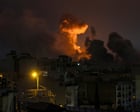
You can't fight a clean war by blowing up drinking water. When American precision bombs slammed into the small southern district of Bemani on June 10, the immediate Pentagon messaging focused heavily on military victory. US Central Command proudly announced that Navy and Air Force fighter jets successfully wiped out Iranian air defense, ground control stations, and radar sites near the strategic Strait of Hormuz.
But satellite imagery and ground footage quickly exposed a much darker reality. Two massive water storage tanks in Bemani, located just two miles from the strait, were completely pulverized. Shrapnel recovered from the scene matched a GBU-39 guided bomb, a 250-pound American precision weapon. If you liked this article, you should look at: this related article.
The strike immediately cut off clean drinking water for roughly 20,000 civilians across 10 local villages. This happened during the absolute hottest part of the year, while Iran is trapped in a historic, punishing drought.
Legally speaking, it's not a complicated riddle. If you deliberately target civilian drinking water, you're committing a war crime. For another angle on this development, check out the latest coverage from The New York Times.
The Zero Sum Rules of Armed Conflict
International humanitarian law isn't a set of loose suggestions. It's built on a rigid binary concept. Brian Finucane, a former State Department lawyer who advised both Republican and Democratic administrations on the use of force, lays it out in blunt terms. An object is either a legitimate military target or it's a civilian object. Attacking the first is a standard act of war. Attacking the second is a war crime.
Under Article 54 of the Geneva Conventions, destroying or rendering useless any infrastructure indispensable to civilian survival—especially drinking water installations—is explicitly forbidden. The Madrid Rules on Water Resources in Armed Conflicts back this up. They declare that water systems have a unique humanitarian status that cannot be casually bartered away for a tactical military advantage.
The Pentagon insists its operation was a proportional response in self-defense after an Iranian drone brought down a US Army Apache helicopter. But self-defense isn't a blank check to dehydrate a civilian population.
Before dropping a GBU-39, American commanders must pass two legal hurdles. They have to prove the target is a genuine military asset. Then, they must prove that any expected civilian harm won't outweigh the direct military advantage.
Military analysts looking at the remote Bemani site point out a glaring issue. It is incredibly rare for two distinct water structures to take direct hits by accident. If the US military intended to hit those tanks, it marks an unprecedented and dangerous shift in American targeting policy.
The Scapegoat in the Machine
As Washington faces heavy backlash, a predictable excuse is emerging from Capitol Hill. Lawmakers are starting to point fingers at algorithmic targeting. Virginia Senator Tim Kaine raised alarm bells about the role artificial intelligence might have played in the Bemani strike, warning that automated systems without strict human oversight lead to egregious errors.
The administration has faced similar scrutiny before. Earlier this year, an American strike hit a girls' school in Minab, killing dozens of young students. The Pentagon stayed silent on its exact role in that disaster, but critics heavily suspected automated target selection was to blame.
Blaming a glitchy algorithm is kiddy-table politics. It's a convenient way to dodge accountability. If the US military uses an AI system that mistake-prone, the human commanders who sign off on those targets are still entirely responsible. You don't get to blame a bad line of code when 20,000 people lose their water supply in a desert summer.
Real Consequences in the Desert
This isn't just a debate for classroom philosophers or international lawyers. The real-world fallout is happening right now in Hormozgan province.
Iran is currently dealing with severe, long-term water scarcity. Damaging a critical reservoir right now has immediate, devastating health consequences. When you take out a region's clean water, people don't magically stop being thirsty. They drink from contaminated, unsafe sources. That leads to rapid outbreaks of waterborne illness, disproportionately hitting children and the elderly first.
The strike also shatters a fragile ceasefire that had been keeping a shaky peace since April. Instead of forcing Iran into a peace deal on Washington's terms, striking vital infrastructure acts as an accelerant. Tehran already retaliated by firing long-range missiles and drones at regional targets, including the US Fifth Fleet in Bahrain and the al-Azraq base in Jordan.
If the Pentagon's goal was to project strength and stabilize the Gulf, the reality on the ground shows the exact opposite.
What Must Happen Next
We need to stop accepting vague "self-defense" press releases at face value. If you want to follow this crisis and push for actual accountability, look for these specific developments.
- Demand Transparency on AI Involvement: Watch for congressional hearings regarding Centcom's targeting systems. We need to know if automated algorithms are actively choosing civilian infrastructure, and who is rubber-stamping those choices.
- Track Independent Damage Assessment: Keep tabs on independent open-source intelligence groups like Bellingcat or the Open Source Munitions Portal. They provide the ground-truth weapon analysis that governments try to conceal.
- Monitor Regional Escalation: Watch how neighboring countries respond to the broken ceasefire. If the US continues targeting life-sustaining infrastructure, it will likely alienate key regional partners who don't want a massive public health crisis on their doorsteps.
Waging war by destroying water doesn't show strategic brilliance. It shows a desperate lack of legal and moral restraint. Holding the line on international law isn't a choice; it's the only thing keeping modern conflict from turning into absolute barbarism.


