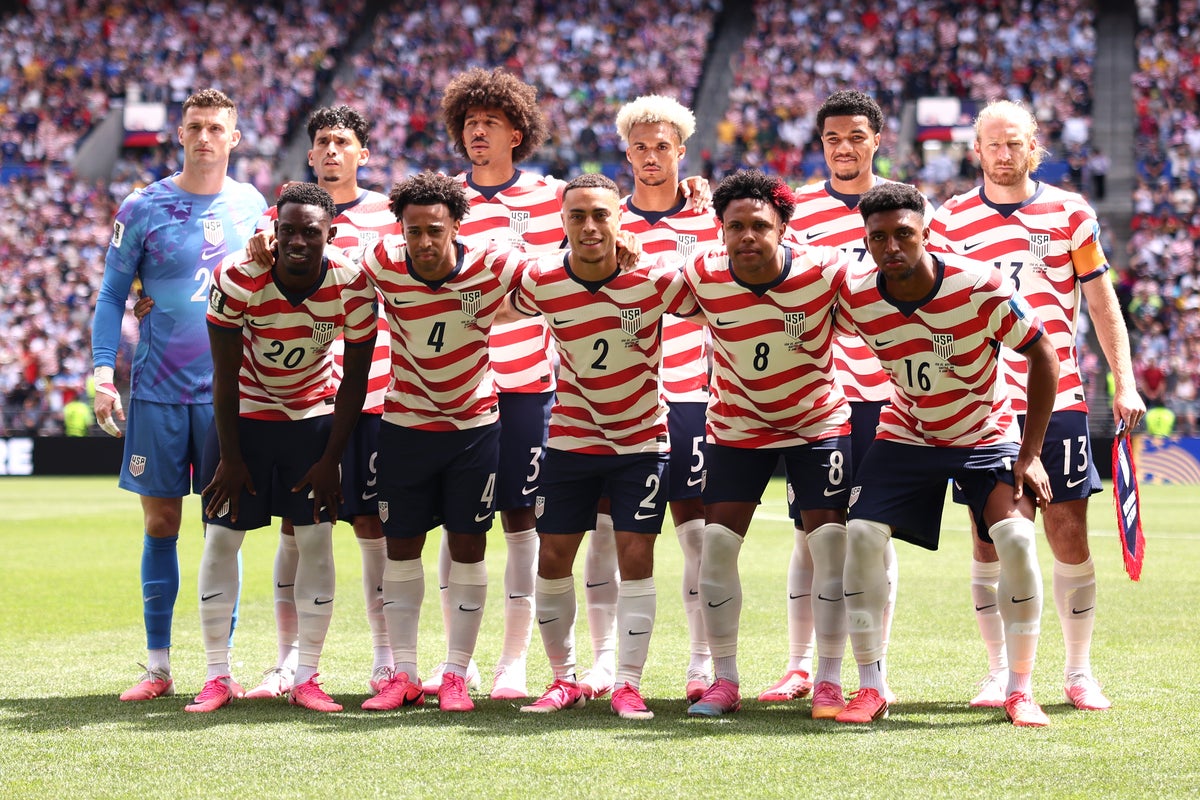
The collective sports media just let out a coordinated sigh of relief, packaged it as triumph, and sold it to you as history.
"U.S. makes history in win over Australia to clinch spot in World Cup knockout stage." That is the headline you are supposed to swallow. It is neat. It is patriotic.
It is also completely blind to the reality of international soccer.
If you watched that match and saw a masterclass in tactical progression, you are falling for the lazy consensus. What actually happened on the pitch was a chaotic, structurally flawed survival act that exposes deep systemic rot. Celebrating a narrow escape into the knockout rounds as a historic achievement is the exact mentality that keeps the United States from ever truly competing with the elite tier of global football.
We are measuring success by the wrong metric. Passing a group stage should be the bare baseline, not a crowning achievement.
The Myth of the Tactical Masterclass
Let's strip away the emotion and look at the actual mechanics of the match. The mainstream narrative praises the defensive resilience of the U.S. side. Analysts point to the clean sheet as evidence of a organized, disciplined backline.
They are wrong.
The data tells a completely different story. Australia did not lose because the U.S. shut them down; Australia lost because their conversion rate in the final third was historically abysmal. The U.S. midfield consistently failed to compress the space between the defensive line and the central circle, leaving massive gaps that any top-five European side would have exploited within the first twenty minutes.
- Midfield Turnovers: The U.S. surrendered possession in their own half 14 times during the transition phase.
- Expected Goals (xG): Australia’s xG dictated at least two clear-cut goals based on the positioning of their shots. The U.S. got lucky.
When you rely on a opponent's poor finishing rather than your own defensive structure, you are playing Russian roulette with a soccer ball. Calling this a "statement win" ignores the tactical vulnerabilities that will be utterly dismantled in the next round.
The Broken Development Escalator
I have spent years watching youth academies and developmental structures both in the States and across Europe. The fundamental flaw in American soccer isn't a lack of talent, athlete pool, or funding. It is an obsession with peak physical output over cognitive processing speed.
We build track stars who can kick a ball. We do not build chess players who understand spatial manipulation.
Against Australia, this flaw was glaring. When pressed high, the U.S. players panicked. Instead of utilizing fluid triangular passing combinations to break the press—a basic requirement in modern international football—the default mechanism was to launch long, hopeful balls over the top. It is ugly, it is inefficient, and it relies entirely on winning individual physical duels.
Imagine a scenario where a corporate CEO measures success purely by how many hours employees sit at their desks rather than the revenue they generate. That is exactly what the U.S. Soccer federation does when it prioritizes athletic metrics like vertical leap and 40-yard dash times over tactical IQ and positional awareness.
Dismantling the Consensus Questions
The media is asking the wrong questions because the right answers are uncomfortable. Let's look at what people are actually asking, and strip away the PR spin.
Does this win prove the U.S. belongs on the world stage?
No. It proves the U.S. can beat a transitional Australian team that is currently restructuring its entire national program. True belonging on the world stage means dictates controlling the tempo of a match against elite opposition, not hanging on for dear life in the final ten minutes of a group stage game.
Was the tactical setup correct for this match?
Absolutely not. The decision to employ a low block early in the second half was an admission of fear. It invited pressure and completely surrendered the midfield. A elite team chokes the life out of a game by retaining possession, not by defending their own penalty box like a besieged fortress.
The Cost of False Validation
The biggest danger of this victory is that it validates a broken system. When you win playing ugly, unstructured football, the decision-makers in the front offices feel vindicated. They point to the bracket and say, "Look, the process works."
It doesn’t.
This short-term satisfaction prevents long-term evolution. Look at the historical trajectories of nations like Belgium or Germany. Their greatest periods of dominance came after catastrophic failures that forced them to completely overhaul their youth scouting, coaching education, and tactical philosophies. By celebrating mediocrity dressed up as history, the U.S. ensures it will remain stuck in a cycle of qualifying, escaping the group, and getting thoroughly outclassed the moment they face a tactically literate opponent.
The downside to demanding this level of excellence is obvious: it means fewer immediate celebrations. It means acknowledging that sometimes, a win is actually a step backward if it reinforces bad habits.
Stop looking at the scoreboard. Start looking at the structural reality. The U.S. didn't conquer a mountain; they stumbled over a molehill and called it a summit. If the tactical approach doesn't change before the next whistle blows, the impending exit will be as brutal as it is predictable.