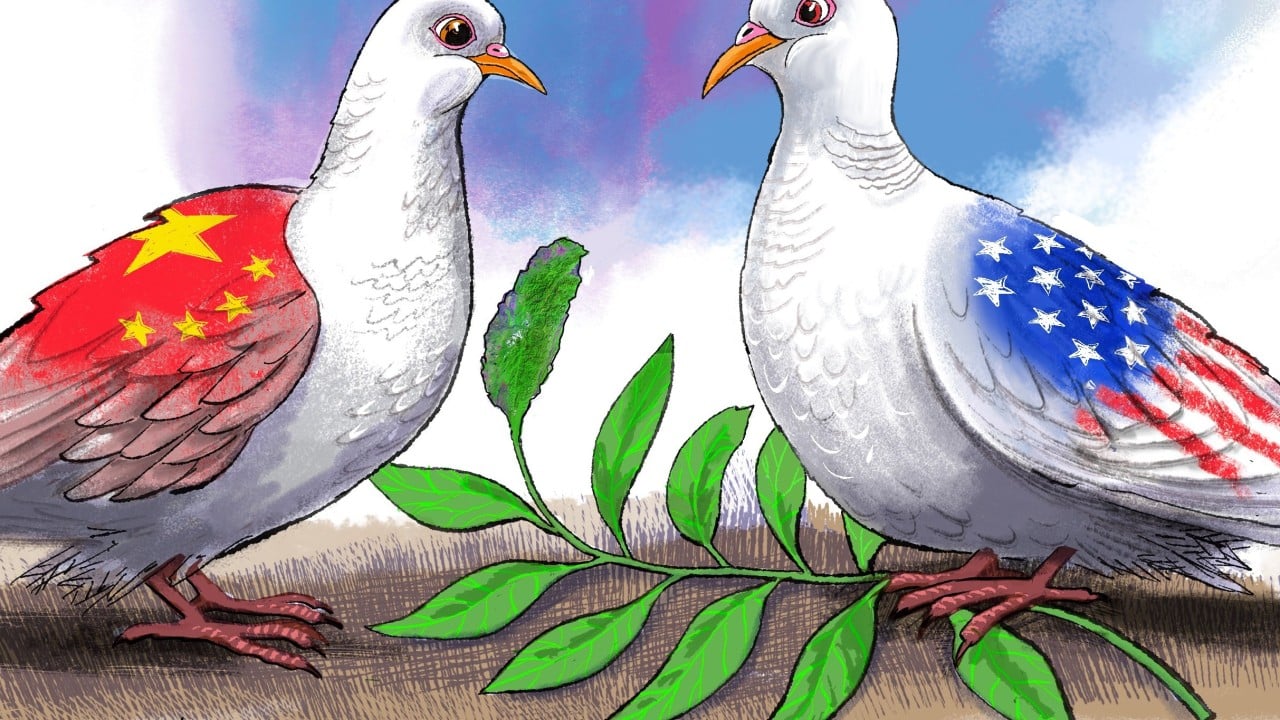
The United States is playing a dangerous game of chicken in the Taiwan Strait, and frankly, we’re the ones without a seatbelt. For decades, Washington has operated under the gray umbrella of "strategic ambiguity"—a fancy way of saying we don’t officially support Taiwan’s independence but we’ll sell them enough missiles to make Beijing sweat. Lately, that ambiguity has started to look a lot like a green light. If you think backing formal independence for Taiwan is a noble crusade for democracy, you’re missing the cold, hard reality of the math. Opposing Taiwan independence isn't a betrayal of values. It’s the only way to keep the global economy from flatlining and to prevent a war that nobody, including the Taiwanese, is actually ready for.
It's easy to get swept up in the rhetoric of sovereignty. We love an underdog story. But in the world of high-stakes geopolitics, "independence" is a loaded word that carries a $10 trillion price tag. That’s the estimated cost of a conflict in the Strait. We’re talking about a complete halt to the world’s most advanced semiconductor flows. If the ships stop moving, your iPhone is the least of your worries; hospitals, power grids, and every modern car on the road stop functioning. By doubling down on the "One China" policy and explicitly opposing a formal break from the mainland, the U.S. isn't being weak. It’s being smart.
The silicon shield is a double edged sword
Everyone talks about Taiwan’s "Silicon Shield." The idea is that because Taiwan manufactures over 90% of the world’s most advanced logic chips, China won't dare invade because they’d destroy the very tech they need. It sounds great on paper. In practice, it makes Taiwan a prize so valuable that the status quo is the only thing keeping the peace.
If Taiwan declares formal independence, that shield shatters. Beijing has made it crystal clear—and they’ve been saying this since 1949—that independence is the red line. They don't care about the economic fallout as much as they care about "national rejuvenation." We can’t project Western logic onto a CCP leadership that views Taiwan as a matter of existential legitimacy. If the U.S. signals even a hint of support for a formal split, we’re essentially hand-delivering a casus belli to Xi Jinping.
I’ve seen the arguments that we should just give Taiwan "strategic clarity." Basically, tell China we will definitely fight. But clarity without the industrial capacity to back it up is just a bluff. Right now, our defense industrial base is struggling to keep up with existing commitments in Europe and the Middle East. Do we really want to add a high-intensity maritime war against a peer competitor to the tab? Honestly, we aren't ready for that kind of inventory drain.
Avoiding the trap of empty promises
When American politicians fly to Taipei for photo ops, they’re scoring domestic points but creating a massive liability for the people living there. Encouraging independence movements without a formal treaty or the physical ability to prevent a blockade is reckless. It’s like telling a friend to pick a fight with a heavyweight and then promising to hold their coat from the other side of the gym.
- Deterrence depends on doubt. If China is 100% sure we’ll intervene, they’ll prep for a pre-emptive strike. If they’re 100% sure we won't, they’ll walk right in. The "not supporting independence" stance keeps them in the middle, where the cost of moving is always too high.
- Economic suicide is real. A war would trigger a global depression that makes 2008 look like a minor dip. We aren't just talking about trade tariffs; we’re talking about the total decoupling of the world's two largest economies in the middle of a shooting match.
- The regional allies aren't all in. Japan and Australia are worried, but they also rely on China for trade. Pushing for Taiwan’s independence forces our allies into a corner they’ve spent years trying to avoid.
The reality is that most people in Taiwan actually prefer the status quo. They’ve built a thriving, democratic society without the formal label of "independent nation." They have their own passports, their own military, and their own elections. They’ve already won the game. Why would the U.S. push them to change the name of the game if it results in the board being flipped over?
A smarter path for Washington
We need to stop treating the Taiwan question like a moral binary. It’s a management problem. The goal shouldn't be a "final resolution" because any final resolution right now ends in fire. The goal is to kick the can down the road so well that the road never ends.
Instead of flirting with independence, the U.S. should focus on "porcupine" strategy. Help Taiwan become too prickly to swallow. This means more mobile anti-ship missiles, better cyber defenses, and sea mines—not big, shiny targets like traditional fighter jets that get wiped out in the first ten minutes of a missile barrage. We keep the arms sales coming but keep the political mouth shut.
Don't buy the hype that "opposing independence" is the same as "handing Taiwan over." It’s the opposite. It’s the diplomatic friction that keeps the gears from turning toward war. We maintain the "One China" framework because it works. It’s been the foundation of the most peaceful and prosperous era in Asian history.
If you want to actually support Taiwan, focus on trade agreements like the Initiative on 21st-Century Trade. Strengthen the economic ties that make Taiwan indispensable without triggering the one thing that would destroy it. The most pro-Taiwan thing the U.S. can do right now is stay the course and explicitly refuse to back a formal independence bid. It's not flashy, it won't get you a standing ovation on a campaign trail, but it's the only way to ensure Taiwan is still there ten years from now.
Stop looking for a "win" in the Taiwan Strait. Success is defined by the absence of a disaster. Every day there isn't a war is a victory. Keep it that way.