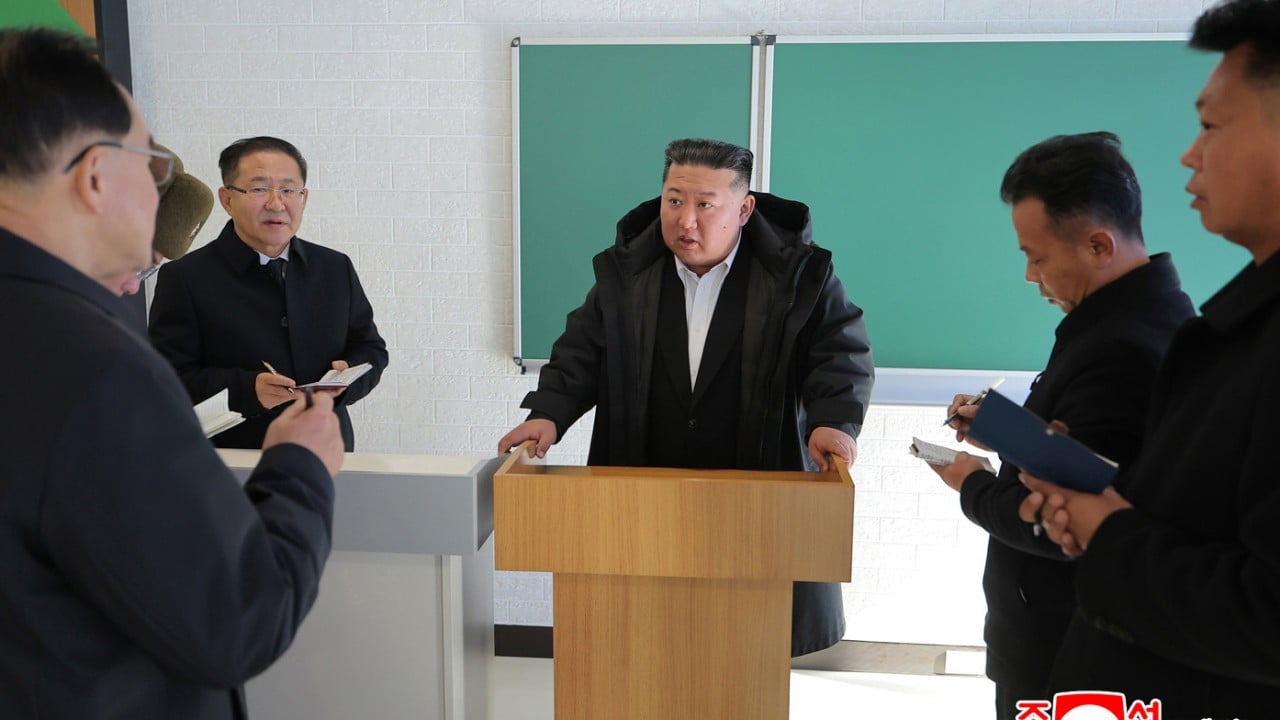
Coverage of North Korean leader Kim Jong Un touring school uniform and backpack factories frequently frames the appearances as a direct reaction to diplomatic friction with Donald Trump. In this common media narrative, state-media photos of Kim inspecting consumer goods are treated as an effort to project calm, deflect embarrassment after a perceived diplomatic snub, or signal resilience to Washington.
Regional analysts and Korea watchers who study Pyongyang’s domestic governance point out that this interpretation reverses cause and effect. While international headlines focus on summitry and bilateral signaling, domestic factory inspections serve established political, economic, and ideological functions inside North Korea that operate on their own calendar.
The Domestic Calendar Behind State Inspections
According to researchers tracking North Korean state media, Kim Jong Un’s "on-the-spot guidance" tours follow predictable seasonal and bureaucratic cycles. Visits to factories producing school uniforms, satchels, and stationery typically occur ahead of the new academic term, which begins in April.
The Workers' Party of Korea has long emphasized free education and state-provided school supplies as core pillars of its socialist welfare system. Publicizing Kim’s personal attention to the quality of children’s backpacks and uniforms reinforces his image as a paternal leader providing for the next generation—a trope central to North Korean political legitimacy since the Kim Il Sung era.
Treating a scheduled domestic welfare inspection as an impromptu reaction to an American president overlooks the internal administrative logic of the Democratic People's Republic of Korea (DPRK). Pyongyang’s propaganda apparatus produces content primarily for domestic consumption, aiming to bolster loyalty among cadres and citizens rather than send subtle cues to foreign capitals.
Economic Self-Reliance Over Diplomatic Signaling
Observers of the North Korean economy note that light-industry tours also reflect long-standing policy priorities. Under the "byungjin" line and subsequent economic development plans—including the Regional Development 20x10 Policy—Pyongyang has stressed localized production of consumer goods to reduce reliance on imports and ease pressure caused by international sanctions.
Inspecting a bag or uniform factory allows the leadership to:
- Audit provincial officials: Publicized visits put local managers on notice regarding production quotas and quality control.
- Demonstrate sanctions endurance: Highlighting domestically manufactured goods signals to the North Korean public that the state can meet basic material needs despite external restrictions.
- Shift focus to civilian livelihoods: Between missile tests and military parades, consumer-facing inspections balance the state's image by showing investment in everyday living standards.
How Foreign Media Frames North Korean News
Media scholars and former diplomats have observed that Western coverage of North Korea often relies on a "Washington-centric" lens. Because foreign journalists lack routine access to Pyongyang, reporting tends to connect isolated Korean Central News Agency (KCNA) dispatches to whatever major geopolitical headline is dominating the news cycle in the United States or South Korea.
When diplomatic tensions or stalled talks with Trump are in the news, almost any subsequent action by Kim Jong Un is easily interpreted as a response. However, experts on North Korean propaganda caution against assuming that Pyongyang’s daily governance revolves around reacting to foreign leaders. Diplomatic signaling from the DPRK is typically explicit—delivered through official statements from the Ministry of Foreign Affairs, party officials like Kim Yo Jong, or weapons demonstrations—rather than through routine inspections of school supply factories.
The Risks of Over-Interpreting Routine Propaganda
Analysts emphasize that both extremes—dismissing state media entirely or reading deep geopolitical subtext into every photo op—can distort threat assessments and policy decisions.
Viewing a school gear tour solely through the prism of US-DPRK relations can obscure real domestic developments, such as supply chain bottlenecks, shifts in light-industry investment, or internal political messaging aimed at North Korean parents and workers. Conversely, ignoring the international context misses how Pyongyang curates its overall image abroad when high-stakes diplomacy is on hold.
Understanding North Korea’s actions requires separating routine domestic governance from deliberate foreign policy signaling. A tour of a backpack factory is rarely a cryptic message to the White House; more often, it is standard political theater designed for an audience at home.