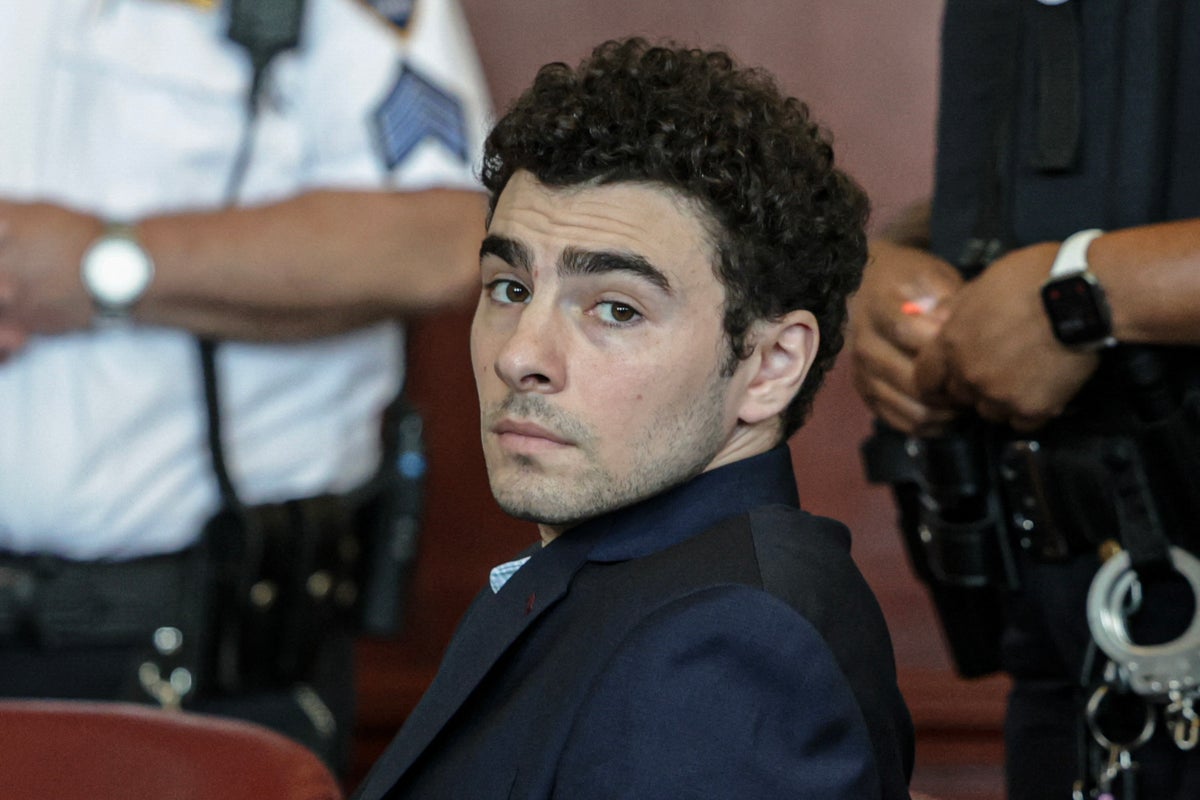
The operational efficiency of a high-stakes criminal prosecution depends on strict execution of low-level administrative protocols. When the Manhattan District Attorney's office failed to secure the physical presence of Luigi Mangione for his June 16, 2026, state court hearing, the breakdown was not a failure of legal strategy, but a breakdown in the bureaucratic logistics of multi-jurisdictional custody. Mangione, the defendant accused of the December 2024 murder of UnitedHealthcare CEO Brian Thompson, remains detained in a federal facility in Brooklyn while simultaneously facing capital-level charges in both state and federal systems. The cancellation of the scheduled hearing highlights a systematic structural friction that occurs when independent judicial systems attempt to process the same high-profile defendant on compressed, concurrent timelines.
The immediate cause of the disruption was a failure to execute a writ of habeas corpus ad prosequendum—the standard legal mechanism required to transfer a detenu from federal custody to a state courtroom. Assistant District Attorney Joel Seidemann confirmed that while the prosecution successfully obtained the judicial signature for the writ, the office failed to serve the document to the federal facility housing Mangione. This administrative omission neutralized a separate, proactive order issued by federal Judge Margaret Garnett, which had already authorized civilian clothing for the defendant. The incident reveals how administrative fragmentation between state prosecutors and federal custodians can completely stall capital proceedings, irrespective of judicial intent.
The Custodial Bottleneck: Federal Power vs. State Jurisdiction
When a defendant faces concurrent state and federal indictments, the physical control of the asset—the defendant—is dictated by the principle of primary jurisdiction. Because Mangione is physically housed in a federal detention center, the federal government maintains primary physical custody. State authorities possess only secondary jurisdiction, meaning their ability to advance their trial calendar relies entirely on the formal, error-free execution of intergovernmental transfers.
The procedural steps required to execute a state court appearance for a federal inmate involve three distinct operational phases:
- Judicial Authorization: The state prosecutor must file a motion demonstrating the necessity of the defendant's presence, securing a signed writ from the presiding state judge.
- Interagency Service: The state prosecution must formally serve the signed writ to the United States Marshals Service or the Bureau of Prisons warden within a prescribed operational window before the court date.
- Logistical Execution: Federal transport details must coordinate with state court officers to transfer custody, manage the transport corridor, and guarantee return delivery post-hearing.
The Manhattan District Attorney’s failure occurred at the second phase. By failing to serve the signed writ, the state prosecution left federal jailors with no legal authority or operational directive to release Mangione to state officers. The state court is structurally powerless to compel production without the validated paperwork, forcing an immediate adjournment.
Jurisdictional Race Conditions and Calendar Compression
This administrative error does not occur in a vacuum; it takes place within a highly compressed, competitive trial calendar. State Judge Gregory Carro has scheduled the state murder trial to begin on September 8, 2026. Meanwhile, Mangione’s federal trial on stalking and interstate commerce charges is scheduled to commence just weeks later, on October 13, 2026.
This narrow window creates a jurisdictional race condition. Both systems are racing to empanel a jury first, as the initiation of the first trial significantly impacts the logistics, defense resources, and potential double jeopardy arguments of the second. The defense has explicitly stated intentions to pursue double jeopardy claims under the Fifth Amendment, arguing that the overlapping state and federal prosecutions constitute an unconstitutional dual punishment for a single course of conduct.
While legal precedent generally permits separate sovereigns (the state and the federal government) to prosecute the same individual for distinct offenses arising from the same act, the logistical strain on the defense team is absolute. Preparing for two complex trials simultaneously creates an operational bottleneck for defense counsel, who must review vast troves of digital evidence, forensic data, and a 3D-printed firearm while responding to distinct evidentiary deadlines in two different courts.
The Costs of Secret Proceedings and Information Asymmetry
The postponed June 16 hearing was highly anticipated because it was slated to deliver a ruling on an unspecified matter derived from a sealed, virtual hearing held on June 3. Judge Carro’s decision to close that proceeding at the request of the defense—without public explanation—has introduced significant information asymmetry into the case.
In the United States, judicial proceedings carry a strong presumption of public access, rooted in First and Sixth Amendment protections. Closing a hearing requires meeting a strict legal standard: proving that open proceedings would cause overriding harm to a defendant’s right to a fair trial, and demonstrating that no less restrictive alternatives exist. The lack of transparency surrounding the June 3 proceeding, combined with previous instances where court staff restricted press access to evidence, creates structural risks for the prosecution's eventual verdict.
A lack of transparency leaves the record vulnerable to appellate challenges. If a trial court routinely seals proceedings or evidence without entering detailed, on-the-record findings of fact to justify the closure, any resulting conviction faces an elevated risk of reversal on appeal. The administrative delay on June 16 compounds these structural vulnerabilities by extending the timeline and increasing public and media scrutiny on the court's procedural integrity.
Operational Framework for Multi-Jurisdictional Trial Management
To prevent low-level administrative failures from derailing high-stakes litigations, prosecution offices must transition from reactive legal workflows to structured project management frameworks. The reliance on individual attorneys to manually verify the service of critical custody writs introduces unacceptable single points of failure.
District Attorney offices managing concurrent federal cases must implement a dual-signature verification protocol for all interagency writs. Under this framework, a dedicated trial coordinator must independently verify service with the receiving federal facility 72 hours prior to production. Furthermore, the court should establish standing, reciprocal production orders signed by both state and federal judges at the outset of concurrent indictments, eliminating the need for iterative, case-by-case writ service for routine pre-trial arguments.
The immediate tactical play for the Manhattan District Attorney is to re-serve the verified writ within the current 24-hour window to preserve the rescheduled June 17 hearing. Beyond this immediate fix, the prosecution must formally request a joint status conference between State Judge Carro and Federal Judge Garnett to align the pre-trial motions pipeline, thereby ensuring that administrative friction does not inadvertently create a viable ground for defense continuance requests or constitutional delay claims.