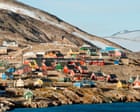
Capital flows into frontier energy markets rarely move in a regulatory vacuum. When a micro-cap entity projects billions of barrels of crude underneath an un-drilled basin, it is targeting the discrepancy between physical asset accessibility and geopolitical optionality. The strategic maneuvering of Texas-based March GL—recapitalized via a three-way merger into the publicly listed entity Greenland Energy—highlights the mechanics of Arctic resource arbitrage. By leveraging a grandfathered exploration license in East Greenland’s Jameson Land Basin, the firm has positioned itself at the center of a structural friction between sovereign regulatory boundaries, extreme maritime logistics, and high-level political rhetoric.
Understanding this dynamic requires stripping away ideological noise to assess the hard constraints of the project. To evaluate the viability of a frontier extraction play in a zero-infrastructure jurisdiction, analysts must pass the venture through three core operational filters. You might also find this connected article useful: Why Insider Trading Panic in UK Takeovers is a Complete Myth.
+------------------------------------------------------------+
|            THE FRONTIER EXTRACTION VIABILITY FILTER       |
+------------------------------------------------------------+
|                                                            |
|  [1. Regulatory Arbitrage] -> Is the asset grandfathered? |
|                                                            |
|  [2. Supply-Chain Resilience] -> Can logistics scale?      |
|                                                            |
|  [3. Fiscal Wellhead Economics] -> Is it commercial?       |
+------------------------------------------------------------+
The Legal Lifecycle of Grandfathered Assets
The primary friction governing Greenland Energy’s ambitions is the divergence between current sovereign environmental policy and historical contract law. In 2021, Greenland’s government halted the issuance of all new oil and gas exploration licenses, citing systemic environmental risk and a strategic pivot toward a 100 percent clean energy grid.
This policy change created an immediate supply-side constraint, turning surviving permits into rare options. Greenland Energy’s operational footprint relies entirely on a legacy concession in Jameson Land originally granted in 2014 to British resource firm 80 Mile PLC. Because the terms of this license remain legally binding, the asset sits outside the current moratorium. As reported in recent coverage by The Economist, the effects are notable.
This structural exception reveals the actual legal framework:
- The Regulatory Exception Rule: While the 2021 moratorium blocks new market entry, it does not retroactively cancel existing contracts that comply with their original performance milestones.
- The Phased Approval Bottleneck: Holding a valid exploration license does not grant automatic permission to drill. Greenland’s Department for Business and Natural Resources separates exploration into three distinct phases.
- The Compliance Hurdle: Phase one and phase two restrict operators to preliminary geological surveys and non-invasive testing. Actual exploratory drilling requires explicit Phase Three approval, which depends on multi-year Environmental Impact Assessments (EIAs) and local public consultations.
The gap between executive public announcements and regulatory reality introduces significant execution risk. Public statements from corporate executives and political surrogates projecting production volumes of two million barrels per day within ten months run into a strict administrative process. In practice, completing the required EIAs and establishing social license in settlements like Ittoqqortoormiit typically requires a minimum of 24 to 36 months before a drill bit touches the ground.
Over-the-Beach Logistics and the Zero-Infrastructure Penalty
Beyond regulatory approvals, the project faces major physical constraints. The Jameson Land Basin features a zero-infrastructure operating environment: it has no deep-water ports, no paved roads, no regional pipeline networks, and no commercial storage terminals. Every piece of equipment must be imported through a complex, weather-dependent supply chain.
To bypass the lack of deep-water ports, Greenland Energy has built a highly specialized maritime logistics alliance. By partnering with Canadian shipping operator Desgagnés and securing coastwise cargo transport clearance from Greenland’s state-owned carrier, Royal Arctic Line, the company is using high-latitude ice-class vessels designed for beach-landing operations. The logistics plan involves transporting 300 shipping containers of drilling infrastructure through 4,000 kilometers of icy waters for a direct over-the-beach deployment on East Greenland’s coast.
This operational approach introduces an extreme cost function:
$$\text{Total Capex} = C_{\text{mobilization}} + C_{\text{ice-class premium}} + C_{\text{demobilization}} + C_{\text{contingency}}$$
Where the over-the-beach asset deployment cost is exceptionally high due to specialized vessel charter rates, rigid seasonal weather windows, and the absolute lack of local secondary supply lines. If a single critical component fails or is omitted from the initial manifest, the operation cannot easily source a replacement, running the risk of stalling the campaign until the next summer thaw.
The Geological Analogue and Wellhead Economics
The economic case for Greenland Energy relies on a specific geological hypothesis. The Jameson Land Basin shares an architectural origin with Norway’s productive North Sea and Barents Sea fields. During the Permian-Triassic transition approximately 250 million years ago, the landmasses of present-day Greenland and northern Europe were joined. Subsequent tectonic rifting separated these regions, leaving identical oil- and gas-bearing sedimentary reservoirs on both sides of the Atlantic Margin.
While this geological relationship supports the potential for major oil deposits, it does not guarantee a commercially viable project. A vast gulf separates unproven resources from economically recoverable reserves. The basin’s commercial viability faces a multi-variable hurdle:
- The Discovery Discount: Seismic surveys from the 1980s by legacy operators like ARCO confirmed promising structural traps, but these structures have never been proven out by modern production wells.
- The Zero-Infrastructure Premium: In established basins like the Permian or the North Sea, an operator can bring a well online and tie it directly into existing pipelines or tanker terminals, keeping incremental transport costs low. In East Greenland, any discovered oil would remain stranded until billions of dollars are spent building offshore loading terminals or subsea storage facilities.
- The Global Cost-Curve Hurdle: Given the high capital costs of Arctic marine logistics and specialized environmental compliance, the break-even price for Jameson Land crude sits well above the global average. This means the project is highly vulnerable to global oil market downturns, as any sustained drop in oil prices would quickly wipe out its margins.
The Geopolitical Arbitrage Play
Greenland Energy’s strategy cannot be understood solely through the lens of geology or corporate finance; it operates as an asset-level play on geopolitical optionality. The convergence of interest between the corporate entities, high-profile public relations firms with deep political ties, and official diplomatic envoys suggests a deliberate strategy to align private resource development with national security frameworks.
By framing an unproven onshore oil field as a critical asset for "Arctic energy security," the stakeholders are positioning the project to hedge against geopolitical risk. If global energy markets face supply constraints due to geopolitical conflicts elsewhere, a grandfathered asset in a strategic Arctic zone gains considerable diplomatic and strategic value.
However, this alignment creates a complex relationship with the host nation. While US political figures frame Greenland resource access as a geopolitical necessity, Greenlandic authorities like the Ministry for Mineral Resources maintain strict sovereignty over their regulatory process. This dynamic creates a distinct risk profile: the corporate entity benefits from capital market interest driven by high-level political backing, but it must still navigate a local government highly protective of its environmental laws and political autonomy.
The ultimate path for Greenland Energy will not be decided by political speeches or executive declarations, but by the strict mathematics of the wellhead. The company must successfully convert capital from its public listing into completed environmental assessments, navigate a highly protective local bureaucracy, and execute an elite logistics campaign in a brutal climate. Until a drill bit physically penetrates the Jameson Land reservoir and pulls up a quantifiable flow of hydrocarbons, the valuation of the basin remains a highly speculative option on an unproven frontier.
For deeper context on how these shifting geopolitical realities intersect with energy markets, a detailed analysis of recent diplomatic maneuvers can be found in this Yahoo Finance report on Arctic oil exploration, which tracks the growing friction between US investment initiatives and local sentiment on the ground in Nuuk.