The BRICS agricultural framework cannot be evaluated through the lens of standard diplomatic communiqués. When the 16th BRICS Agriculture Ministers’ Meeting commenced in Indore under India's 2026 presidency, media coverage focused heavily on the rhetoric of cooperation. This misses the underlying economic reality. The bloc controls 42% of global agricultural land, accounts for more than 42% of global food produce, and houses 70% of the planet's small cultivators. Consequently, any shift in internal BRICS agricultural policy modifies the global terms of trade, alters international supply chain mechanics, and redefines global food security architectures.
To understand the strategic trajectory of this bloc—which now spans 11 major emerging economies including Brazil, Russia, India, China, South Africa, Egypt, Ethiopia, Iran, Saudi Arabia, the United Arab Emirates, and Indonesia—one must analyze the structural friction points and operational trade-offs discussed during the five-day conference.
The Macro-Agrarian Asymmetry Framework
The fundamental challenge within the expanded BRICS bloc is the deep structural asymmetry between its member states. The bloc does not operate as a single economic unit; rather, it is divided into distinct agrarian profiles that create structural dependencies and trading inefficiencies.
- Net Calorific Exporters (The Production Engine): Countries like Brazil and Russia operate on massive scale economies. Brazil’s agricultural model relies on capital-intensive, large-scale agro-industrial complexes optimized for the export of soy, corn, and beef. Russia dominates global wheat export markets via vast, mechanized acreage. Their primary constraint is logistics and market access, not production capacity.
- The Smallholder Demand Centers (The Consumption Engine): India and China house nearly half of the world's population, but their agricultural output relies on highly fragmented landholdings. Of the 58 crore (580 million) farmers globally, 70% of small cultivators reside within BRICS nations, concentrated heavily in the Indo-Gangetic plains and China's smallholder provinces. These systems prioritize domestic price stability, rural employment, and caloric self-sufficiency over export optimization.
- Net Food-Deficit Import States (The Vulnerable Tier): Newer entrants like Egypt, Ethiopia, Saudi Arabia, and the UAE face acute domestic production constraints due to severe water scarcity or infrastructure deficits. They are structurally exposed to international commodity price volatility and supply chain disruptions.
This creates a permanent policy tension. Exporters seek deregulated trade paths and minimal export restrictions, while the demand centers and deficit states require stringent market interventions, state-led procurement, and buffer stocks to insulate vulnerable populations from macroeconomic shocks.
The Core Strategic Dilemma: Climate Resilience vs Yield Optimization
The primary technical friction point addressed by the Agriculture Working Group in Indore is the conflict between climate-smart adaptation and short-term yield requirements. The standard media narrative treats "climate-friendly smart agriculture" as a costless upgrade. In practice, it operates on a complex cost function where optimizing for environmental resilience frequently introduces near-term production bottlenecks.
The structural impact of climate volatility on BRICS agriculture manifests through three main channels:
[Atmospheric Variability] -> [Altered Hydrological Cycle] -> [Soil Organic Carbon Depletion] -> [Yield Degradation]
To counter these pressures without inducing food price inflation, the bloc is attempting to operationalize a dual-track technology framework:
1. The Digital Agriculture Infrastructure
The deployment of artificial intelligence, robotics, and remote sensing is designed to shift farming from static, calendar-based schedules to dynamic, data-driven interventions.
- Operationalizing Precision Nitrogen Application: By utilizing satellite telemetry and localized drone sensors, inputs can be varied across a single field. This limits nitrogen runoff, reduces capital expenditure on synthetic fertilizers, and mitigates nitrous oxide emissions without reducing crop yields.
- Automation of Smallholder Mechanics: The integration of robotics within smallholder frameworks requires a departure from Western large-scale machinery. The technical blueprint focuses on micro-mechanization—small, automated, low-weight electric implements capable of navigating fragmented plots without causing soil compaction.
2. The Soil Health and Regenerative Capital Trade-off
Transitioning to regenerative farming and improving soil organic carbon presents a capital-allocation problem for small cultivators. Moving away from chemical-intensive, flood-irrigated monoculture toward conservation tillage and cover cropping requires an upfront sacrifice in operational velocity.
During the initial transition phase (typically 3 to 5 years), yields can fluctuate unpredictably. For a smallholder farmer operating on marginal credit lines, this temporary drop in productivity is an existential risk. Without institutional mechanisms to provide bridging capital, subsidized credit, or guaranteed floor prices during this transition, the adoption rate of climate-smart methodologies will remain dangerously low.
Supply Chain Friction and the Geopolitics of De-Dollarization
A critical bottleneck to ensuring institutional food security across the 11-member bloc is the clearing and logistics of international agricultural trade. Global agricultural trade remains highly dependent on the US dollar for clearing and Western-dominated logistical infrastructure for shipping and insurance. This creates structural vulnerabilities for nations facing economic sanctions or foreign exchange shortages.
The strategic play under discussion within the BRICS framework involves creating a closed-loop agrarian ecosystem that reduces exposure to external financial systems through two primary mechanisms:
The Local-Currency Settlement Mechanism
By bypassing traditional SWIFT clearing networks and settling agricultural transactions in local currencies (such as the Renminbi, Ruble, or Rupee), the bloc aims to eliminate transaction drag caused by currency conversion volatility. For instance, a direct barter or local-currency clearing arrangement between Russian wheat exporters and Egyptian state procurement agencies insulates both nations from G7 financial crosswinds.
Sanction-Resilient Logistics and Value Chains
The expansion of BRICS to include key maritime and logistical choke points—specifically the UAE, Egypt (Suez Canal), and Saudi Arabia—provides an opportunity to construct secure, institutional trade corridors. The objective is to build dedicated storage hubs, processing zones, and tariff-free agricultural corridors that reduce transit times and lower the cost of freight insurance across the Global South.
Institutional Bottlenecks and Strategic Risks
The realization of the goals outlined in the Indore meetings faces significant structural impediments. Analysts must account for these institutional limitations before projecting a total shift in global agricultural power.
- Technological Asymmetry and IP Barriers: The exchange of advanced agricultural technology, AI algorithms, and robotic hardware faces strict domestic intellectual property protections. Transferring proprietary agronomic tech from high-tech manufacturing hubs like China to low-mechanization agricultural sectors like Ethiopia requires complex state-subsidized licensing agreements that are slow to materialize.
- Protectionist Domestic Mandates: When domestic inflation spikes, governments prioritize national consumers over international trade treaties. If India or Russia encounters a severe domestic crop shortfall due to an anomalous monsoon or drought, their immediate policy lever is an export ban. These sudden, unilateral market interventions undermine the reliability of the bloc's internal supply chains and disrupt the food security planning of import-dependent member states.
- The Financing Deficit: Shifting 70% of the world's smallholder farmers toward climate-resilient farming requires capital deployment at an unprecedented scale. While the New Development Bank (NDB) exists as a funding mechanism, its capital allocation has historically leaned toward large-scale industrial and transport infrastructure rather than fragmented, micro-level agricultural credit systems.
The Strategic Play
To transform the policy declarations of the Indore meet into actual economic leverage, the BRICS alliance must pivot from diplomatic alignment to hard institutional integration. The optimal strategic play requires the immediate creation of a tripartite agricultural architecture.
First, the bloc must establish a BRICS Sovereign Agricultural Stabilization Fund. This fund should operate as a multilateral grain and fertilizer buffer pool, backed by physical reserves in exporting nations and financial guarantees from cash-rich energy exporters like Saudi Arabia and the UAE. In the event of climate-induced crop failures or sudden supply chain disruptions, member states can draw from this pool at predetermined, non-speculative rates, bypassing Western commodity trading desks entirely.
Second, the transition to digital agriculture must be standardized through an Open-Source Agronets Architecture. Instead of forcing smallholders to buy proprietary software from Western agtech monopolies, India and China should co-develop and open-source their agricultural AI models, localized crop-yield prediction algorithms, and robotic blueprints. This software stack can then be customized by member states to match their specific soil, weather, and language profiles.
Finally, the bloc must tie its agricultural trade directly to its de-dollarization roadmap by mandating that a minimum of 30% of all intra-bloc agricultural trade be cleared via local currencies or Central Bank Digital Currencies (CBDCs) by 2028. This will create a baseline of non-dollar transaction liquidity, insulating the food security of the Global South from Western monetary policy adjustments.
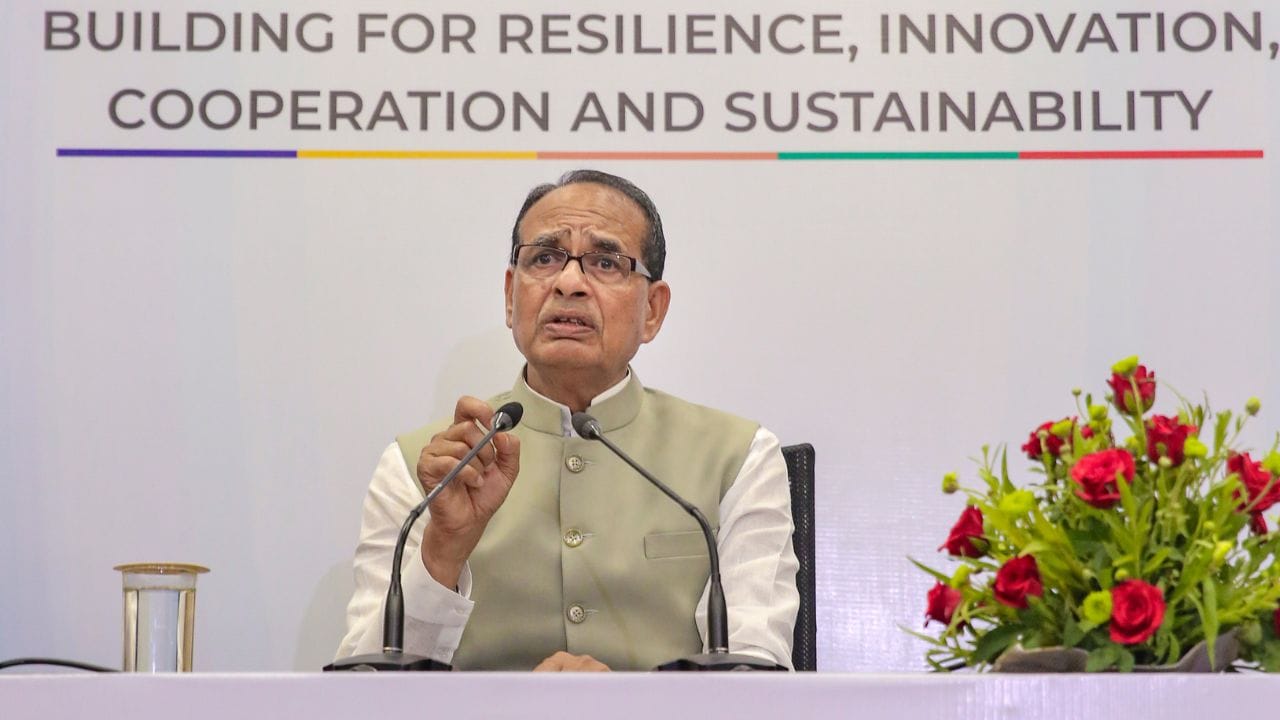
Agriculture Minister Shivraj Singh Chouhan briefs media on BRICS meet in Indore
This video provides direct insight into the official policy priorities and structural statistics presented by the host nation during the opening stages of the conference.