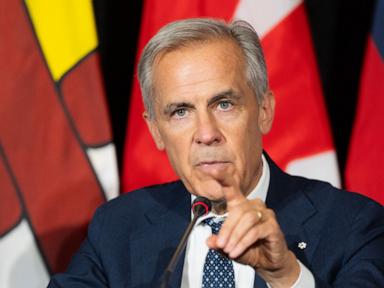
Canadian foreign trade policy faces a game-theoretic dilemma as the August 19 deadline for proposed 50% U.S. import levies approaches. The threat covers approximately CAD 28 billion ($19.8 billion) in annual exports, representing roughly 5% of Canadian outward trade to the United States and 0.8% of national GDP. Prime Minister Mark Carney's posture—holding off on preemptive countermeasures while keeping all retaliatory mechanisms available—reflects a precise calculated strategy aimed at optimizing bargaining power while mitigating self-inflicted economic drag.
Evaluating Canada's operational options requires dissecting the targeted sectors, calculating regional economic asymmetry, and mapping out the structural limits of Ottawa's leverage. For a different perspective, check out: this related article.
The Scope and Asymmetry of the Targeted Sectors
The scope of the U.S. proposal reveals a calculated tactical decision: apply high friction to finished goods and consumer items while explicitly carving out foundational inputs.
- Excluded Commodities: Crude oil, natural gas, potash, critical minerals, and seafood.
- Targeted Goods: Chemicals, plastics, industrial equipment, electronics, forestry products, cement, dairy, and consumer packaged goods.
Excluding energy and raw materials protects U.S. downstream processing industries from acute supply shocks and inflationary pressures. By targeting manufactured components and finished products, the proposal concentrates economic disruption within specific manufacturing hubs, primarily Ontario, Quebec, and British Columbia. Related coverage on this trend has been published by Business Insider.
This generates an asymmetric shock function within Canadian federalism. Industrial provinces face direct export compression, whereas resource-heavy provinces like Alberta and Saskatchewan remain largely insulated from direct tariff lines. Consequently, provincial preferences for retaliation diverge sharply based on local industry exposure.
The Three Pillars of Canadian Counter-Leverage
Ottawa's counter-strategy rests on three distinct operational levers, each carrying varying degrees of friction and economic feedback.
1. Symmetrical Tariff Matching
Ontario leadership has advocated for dollar-for-dollar tariff matching. In classical trade policy, retaliatory tariffs aim to impose politically concentrated costs on the opposing party's domestic constituencies. However, because Canada's economy is roughly one-tenth the size of the U.S. economy, broad horizontal tariffs impose higher deadweight loss on Canadian consumers than they inflict on U.S. producers. Symmetrical matching works primarily as a political signal rather than a structural threat.
2. Strategic Commodity and Energy Surcharges
Provinces like Ontario export significant volumes of electricity to northern U.S. grids. Implementing export surcharges or supply restrictions on regional electricity and critical inputs alters the cost equation for target border states. The limitation of this lever lies in contract enforceability, regulatory compliance, and the risk of accelerating permanent U.S. energy grid decoupling.
3. Non-Tariff Regulatory Barriers
Provinces maintain regulatory tools, such as retail distribution restrictions for imported goods. Eight provinces currently restrict U.S. alcohol sales through government-operated distribution networks. While non-tariff barriers impose low fiscal costs on Ottawa, their aggregate trade volume is insufficient to offset large-scale industrial tariffs.
The Non-Preemption Decision Matrix
Carney's refusal to enact retaliatory measures prior to the August 19 deadline follows sequential game logic. Early implementation yields two immediate risks:
- Loss of Negotiating Optionality: Preemptive retaliation converts a conditional threat into a hard dispute, locking both parties into a escalation cycle before formal negotiation channels exhaust their utility.
- Unilateral Deadweight Loss: Imposing retaliatory taxes before U.S. tariffs take effect inflicts immediate input cost inflation on domestic supply chains without securing trade concessions.
By deferring action, Ottawa preserves a credible threat matrix while testing whether the public deadline represents an anchor strategy designed to force concessions under CUSMA re-negotiation tracks.
Operational Execution Plan
To navigate the August 19 deadline without triggering structural margin compression, enterprise strategy must pivot from reactive lobbying to supply chain hardening:
- Establish Tariff Line Granularity: Audit all cross-border product flows against 8-digit Harmonized System (HS) codes. Products operating under existing CUSMA rules of origin must ensure full documentation compliance, as compliant trade lines remain sheltered under baseline regional rules.
- Re-route Intercompany Transfer Pricing: Enterprise firms with dual-national operations should re-evaluate intra-entity transfer pricing and manufacturing location rules to minimize duty exposure on high-margin industrial components.
- Contractual Cost-Shifting Clauses: Re-negotiate commercial supply contracts to incorporate explicit tariff risk-allocation clauses, defining clear duty-paid terms (DDP vs. DAP) before the August enforcement window opens.