The Federal Aviation Administration receives notifications regarding in-flight smoke or fumes in the cockpit nearly every single day. Yet, under current regulatory standards, commercial airline pilots are not required to complete a single hour of realistic, simulation-based training to manage a flight deck obscured by thick, blinding smoke. Instead, standard industry training routinely reduces one of the most time-critical emergencies in aviation to a static verbal discussion.
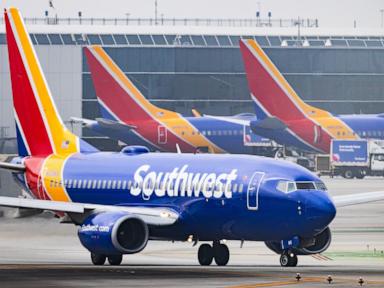
The structural disconnect between regulatory minimums and actual operational risk was brought into sharp focus following the National Transportation Safety Board investigation into a December 2023 Southwest Airlines Boeing 737 MAX incident out of New Orleans. Following a bird strike, the cockpit rapidly filled with dense, opaque oil smoke. The flight crew successfully donned oxygen masks and executed emergency procedures to land safely with all 139 passengers unharmed. However, the pilots explicitly stated to investigators that the real-world event was exponentially more challenging than anything they had experienced in training, citing immediate difficulty seeing their primary flight instruments and physical checklists. Don't forget to check out our recent article on this related article.
This operational gap reveals a systemic vulnerability. Had this event occurred at night or under Instrument Meteorological Conditions, where external visual references are non-existent, the loss of instrument visibility would present a catastrophic failure point. Resolving this requires shifting away from passive cognitive knowledge toward immersive, high-workload simulation that builds deep muscle memory.
The Tripartite Failure Vector of In-Flight Smoke
To understand why a verbal briefing is structurally insufficient to mitigate this risk, the emergency must be deconstructed into three intersecting variables that compound a pilot’s cognitive and physical workload. If you want more about the background here, Gizmodo offers an in-depth breakdown.
1. Sensory Decoupling and Visuo-Spatial Degradation
When smoke enters a flight deck, the primary casualty is the visual loop. Standard simulator training assumes a clear line of sight to the Primary Flight Display, the Navigation Display, and the Electronic Flight Bag checklists. Real-world oil smoke introduces severe visual attenuation within seconds. Pilots are forced to transition from rapid scanning to straining to read individual characters. This degradation breaks the critical feedback loop of instrument flying, inducing rapid spatial disorientation.
2. Physical and Communication Impedance
The immediate procedural response to smoke is the donning of emergency oxygen masks and smoke goggles. This action instantly introduces a steep operational tax:
- Field of View Limitation: Smoke goggles severely restrict peripheral vision, compounding the difficulty of scanning instruments already obscured by smoke.
- Acoustic Barriers: Microphones inside oxygen masks alter voice acoustics, forcing pilots to rely heavily on inter-cockpit communication channels that can distort or muffle critical commands.
- Tactile Friction: The physical presence of a pressurized mask and goggle assembly restricts head movement and alters the pilot’s spatial relationship with overhead switches and lateral consoles.
3. Exponential Workload and Time Compression
A smoke event is fundamentally an un-ordered emergency. Unlike a localized mechanical failure (such as an engine flameout), smoke forces the crew to execute a high-priority physical survival task (donning masks) while simultaneously diagnosing an invisible, evolving threat. The crew must run complex checklists to isolate the source—discerning whether the origin is environmental, electrical, or a structural engine failure—all while flying an aircraft with a degraded visual interface.
The Mechanics of Bleed Air and the CFM LEAP-1B Vulnerability
The Southwest Airlines incidents—including a March 2023 departure from Havana that filled the passenger cabin with smoke and the December 2023 New Orleans event—highlight a specific mechanical mechanism tied to modern high-bypass turbofan engines.
Commercial aircraft rely on compressed air bled from the compressor stages of the engines to pressurize and air-condition the flight deck and cabin. In the architecture of the Boeing 737 MAX, air bled from the left engine routes directly into the cockpit, whereas air from the right engine supplies the passenger cabin.
The root cause of the rapid smoke generation during these bird-strike events stems from a mechanical safety feature embedded within the CFM International LEAP-1B engines. To minimize catastrophic structural damage when an engine ingests a foreign object, a designed mechanical fail-safe releases oil to cushion and protect internal components. However, when a severe bird strike occurs, this oil is introduced to high-temperature compressor environments, vaporizing it instantly. Because the environmental control system continues to pull bleed air from the damaged engine, this vaporized oil is pumped directly into the cockpit or cabin ventilation systems.
Because a software-based fix from Boeing and CFM International remains in development, the primary line of defense shifts entirely to the operational execution of the flight crew. Flight crews must immediately identify the malfunctioning engine and isolate the corresponding engine bleed valve to stop the influx of smoke. If the wrong valve is closed, or if the diagnosis is delayed, the cockpit environment will continue to degrade.
The Training Deficiency: Static Discussion vs. Immersive Simulation
The core limitation of the current regulatory framework is the reliance on verbal or classroom-based reviews of the "Smoke, Fire, or Fumes" checklist. This pedagogical model satisfies regulatory compliance but completely fails to prepare a crew for the neurological stress of an actual emergency.
| Training Attribute | Current Standard (Verbal Discussion) | Proposed NTSB Standard (Immersive Simulation) |
|---|---|---|
| Cognitive Load | Low; retrospective and sequential | Extreme; requires high-stress multi-tasking |
| Visual Environment | Nominally clear; unobstructed instrument access | Obscured; requires tactical use of emergency lighting and instrument shielding |
| Physical Rehearsal | Absent; steps are spoken or read from a page | Active; physical deployment of masks under time-compressed conditions |
| Muscle Memory | Zero; relies on intellectual recall | High; builds automated physical responses to sensory cues |
The second limitation of static training is the omission of the "startle factor." When smoke manifests in an actual flight deck, it triggers an immediate sympathetic nervous system response, causing tunnel vision and elevated heart rates. Immersive simulation forces pilots to operate through this initial physiological spike, ensuring that procedural execution remains deliberate and precise rather than frantic.
Operational Constraints and Implementation Limitations
While the NTSB's recommendation to mandate realistic smoke-in-cockpit simulation training addresses an undeniable safety gap, implementing this across the commercial aviation sector introduces significant operational and technical hurdles for airlines.
The first constraint centers on simulator technology. Most modern Class D Full Flight Simulators do not feature integrated smoke-generation hardware capable of safely injecting synthetic, non-toxic smoke into the cab. Retrofitting hundreds of active simulators with such systems requires substantial capital expenditure and introduces maintenance overhead, as chemical residue can degrade sensitive simulator avionics and optical displays.
As an alternative, some training organizations utilize specialized "smoke goggles" for pilots that use liquid-crystal tech to electronically blur or obscure vision on demand, mimicking varying levels of visibility. While less invasive than chemical smoke, electronic goggles do not replicate the true spatial environment of a smoke-filled room, where ambient light scattering from screens alters instrument readability.
The second bottleneck is training capacity. Commercial airlines operate under tightly optimized simulator schedules, where every hour of simulator time is mapped out months in advance for recurrent type-ratings and proficiency checks. Inserting mandatory, high-intensity smoke training blocks means airlines must either extend training footprints—increasing labor costs and taking pilots off active flight lines—or compress existing maneuvers, potentially diluting training time spent on other critical flight profiles.
The Strategic Path Forward for Fleet Operations
Airlines cannot afford to wait for final regulatory mandates from the FAA or software updates from manufacturers. Forward-looking safety management systems must preemptively incorporate these dynamic variables into current training regimes.
The immediate tactical play for airline training departments is to utilize existing simulator infrastructure to maximize workload exposure, even in the absence of physical smoke generators. This is achieved by programming simulators to run smoke checklists under night or Instrument Meteorological Conditions while manually dimming cockpit displays to lowest legible thresholds to simulate visual attenuation. Forcing pilots to execute physical mask donning within a strict 15-second window while simultaneously managing complex ATC communications and isolating bleed air valves creates the necessary procedural friction. Building this operational resilience guarantees that when the daily statistic of cockpit smoke applies to your fleet, the crew relies on instinctual muscle memory rather than un-rehearsed theory.