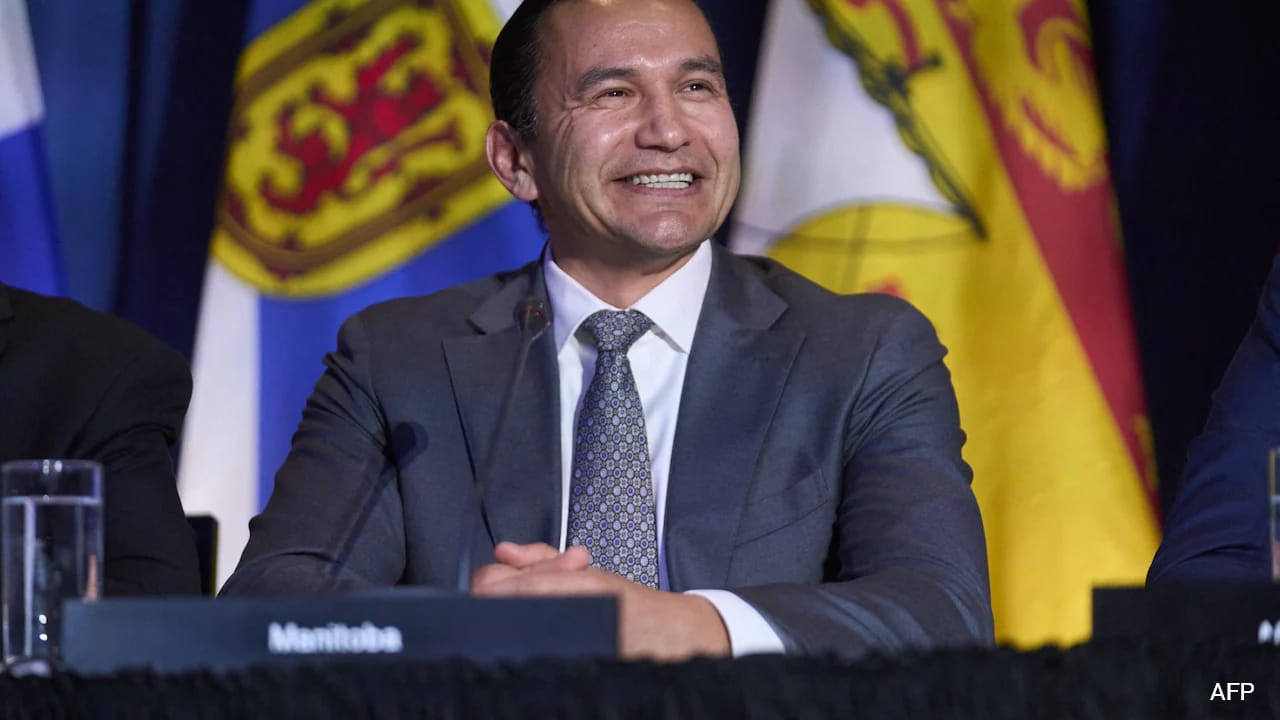
Geopolitical negotiations under asymmetric tariff threats reduce to a game of domestic political endurance and institutional credibility. When Manitoba Premier Wab Kinew characterized the white house administration as unreliable during ongoing bilateral trade talks, the outburst exposed the structural friction inherent in federal-provincial statecraft. Prime Minister Mark Carney faces an impending deadline regarding roughly twenty billion dollars in threatened Canadian imports, forcing an evaluation of sub-national concessions against federal macroeconomic stability. Understanding how regional retaliatory measures interact with federal diplomatic positioning requires examining the mechanics of economic leverage, regulatory choke points, and the cost functions of protectionist posturing.
The Three Pillars of Bilateral Leverage
Analyzing the current standoff between Ottawa and Washington demands looking past diplomatic rhetoric to map the actual components of state power.
- Regulatory Retaliation: Sub-national jurisdictions control distribution networks and procurement preferences. Eight of ten Canadian provinces restricted or banned American alcohol imports in response to prior protectionist actions, weaponizing provincial liquor boards against specific export constituencies in the United States.
- Temporal Asymmetry: Trade deadlines create compressed decision cycles. With a midnight Saturday cutoff for fifty percent tariff implementations, the White House leverages short-term market panic to force rapid administrative capitulation.
- Domestic Electoral Vulnerability: Economic pain registers differently across federal systems. While federal executives manage aggregate GDP metrics, provincial leaders monitor regional employment indices and cost-of-living metrics ahead of impending electoral cycles.
These three pillars dictate the boundaries of negotiation. When Prime Minister Carney presses premiers to restore American alcohol sales, he operates within a constrained optimization problem where giving up provincial retaliatory assets is the price of avoiding macro-level trade disruption.
The Cost Function of Sub-National Concessions
Surrendering retaliatory measures alters the bargaining equilibrium. Provincial liquor boards, such as Ontario’s LCBO which historically moved nearly one billion dollars annually in American products, represent high-visibility consumption targets. Removing these barriers functions as a direct signal of compliance.
However, regional leaders arguing against swift concessions point to the durability of agreements negotiated under duress. The strategic hazard involves asymmetric compliance. If Canada dismantles provincial procurement preferences and retail bans before securing permanent legislative exemptions from executive tariff authorities, the sub-national units lose their primary defensive mechanisms.
The mechanism relies on credibility. If an administration is perceived as structurally volatile—frequently deploying maximum tariff threats only to adjust timelines—long-term contractual certainty drops near zero. Consequently, regional officials calculate that a temporary economic shock from tariffs is structurally preferable to a permanent institutional surrender that yields no binding guarantee against future executive actions.
Mapping the Strategic Miscalculations
Public commentary surrounding trade disputes often mistakes tactical posturing for foundational economic shifts. Several structural realities govern the current bilateral dynamic:
- The Illusion of Permanent Resolution: Bilateral frameworks negotiated under acute threat profiles carry high decay rates. Without statutory congressional guardrails in Washington, executive trade pacts remain vulnerable to unilateral revisions.
- The Domestic Consumer Buffer: Provincial calls to boycott returned American goods introduce consumer-level friction that neutralizes the commercial benefit of lifted state-level bans. Retail availability does not equate to actualized demand if civic sentiment shifts purchasing patterns toward domestic alternatives.
- Intergovernmental Friction: Federal authorities must balance macro-level export exposure against provincial jurisdictional autonomy. Premiers retain control over local distribution laws, meaning a federal trade deal requires unanimous or near-unanimous sub-national alignment to execute effectively.
This creates a coordination dilemma. While federal negotiators seek an immediate treaty to preserve supply chain continuity for export-heavy sectors, provincial executives evaluate the domestic political cost of appearing submissive to external pressure.
Operational Execution for Bilateral Exposure
Managing exposure to volatile trade policy requires a systematic approach to supply chain redundancy and regulatory optionality. Enterprises operating across the northern border must decouple operational dependency from single-jurisdiction regulatory environments.
Contractual safeguards must account for sudden tariff re-impositions by embedding price-adjustment clauses that distribute cross-border fiscal burdens evenly between vendor and buyer. Furthermore, logistics networks should prioritize intra-provincial distribution hubs that remain insulated from federal customs bottlenecks.
By diversifying procurement away from sectors frequently targeted for retaliatory retaliation, commercial entities insulate themselves against the cyclical volatility of executive trade maneuvers. The primary objective is establishing an operational baseline that remains profitable regardless of whether sub-national trade barriers are reinstated or dismantled.