The Strategic Imperative of Cross Domain Integration
Military robotics has entered a phase where platform specialization is giving way to domain-agnostic interoperability. For years, autonomous systems operated in vertical silos. Aerial quadcopters mapped terrain from above, unmanned surface vessels patrolled littoral boundaries, and tracked ground vehicles navigated restricted pathways. This segregation limited operational velocity. When an aerial asset spotted a maritime target, the translation of telemetry across disparate command networks introduced latency, creating a tactical window for evasion.
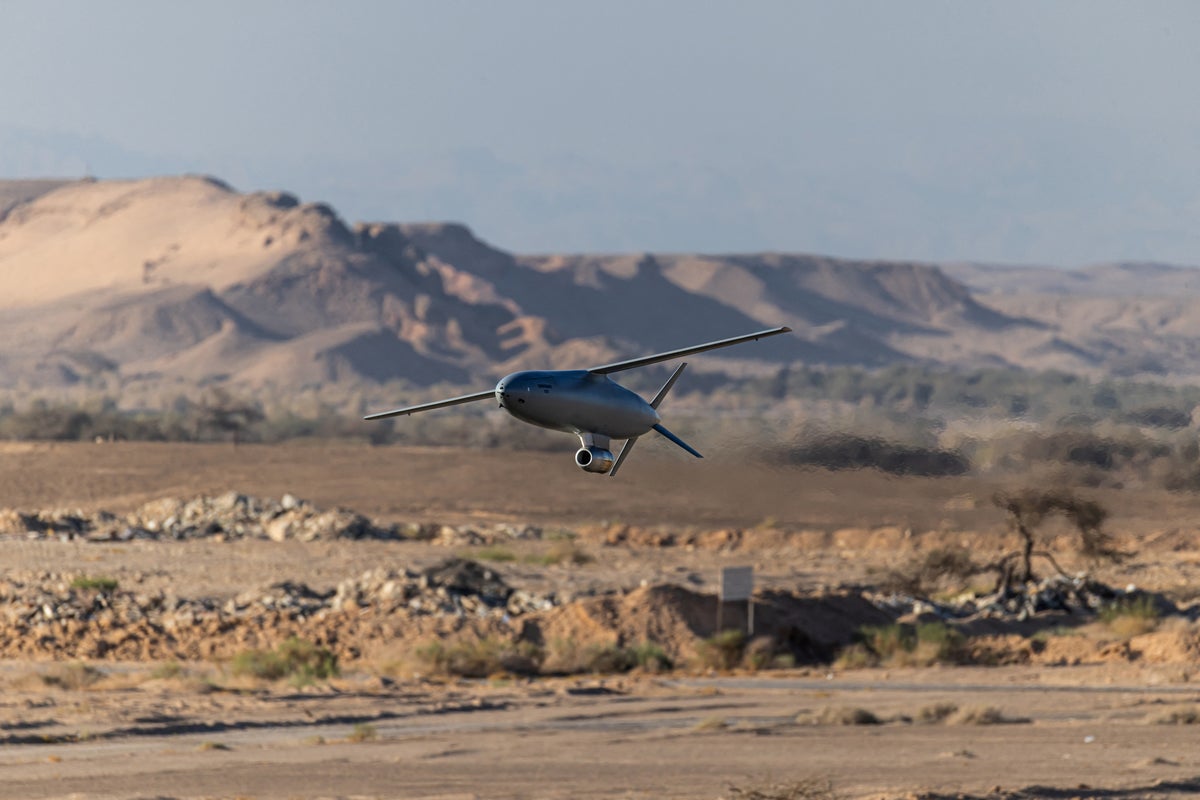
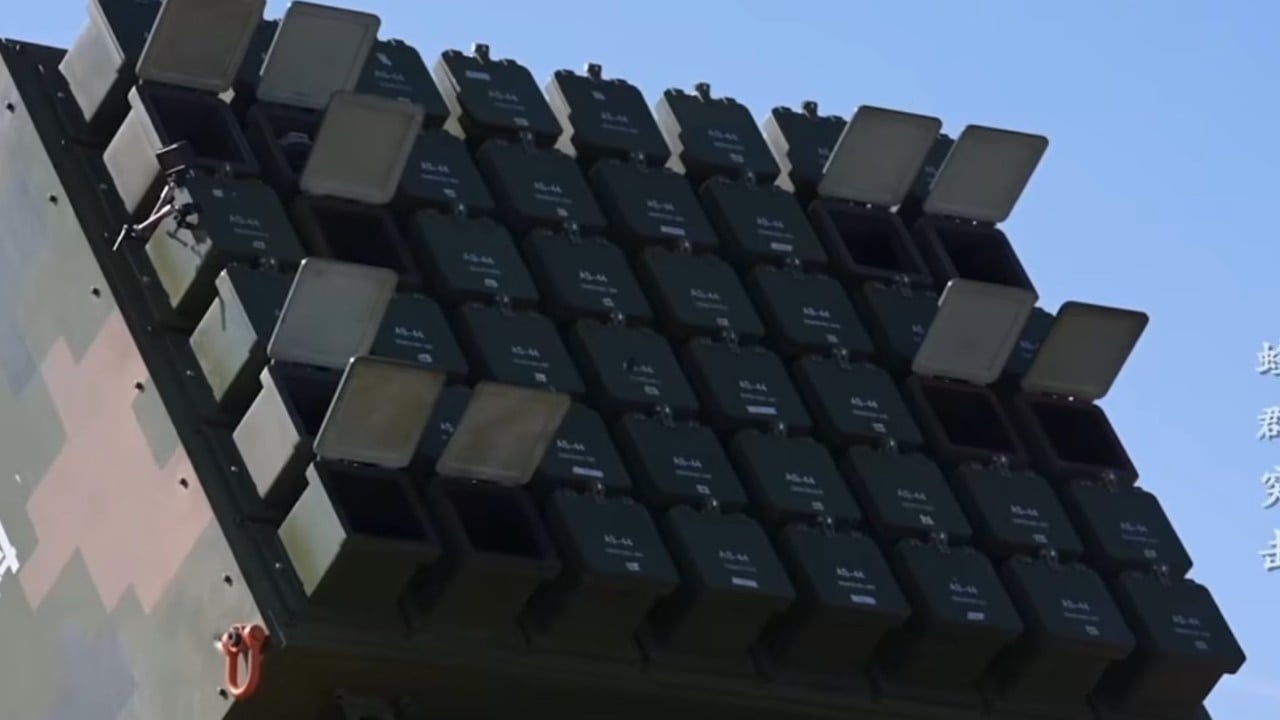
China's military-industrial complex is systematically closing this gap by developing cross-domain swarm architectures. This capability merges aerial, land, and sea platforms into a single, unified hive-mind network. Understanding this shift requires moving past breathless media narratives about sheer platform counts and examining the underlying engineering constraints, communication protocols, and tactical cost functions that dictate multi-domain swarm performance.
The primary driver behind this transition is the diminishing utility of single-domain saturation attacks. Advanced electronic warfare and directed-energy defenses have raised the attrition rate for aerial-only swarms. By diversifying the vector of approach across three physical mediums, an attacking force forces defenders to solve a simultaneous, multi-variable interception problem. Sensors optimized for high-altitude radar cross-sections struggle with low-signature surface drones, while acoustic dampening on ground crawlers confounds traditional ground-moving target indication systems.
The Architectural Bottlenecks of Heterogeneous Swarms
Building a swarm within a single domain is an exercise in distributed consensus algorithms and local sensor fusion. Extending that architecture across air, water, and land introduces three acute friction points: latency differentials, medium-specific propulsion trade-offs, and heterogeneous power constraints.
Latency and Propagation Constraints
Radio frequency communication behaves unpredictably across boundaries. Electromagnetic waves propagate freely through air, but attenuate rapidly in water. A marine surface drone cannot maintain high-bandwidth, low-latency links with an aerial drone using standard line-of-sight microwave frequencies if sea spray or wave geometry interrupts the Fresnel zone. Acoustic underwater communication is too slow for real-time swarm coordination, operating at speeds roughly five times slower than sound in air.
To overcome this, cross-domain swarms rely on hierarchical edge computing. Sub-swarms operate autonomously within their respective mediums using local visual inertial odometry and peer-to-peer optical or low-frequency RF pulses. Only high-level mission directives and target designation handoffs travel between domains, utilizing relay nodes positioned at the air-water or air-land interface.
The Physics of Propulsion and Payload
A platform optimized for aerial flight requires high power-to-weight ratios, necessitating lightweight composite materials and high-discharge lithium polymer batteries. Conversely, marine surface vessels demand corrosion-resistant hulls, watertight seals, and continuous-duty propulsion systems that prioritize torque over burst velocity. Ground vehicles require ruggedized suspension systems to absorb high-frequency shock loads.
Attempting to build a true transformer drone—a single machine that flies, floats, and rolls—results in compounding compromises. Weight added for marine waterproofing degrades flight endurance. Armor required for ground mobility destroys aerial payload capacity. Therefore, operational cross-domain integration relies on heterogeneous swarms: distinct, purpose-built platforms bound together by a common software architecture rather than physical metamorphosis.
Energy Density and Endurance Asymmetries
Aerial drones operate on tight endurance windows, typically twenty to sixty minutes. Surface vessels and ground rovers can operate for hours or days. This asymmetry creates a synchronization challenge. Aerial components of a cross-domain swarm must function as rapid-response or high-designation elements, while ground and sea components serve as persistent nodes or mobile charging stations. Docking mechanisms that allow aerial units to land on marine or ground platforms for inductive power transfer represent a critical, albeit mechanically difficult, engineering milestone currently under active development.
The Economic Cost Function of Multi-Domain Attrition
Military technology adoption is ultimately governed by economics. The fundamental utility of a drone swarm lies in its asymmetric cost exchange ratio. If a defender expends an expensive surface-to-air missile to destroy an inexpensive commodity drone, the economic balance favors the attacker.
Cross-domain swarms alter this calculus by exploiting the defender's sensor and weapon specialization. Modern air defense batteries are heavily optimized against fast-moving, high-altitude airborne threats. They are poorly configured to engage low-profile surface craft moving in erratic, swarming patterns. Conversely, naval point-defense systems are designed to intercept anti-ship missiles, not slow-moving aerial loitering munitions or subterranean-adjacent ground crawlers.
By deploying air, land, and sea assets simultaneously, an attacking force forces the defender to activate multiple, disparate radar and fire-control systems. This creates radar clutter and exhausts ammunition reserves across mismatched calibers and interceptor types.
However, the cost function cuts both ways. Heterogeneous swarms are expensive to manufacture compared to homogenous aerial commodity drones. Integrating specialized sensors, multi-band communication suites, and cross-domain translation software increases unit production costs. If the attrition rate of the swarm exceeds the economic replacement capacity of the industrial base, the tactical advantage collapses. The viability of these systems depends on modularity—using cheap commodity airframes integrated with high-value communication nodes that remain safely outside the direct engagement zone.
Tactical Mechanics of Coordinated Execution
Translating multi-domain capability into battlefield dominance requires specific operational choreography. The execution model operates through three distinct phases: initial insertion, decentralized convergence, and synchronized kinetic delivery.
Initial Insertion and Dispersal
Cross-domain swarms are rarely deployed from a single point. Aerial components launch from distributed mobile ground stations or naval vessels. Marine units enter via amphibious craft or coastal launch points. Land units deploy from transport vehicles or infiltrate autonomously. During this phase, absolute radio silence is maintained. Navigation relies on internal inertial measurement units backed by terrain-contour matching and celestial observation, mitigating electronic jamming.
Decentralized Convergence
As the swarm approaches the engagement zone, local mesh networks activate. Unlike centralized command structures where every node communicates with a remote human operator, these swarms utilize decentralized consensus protocols. If an aerial node is destroyed by enemy fire, adjacent nodes instantly reallocate sensor coverage sectors to eliminate the blind spot. If a marine drone encounters an impassable barrier like a breakwater, it transmits spatial telemetry to the broader network, causing trailing ground and air assets to dynamically adjust their routing vectors.
Synchronized Kinetic Delivery
The culmination of the maneuver is simultaneous multi-vector engagement. Surface drones approach coastal defense installations to draw fire and saturate optical targeting systems. Ground crawlers bypass traditional barricades to sever communication lines or deliver localized kinetic charges. Aerial drones descend from altitude to strike high-value assets from above, exploiting the blind spots of defenders who are looking outward toward the sea or downward toward the earth.
This multi-vector convergence breaks the cognitive processing capacity of human operators on the defending side. Human decision cycles are overwhelmed when threats materialize simultaneously across vertical and horizontal planes from completely different physical vectors.
Industrial and Technical Limitations
Despite the strategic appeal of cross-domain integration, significant technical hurdles prevent flawless execution. Recognizing these constraints separates realistic military analysis from speculative fiction.
Autonomous navigation without global positioning system access remains fragile. While visual inertial odometry performs well in clear conditions, it degrades rapidly in environments obscured by smoke, dust, or heavy precipitation—conditions common in contested combat zones. Furthermore, electronic warfare in the form of localized spectrum denial can isolate sub-swarms, forcing them onto pre-programmed fallback behaviors that lack tactical adaptability.
The software challenge is equally formidable. Writing decentralized control code that prevents friendly collisions while maximizing collective tactical utility requires advanced multi-agent reinforcement learning. Simulating these environments in laboratory settings does not fully capture the chaotic, non-linear variables of actual physical deployment. Software bugs that cause unexpected oscillation or self-collision within a single-domain swarm become catastrophic failures when cross-domain physics are introduced.
Supply chain dependencies also dictate capability ceilings. Advanced microprocessors, high-density energy storage cells, and specialized sensor suites require industrial ecosystems that are fiercely contested globally. Access to high-purity rare earth materials and sub-nanometer semiconductor fabrication facilities sets a hard limit on how rapidly these systems can be mass-produced.
Strategic Deployment Forecast
The proliferation of air-land-sea drone integration shifts the baseline of asymmetric conflict. Nations that master heterogeneous swarm architecture will render traditional territorial defense postures obsolete, as static fortifications and rigid command-and-control nodes become vulnerable to simultaneous multi-vector saturation.
Military planners must prioritize the development of multi-spectral, low-cost interceptor networks that can simultaneously engage targets across land, sea, and air without exhausting ammunition stockpiles. Concurrently, electronic warfare doctrine must evolve from simple GPS jamming toward cognitive spectrum operations that disrupt the peer-to-peer mesh networks holding heterogeneous swarms together. The future of tactical advantage belongs not to the side with the most platforms, but to the architect who best synchronizes disparate physical domains into a single, cohesive computational weapon.