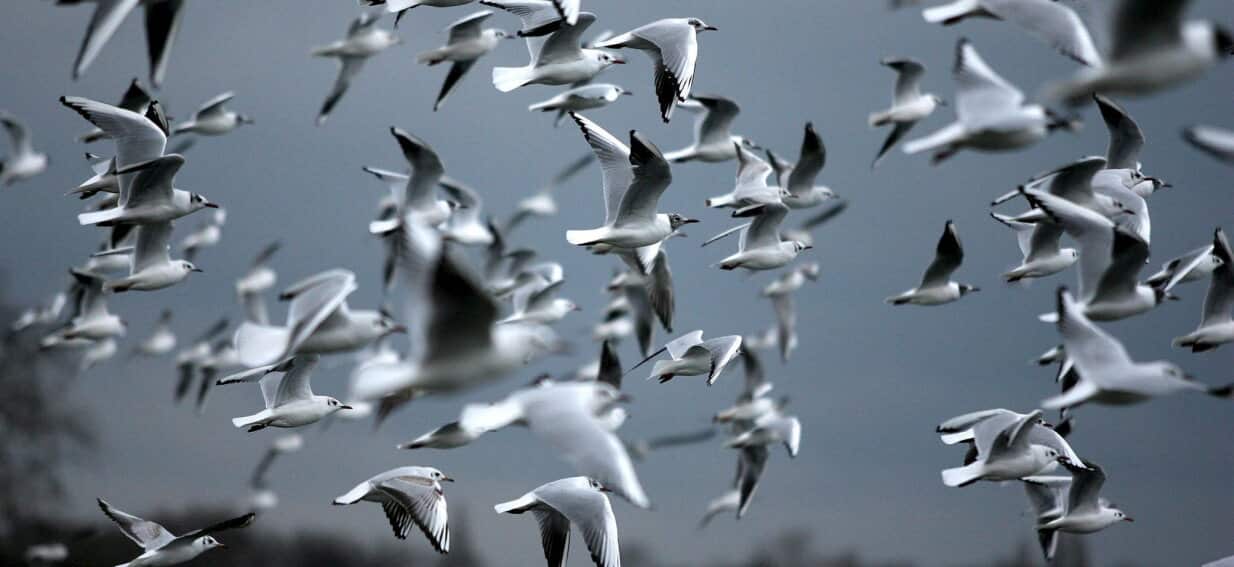
The confirmation of highly pathogenic avian influenza (HPAI) H5N1 clade 2.3.4.4b in an ocean-going brown skua on Petone Beach, Wellington, marks an irreversible structural shift in New Zealand’s biosecurity baseline. For decades, geographic isolation functioned as a natural firewall against global panzootics. However, this coastal index case validates the hypothesis that migratory pathways bypass localized borders entirely. The central challenge now transitions from an exclusion strategy to a highly technical containment and mitigation framework designed to protect vulnerable ecological assets and commercial poultry infrastructure.
Understanding the immediate risk requires evaluating the distinct vector pathways that dictate how a pathogens moves from a single pelagic bird into localized biological systems. The entry point is isolated, but the systemic implications expose vulnerabilities across wildlife conservation, agricultural economics, and the private insurance landscape. Recently making news recently: The Fault Lines in Indias Balancing Act Over Palestine.
+-----------------------------------------------------------------+
|                       INDEX DETECTION                           |
|             Pelagic Vector (Brown Skua) on Coast                |
+-----------------------------------------------------------------+
                                 |
                                 v
         +-----------------------------------------------+
         |     EPIDEMIOLOGICAL TRANSMISSION PATHWAYS     |
         +-----------------------------------------------+
                 /                               \
                /                                 \
               v                                   v
+-----------------------------+     +-----------------------------+
|    WILDLIFE INTERACTION     |     |    COMMERCIAL INGRESS       |
|  • Pelagic-to-Coastal Shift |     |  • Free-Range Exposure      |
|  • Communal Breeding Sites  |     |  • Waterfowl Vectors        |
|  • High Mortality Risk      |     |  • Biosecurity Breaches     |
+-----------------------------+     +-----------------------------+
The Tripartite Transmission Matrix
The threat vectors following a coastal detection are categorized into three operational channels, each governed by different transmission dynamics and containment protocols.
1. The Pelagic-to-Coastal Wildlife Loop
Ocean-going seabirds like the brown skua function as long-range vectors that cross maritime borders. The immediate risk is the spillover of the virus into localized, shore-dwelling wildlife populations. Because New Zealand's native avian species evolved in the absence of mammalian predators, their behavioral ecology emphasizes communal nesting and dense breeding grounds. This density creates a high-probability transmission environment. If the virus transfers from transient coastal scavengers to residential shorebirds or marine mammals, eradication becomes mathematically impossible. Additional details on this are covered by Reuters.
2. The Commercial Poultry Ingress Pathway
The commercial poultry sector operates under a strict biosecurity regime, yet physical vulnerabilities exist. The transmission pathway from wild birds to commercial flocks depends on two primary variables:
- Waterfowl Co-location: High-risk vectors, specifically wild mallards and other waterfowl, act as bridge species. They contract the virus from coastal zones and deposit viral sheds into inland waterways or pastures near production facilities.
- Free-Range Infrastructure Exposure: Commercial free-range layers face an exposure function determined by the total surface area of outdoor ranges and the frequency of wild bird incursions. The 2024 H7N6 outbreak in Otago proved that even domestic mutations of low-pathogenicity strains could rapidly devastate a single facility of 198,000 birds once introduced via environmental exposure. An exogenous introduction of H5N1 presents an accelerated mortality curve, reducing the detection-to-depopulation window from days to hours.
3. The Mammalian Interface and Public Health Risk
Data from global outbreaks indicate that H5N1 clade 2.3.4.4b exhibits increased affinity for mammalian hosts, particularly scavengers and marine mammals. While public health agencies classify the human health risk as low, requiring prolonged, direct contact with highly infected biomatter to cross the species barrier, the operational risk involves the mutation potential during replication within non-avian hosts.
Supply Chain Volatility and Structural Insurance Gaps
A widespread H5N1 incursion creates a severe economic bottleneck within the domestic food production sector, disproportionately impacting the egg supply chain before affecting chicken meat production. This imbalance is driven by distinct operational lifecycle timelines.
| Metric | Layer Infrastructure (Eggs) | Broiler Infrastructure (Meat) |
|---|---|---|
| Flock Replacement Cycle | 18 to 72 weeks | 5 to 7 weeks |
| Supply Elasticity | Highly Inelastic | Moderately Elastic |
| Upstream Vulnerability | Long-term genetic line disruption | Short-term hatchery disruptions |
| Downstream Impact | Immediate retail and industrial baking shortages | Substitutable protein adjustments |
The regulatory mechanism for managing an active poultry detection involves mandatory depopulation (stamping out) and the immediate imposition of a minimum 10-kilometer enhanced surveillance and movement control zone around the index property.
This regulatory intervention creates an immediate insurance coverage deficit. While the Government Industry Agreement (GIA) under the Ministry for Primary Industries (MPI) provides a cost-sharing framework for direct biosecurity intervention, testing, and direct asset compensation, it does not account for consequential economic losses.
Uninfected farms caught within a mandatory movement control zone face immediate revenue degradation due to logistical blockades. They cannot move product out, yet must continue to fund operating costs. The private insurance market presents a structural limitation; commercial underwriters generally sub-limit or completely exclude avian influenza business interruption cover once a domestic detection is verified. This places the entire financial burden of logistics disruptions directly onto the balance sheets of producers and downstream logistics providers.
Conservation Mechanics: Targeted Genetic Protection
The Department of Conservation's (DOC) deployment of a targeted vaccination program for 300 core breeding birds across five critically endangered species—the kākāpō, takahē, shore plover (tūturuatu), black stilt (kakī), and orange-fronted parakeet (kākāriki karaka)—reflects a shift toward active genetic preservation.
The strategy focuses on protecting the genetic baseline rather than attempting population-wide inoculation, which is logistically impossible for wild populations. The survival of these species depends on a strict protection formula:
$$\text{Species Survival Probability} = f(V_c, R_0, \alpha)$$
Where:
- $V_c$ represents the proportion of the core breeding nucleus successfully vaccinated ($300 \text{ birds}$).
- $R_0$ is the basic reproduction number of the virus within a specific avian colony density.
- $\alpha$ is the field efficacy coefficient of the vaccine against clade 2.3.4.4b under environmental stress.
The primary limitation of this conservation framework is its dependence on human intervention. Capturing, vaccinating, and monitoring wild, highly sensitive populations introduces capture-induced stress and logistical bottlenecks. If the virus reaches unmanaged subantarctic or offshore island sanctuaries before the core populations achieve sufficient antibody titers, localized extinctions of specific genetic lines remain a distinct possibility.
Technical Directives for Commercial Producers
Eradication is highly unlikely if H5N1 establishes a permanent reservoir in wild bird populations. Commercial poultry operations must immediately transition from passive biosecurity protocols to aggressive physical exclusion frameworks.
- Total Exclusion of Open Water Sources: All open-air water retention ponds must be netted using heavy-duty, UV-stabilized polyethylene netting with a mesh size not exceeding 25mm to prevent wild waterfowl access. Surface water used for bird consumption must undergo mandatory online sanitization using chlorination, chlorine dioxide, or validated ultraviolet disinfection systems.
- Enclosure Transition and Range Management: Free-range operations must prepare for mandatory housing orders. This requires maintaining ready-to-deploy physical barriers or modifying ventilation systems to support long-term indoor confinement without inducing heat stress or air quality degradation.
- Logistical Sanitation Controls: Establish physical disinfection locks at all property boundaries. No vehicle may enter production zones without completing a dual-stage undercarriage and wheel wash utilizing a verified virucidal compound with proven efficacy against enveloped viruses (e.g., potassium peroxymonosulfate or glutaraldehyde-based solutions). Staff and external technicians must operate under a strict three-zone line-of-separation protocol, separating clean farm zones from potentially contaminated external spaces with mandatory, site-specific footwear exchanges.
:max_bytes(150000):strip_icc():focal(749x0:751x2)/auschwitz-2-691cb034ee9e43cfa45a0969012c6337.jpg)