The unexpected vacancy in a tier-one legislative race exposes the structural vulnerabilities of statutory ballot deadlines and internal party mechanics. When Graham Platner suspended his campaign for the United States Senate in Maine following severe personal misconduct allegations, he transformed a high-margin populist campaign into a complex logistical bottleneck. Under Maine election law, a major political party possesses a narrow statutory window to execute an emergency candidate substitution. Failing to optimize this transition guarantees the forfeiture of the ballot line, effectively ceding a critical seat necessary for chamber control.
The strategic imperative for the Maine Democratic State Committee relies on a binary timeline governed by Title 21-A of the Maine Revised Statutes. The mechanism of replacement is not an ideological debate; it is an optimization problem bounded by rigid operational constraints, legacy primary data, and factional alignment.
The Two-Stage Statutory Bottleneck
The replacement process operates under strict temporal boundaries that dictate the viability of any substitute candidacy.
[Primary Victory: June 9] ---> [Withdrawal Deadline: July 13] ---> [Selection Deadline: July 27]
The first phase is the Voluntary Resignation Threshold. State law dictates that a nominated candidate must formally withdraw by 5:00 p.m. on July 13 to allow the political party to fill the vacancy for the general election ballot. If a candidate misses this date, the party is statutorily barred from substituting the nominee unless the vacancy is caused by death or "catastrophic illness, condition, or injury." Because Platner executed his withdrawal prior to this July 13 cliff, the mechanism moved to phase two.
The second phase is the Committee Selection Window. Following a valid withdrawal, the state party committee faces a fixed 14-day window—terminating at 5:00 p.m. on July 27—to select, vet, and formally certify a replacement nominee with the Secretary of State. This creates a severe structural compressed timeline. A process that typically takes 12 to 18 months of public campaigning, financial auditing, and opposition research must be compressed into 336 hours.
The operational risk during this window is high. The committee must choose between a top-down appointment to maximize speed and stability, or an open nominating convention to maintain democratic legitimacy among a highly energized base.
The Electoral Capital Dilemma
Replacing a candidate who won 72.1% of the primary vote requires an analysis of the electoral capital left behind. Platner’s primary victory on June 9 set an absolute record for a Maine Democratic Senate primary, securing 156,084 votes and displacing the establishment favorite, Governor Janet Mills.
The replacement candidate faces an immediate deficit in two primary metrics:
The Ideological Realignment Cost
Platner consolidated a unique coalition of rural, working-class voters and progressive activists through aggressive economic populism, anti-monopoly rhetoric, and isolationist foreign policy. The institutional wing of the party cannot easily re-absorb these voters by nominating a conventional centrist without incurring severe turnout degradation in November.
Financial and Operational Disruption
An insurgent campaign relies heavily on decentralized small-dollar donor networks and localized volunteer infrastructure. When a candidate withdraws under a cloud of misconduct, these networks freeze. The incoming nominee cannot legally inherit the cash balances of the previous campaign committee; they must launch a new Federal Election Commission (FEC) entity and rapidly scale fundraising to counter an incumbent who has held office since 1997.
Strategic Archetypes for the Replacement Nomination
The state committee's decision matrix breaks down into three distinct candidate profiles, each presenting specific trade-offs between establishment stability and base retention.
The Ideological Continuity Model (Troy Jackson)
Former State Senate President Troy Jackson represents a direct attempt to capture the populist energy of the primary victory without the liabilities of the former nominee. Backed by national progressive figures, Jackson possesses established ties to organized labor and rural logistics networks (e.g., the logging industry).
- Advantage: High retention rate of the 156,000 primary voters; minimizes base alienation.
- Limitation: Suffers from historical statewide losses, having previously failed to secure the gubernatorial nomination, raising doubts about general election viability against a deeply entrenched incumbent.
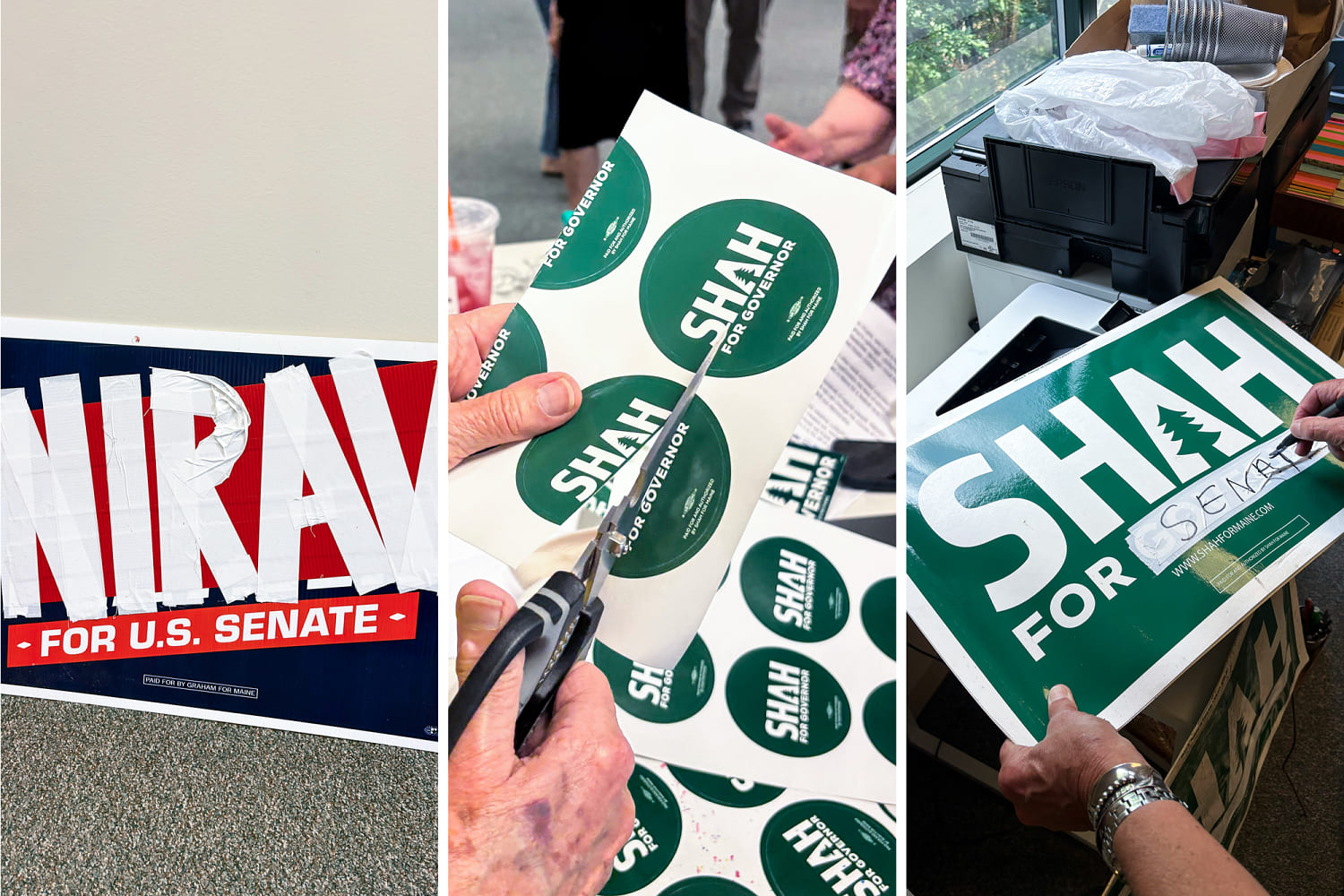
The Technocratic Capitalist Model (Nirav Shah)
The former director of Maine's Center for Disease Control and Prevention offers a resume defined by high public recognition gained during the COVID-19 pandemic.
- Advantage: Strong appeal to suburban independents and moderate swing voters who may have been alienated by aggressive economic populism. High baseline trust scores in public polling.
- Limitation: Zero institutional footprint within the progressive base; risks a catastrophic drop-off in base enthusiasm and volunteer mobilization.
The Institutional Standard-Bearer (Shenna Bellows)
As the current Secretary of State and a former Senate nominee, Bellows offers immediate operational readiness. She understands the bureaucratic mechanics of the ballot and possesses a statewide fundraising apparatus.
- Advantage: Rapid deployment of campaign infrastructure; zero learning curve regarding state election apparatus.
- Limitation: Historical data presents a major hurdle; Bellows lost the 2014 Senate race to the current incumbent by over 30 percentage points, signaling a low ceiling for growth in a general election environment.
Tactical Playbook for the 14-Day Window
To mitigate the structural bottlenecks of the selection window, the state party committee must execute a multi-layered operational strategy before the July 27 deadline.
- Simultaneous Multi-Candidate Vetting: The party must deploy parallel legal and investigative teams to conduct exhaustive background checks on all five major prospects concurrently. Given the prior failure to vet the initial nominee's online history and personal background, a sequential vetting process introduces unacceptable existential risk.
- The Open-Convention Compromise: To prevent allegations of backroom deals by the "donor class"—a narrative that the former nominee used to build his populist base—the committee must reject a closed-door appointment. Holding an emergency, transparent nominating convention with recorded votes from state committee members satisfies the demand for democratic legitimacy while maintaining the speed required by the July 27 deadline.
- Immediate Independent Expenditure Mobilization: Because a new nominee will start with zero dollars in their official FEC campaign account, national senatorial committees must instantly shift independent expenditure funds into the state. This capital must build a defensive media shield to prevent the incumbent from defining the new nominee before they can establish their own platform.
The final strategic move requires the party to choose between ideological purity and institutional insulation. If the committee prioritizes avoiding an internal party civil war, they must select a populist labor figure like Troy Jackson to absorb the record-setting primary turnout. Attempting to revert to a technocratic or establishment candidate will alienate the populist base, fracturing the coalition needed to win a high-stakes, margins-of-error general election.