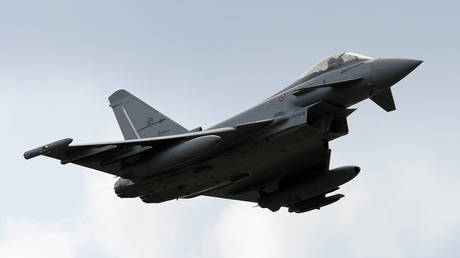
Air defense systems operate under a zero-margin-of-error constraint, a systemic vulnerability that turns
False Positives in Air Defense The Mechanics of Military Scrambles
news, technology
Military air defense networks operate under a structural imperative where the cost of a false negative approaches infinity while the cost of a false positive is treated as a localized operational overhead. When a European air defense command orders a fighter jet scramble in response to a flock of birds, observers outside the defense sector view the event through the lens of irony or technological failure. This perspective misdiagnoses the underlying system architecture. Air defense is not designed to achieve error-free classification at long range; it is engineered to manage uncertainty under tight temporal constraints.
To understand why military radar systems and human operators frequently misidentify biological reflectors as airborne threats, one must examine the operational parameters of early warning systems, the physical limitations of radar cross-section analysis, and the decision loops governing interceptor deployment.
The Radar Signal Problem and Biological Targets
Primary surveillance radar relies on the transmission of radio frequency energy and the measurement of the reflected signal return. The physical property governing this return is the radar cross section, which quantifies how well an object reflects radio waves back toward the receiver.
Large flocks of migratory birds, particularly species like starlings, geese, or ducks, present complex electromagnetic signatures. When tens of thousands of individual animals fly in close formation, they create a coherent volumetric return that can mimic the radar cross section of a small, low-flying aircraft or a subsonic cruise missile.
Radar operators and automated tracking algorithms evaluate targets based on kinematics, including ground speed, altitude, heading, and trajectory. While commercial and military aircraft maintain high ground speeds and predictable flight paths, bird flocks can drift, stall against headwinds, or alter vectors in ways that overlap with the performance envelope of slow aerial platforms, such as unmanned aerial vehicles or older training aircraft.
When a radar return exhibits characteristics that fall within an ambiguous classification band, automated identification systems frequently err on the side of caution. This is a deliberate design choice embedded in the software logic of modern air defense networks.
The Cost Function of Airspace Defense
The decision to scramble an interceptor jet is governed by a strict cost-benefit equation. The variables in this equation are heavily skewed by historical precedent and strategic doctrine.
The variables include:
- $C_{fn}$: The cost of a false negative. If an unidentified radar contact is ignored and turns out to be a hostile projectile or aircraft, the resulting loss of infrastructure, military assets, or civilian life is catastrophic.
- $C_{fp}$: The cost of a false positive. This includes fuel consumption, airframe fatigue on the interceptor, personnel deployment costs, and temporary operational disruption.
- $T_{reac}$: The reaction time available to intercept an inbound threat before it crosses a strategic boundary or enters a restricted zone.
When $T_{reac}$ is compressed, the decision-making window shrinks from hours to minutes. In this high-pressure environment, the system cannot afford to wait for absolute confirmation via visual identification before initiating a response. The jet is scrambled to establish a visual line of sight while the ground-based operators continue data collection. Consequently, a scramble initiated by a flock of birds is not a mistake in execution; it is the physical manifestation of a risk mitigation strategy designed to eliminate false negatives at the expense of generating false positives.
Human-in-the-Loop Constraints and Operator Bias
Modern command and control systems incorporate advanced sensor fusion, combining primary radar, secondary surveillance radar, transponder data, and electronic intelligence feeds. Despite this automation, human operators remain the final arbiters of the scramble decision during ambiguous scenarios.
Operators are trained under a psychological framework that penalizes hesitation. In simulations and operational doctrine, missing an actual penetration carries career-ending and strategic consequences, whereas authorizing an unnecessary interceptor launch results in minor administrative friction and budgetary expenditure. This asymmetry creates an institutional bias toward action.
When a cluster of anomalous returns appears on a scope, operators evaluate the proximity to sensitive airspace, the current threat level, and the reliability of surrounding sensor nodes. If gaps exist in secondary surveillance data—meaning the target is not squawking an identifying transponder code—the unknown return is treated as non-cooperative. A non-cooperative track moving toward a defended area triggers the default escalation protocol. The biological nature of the radar return is often only discovered after the pilot closes the distance and executes a visual identification run.
Systemic Vulnerabilities and Electronic Clutter
The interaction between biological phenomena and military hardware highlights the broader challenge of environmental clutter in modern defense systems. Weather fronts, insect swarms, chaff, and flocks of birds all contribute to the ambient noise floor of a radar operator's environment.
While moving target indication filters and Doppler processing help isolate targets with distinct radial velocities, dense biological formations can exhibit Doppler signatures that confuse filter algorithms. Birds adjust their flight vectors relative to wind currents, creating ground speeds that mimic mechanical propulsion.
As radar technology evolves toward higher frequencies and greater sensitivity to detect low-observable threats, the probability of detecting non-threat biological phenomena increases proportionately. High-resolution arrays capture minute details of environmental noise that older systems filtered out automatically. This creates a paradox where technological upgrades meant to enhance security also increase the frequency of environmental false alarms.
Strategic Allocation of Interceptor Assets
The operational overhead of managing false positives extends beyond immediate fuel and maintenance costs. Frequent unnecessary scrambles degrade fleet readiness over time. Each flight hour accumulated by an interceptor in response to a flock of birds consumes a fraction of the airframe's total structural lifespan, which is finite and expensive to replenish.
Furthermore, repeated false alarms can induce operational fatigue and complacency among crews. If a unit experiences a high ratio of false alarms to genuine intercepts, the perceived urgency of the alert protocol can degrade, introducing latency into the response chain during a genuine crisis.
Air defense commanders continuously balance these long-term readiness costs against the immediate necessity of sovereign airspace enforcement. Adjusting radar sensitivity thresholds or altering automated classification algorithms to reduce bird-induced scrambles risks introducing vulnerabilities that adversaries could exploit. If an air defense network is tuned to ignore slow, low-altitude returns to avoid bird strikes, a hostile actor could theoretically mask an approach using similar flight profiles.
The reliance on interceptor scrambles as a primary investigative tool remains a structural necessity until sensor fusion and classification algorithms achieve high-confidence autonomous identification of biological versus mechanical targets at extended ranges. Until that technological threshold is crossed, military command structures will continue to absorb the cost of false positives to ensure that no genuine threat passes unexamined.
Reallocate maintenance schedules to account for increased airframe fatigue resulting from false-alarm sorties, and direct engineering teams to refine Doppler processing algorithms to isolate biological clustering signatures from mechanical propulsion profiles without widening vulnerability gaps in low-altitude surveillance.