Politics is rarely broken by a single, shattering blow. It fractures the way old ice does under a sudden shift in weight—a long, agonizing crack that starts deep in the dark, silent for a moment, and then races across the surface until the whole structure splits beneath your feet.
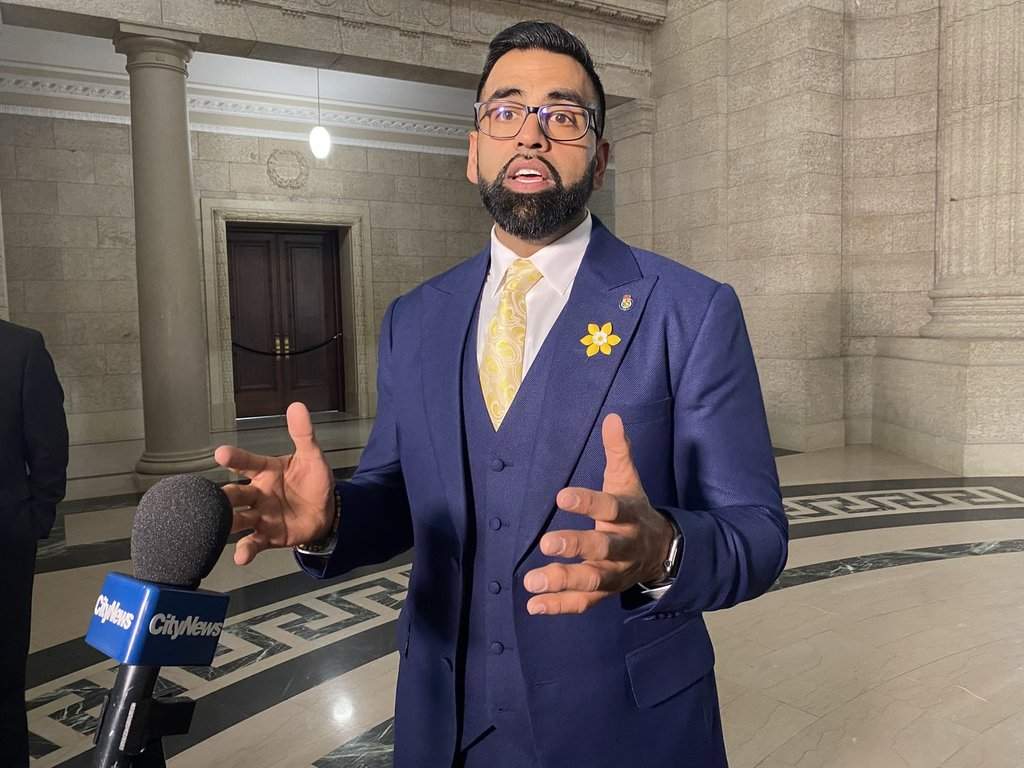
Obby Khan knew the sound of that ice.
When a leader steps down, the official dispatches speak in clean, bloodless geometry. They talk of direction, of timing, of personal chapters closing and new horizons opening up. Press releases are frosted glass; they obscure the room behind them so the public only sees a vague, dignified silhouette bowing out. But politics is a human furnace. And when the heat inside a party room gets too high, the people holding the levers either melt or burn.
To understand why a rising figure walks away from the table while the game is still being played, you have to step out of the legislative chamber and into the waiting rooms where ambitions collide.
Imagine the air inside a caucus meeting room late on a Tuesday evening. The stale coffee smell. The hum of the fluorescent lights that everyone pretends not to notice. On paper, a political party is an army marching under a single banner toward a shared horizon. In reality, it is a fragile federation of fragile egos, regional grievances, and competing visions of tomorrow. Every member carries the weight of a constituency in their briefcase—thousands of voters who expect miracles, roads paved, taxes lowered, hospitals staffed, schools built.
When a party is winning, those tensions are papered over with the cheap gloss of victory. Everyone can find a reason to smile for the cameras. But when the polls tighten, or when the internal friction turns from a dull ache into a sharp, grinding grit, the fractures start to show.
Obby Khan’s journey into public life was never a conventional career path. Long before his name appeared on a ballot, he was known as an entrepreneur, a builder who traded in hospitality and the tangible hustle of small business. In that world, if a roof leaks, you fix it. If a team doesn't work together, you change the lineup or change the culture. There is a brutal clarity to commerce: numbers go up, doors stay open. Numbers go down, you adapt or you close.
Politics operates by a entirely different, infinitely more frustrating set of physics.
In politics, you can do everything right by the ledger and still watch the walls cave in because someone three offices down is fighting a proxy war for control of the narrative. You can pour your entire life into constituency work, rising through the ranks of the Progressive Conservative Party of Manitoba, only to realize that the machinery you are trying to steer is spending more time fighting itself than fighting the problems facing the citizens outside.
Internal fighting is a slow poison. It doesn't make a loud noise at first. It starts as whispers in the hallways of the legislature. It looks like crossed arms during a caucus presentation. It sounds like strategic leaks to reporters looking for a headline on a slow Thursday afternoon. Over time, those micro-confractions drain the oxygen right out of the room.
A leader has a choice when that happens. You can armor up, pull the visor down over your eyes, and spend all your energy waging civil war within your own camp just to keep your seat at the head of the table. Or you can look around, calculate the toll it is taking on your peace, your family, and your purpose, and decide that the title isn't worth the erosion of your soul.
Khan chose the exit. And in doing so, he laid bare a truth that party strategists spend millions of dollars trying to hide: the hardest part of governing is never the opposition across the aisle. It is the coalition sitting right beside you.
Consider the cost of this constant internal friction on the broader public trust. When politicians spend their days trading barbs behind closed doors or managing factional skirmishes, the real business of governance grinds to a gear-grinding halt. Roads don't get repaired faster because two factions are arguing over who gets credit for the asphalt. Health care wait times don't shrink because a caucus is preoccupied with its own internal thermostat.
Voters sense this dysfunction instantly. You do not need to sit in the legislature to feel when a government has stopped looking outward and started staring navel-ward. It shows up as a collective fatigue among the electorate—a deep, cynical weariness that asks why anyone of substance would bother entering public service if they are just going to be chewed up by the internal meat grinder.
This is the hidden crisis of modern democracy. We have engineered political parties into such monolithic, hyper-tribal machines that they struggle to accommodate independent thought, fierce individuality, or the messy reality of genuine debate. Instead of iron sharpening iron, we get factions blunting each other into uselessness until leaders are forced to fall on their swords or walk away into the quiet.
When Obby Khan announced his departure, he didn't just leave a vacancy in Manitoba politics. He left behind a warning flare.
The political landscape is littered with the ghosts of leaders who stayed too long in rooms that were burning from the inside out, convincing themselves that they could outrun the smoke. Khan chose to walk out the door instead. He stepped away from the machinery of partisanship, leaving behind the titles, the briefings, and the endless loop of strategic positioning.
What remains in his wake is a party forced to look in the mirror and ask a hard, unvarnished question. When the internal warfare consumes the best people you have, what is actually left to lead?
The door clicks shut behind him, the legislative halls grow quiet for the evening, and out in the wider province, the real world keeps turning, waiting for someone to finally fix the roof.