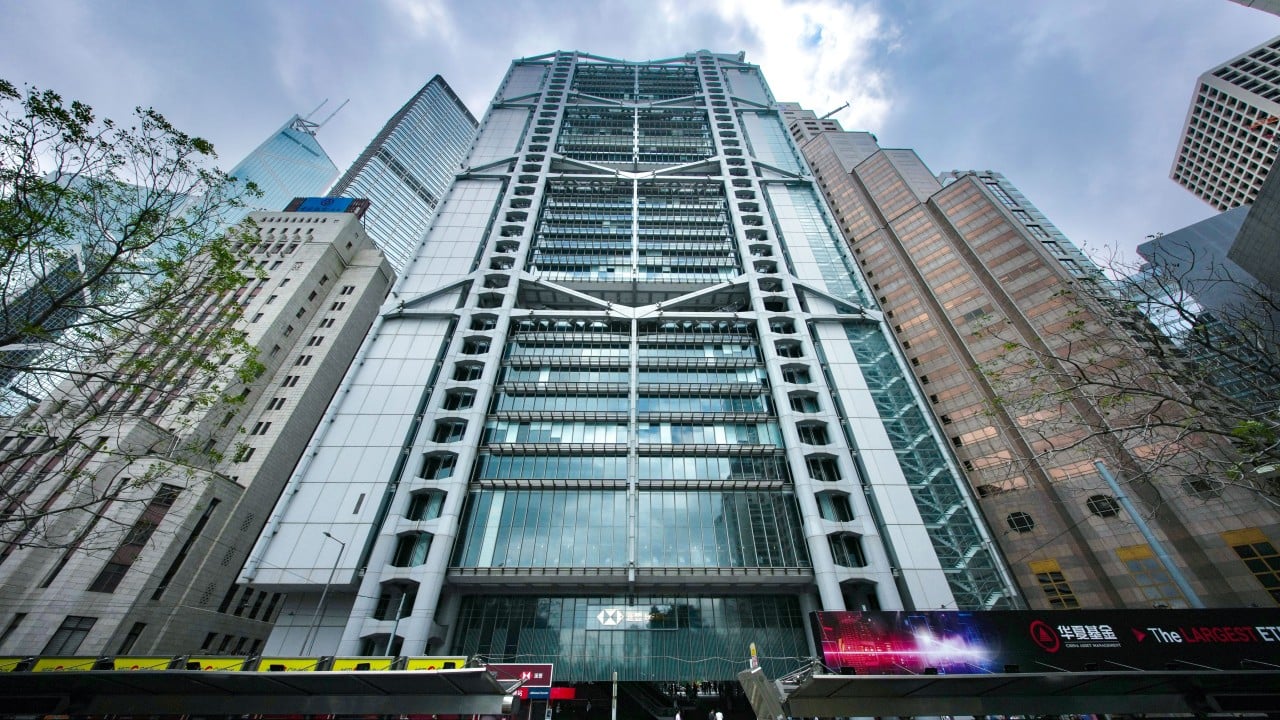
Presenting a counterfeit financial instrument valued at HK$200 billion (approximately US$25.6 billion) at the physical counter of a global systemically important bank represents a catastrophic failure in adversarial risk modeling. In major financial hubs like Hong Kong, tier-one institutions operate under deterministic verification architectures where the probability of a fabricated ultra-high-net-worth statement bypassing initial front-office triage approaches zero. When two individuals attempted to execute this exact maneuver at HSBC’s Hong Kong headquarters—resulting in immediate police intervention and arrest—they collided with a multi-layered defensive matrix designed specifically to neutralize synthetic liquidity claims.
To understand why high-value document fraud fails instantly at the institutional level, analysts must examine the structural divide between retail banking interfaces and ultra-high-net-worth (UHNW) custody protocols. Standard reporting on such arrests treats the event as an isolated criminal anomaly. A rigorous operational breakdown reveals a precise sequence of automated flags, cryptographic ledger mismatches, and human-in-the-loop escalation triggers that convert a physical walk-in attempt into a law enforcement detention within minutes.
The Structural Impossibility of Paper-Based Liquidity Claims
Modern institutional banking relies on closed-loop electronic ledgers rather than bearer-style paper attestations. A balance of HK$200 billion exceeds the entire annual gross domestic product of several sovereign nations and rivals the total assets under management of mid-sized regional banks. Assets of this magnitude do not exist as static, unmonitored cash balances accessible via a standard teller window.
Ledger Architecture vs. Physical Documentation
In tier-one banking operations, a physical bank statement serves solely as a historical, non-binding snapshot of an underlying database state. When a party presents a physical document claiming nine-figure or twelve-figure liquidity, the receiving institution does not evaluate the typography, paper stock, or ink quality of the document first. Instead, front-office personnel query the core banking ledger using the purported account identifiers.
Three immediate disconnects occur when a synthetic statement of this scale meets a live core banking system:
- Segregated Custody Isolation: Accounts holding assets above the US$100 million threshold are universally isolated from retail branch networks. They are ring-fenced within dedicated private wealth, institutional custody, or sovereign wealth divisions. A retail or commercial walk-in desk lacks the system permissions even to view, let alone transact upon, a genuine balance of HK$200 billion.
- Liquidity Deployment Mechanics: Capital at the US$25 billion scale is never held as idle demand deposits due to balance sheet drag, capital adequacy ratios under Basel III regulations, and negative yield implications. Genuine holdings of this size are structured across tri-party repurchase agreements, sovereign debt instruments, custodied equities, and syndicated credit facilities. A single-page or multi-page statement showing a monolithic cash figure contradicts basic institutional treasury management.
- Cryptographic and Out-of-Band Authentication: Legitimate proof-of-funds (POF) or bank comfort letters at the institutional level are transmitted exclusively via authenticated interbank messaging networks—primarily SWIFT MT799 or MT760 protocols—or verified through pre-established diplomatic and legal channels. Physical paper carries zero cryptographic signature verifiable against the bank’s internal public key infrastructure (PKI).
The Four Stages of Front-Office Escalation
When suspects present falsified high-value instruments at a flagship headquarters like 1 Queen's Road Central, the institution executes a standardized containment protocol. The objective is not merely to reject the transaction, but to preserve evidentiary chain-of-custody while preventing the perpetrators from fleeing prior to law enforcement arrival.
Stage 1: Triage and Account Lookup Failure
The initial point of contact—typically a floor manager or senior customer service officer—conducts a preliminary database query. If the account number on the counterfeit document does not exist, or maps to a dormant retail account with a nominal balance, the anomaly is classified immediately as a potential fraud event rather than an administrative error. At this stage, staff are trained to avoid alerting the presenters to the discrepancy.
Stage 2: Silent Escalation to Financial Crime Compliance
Rather than returning the forged document, the front-office representative initiates a covert escalation to the bank’s internal Financial Crime Compliance (FCC) unit and corporate security operations. The standard operational excuse provided to the subjects involves "senior management sign-off," "system synchronization delays," or "private banking liaison verification." This artificially extends the dwell time of the suspects inside a controlled, high-surveillance environment.
Stage 3: Evidentiary Capture and Forensic Preservation
While the subjects wait, corporate security isolates high-definition CCTV feeds covering the entry points, waiting areas, and service counters. Simultaneously, the physical document is scanned at high resolution and retained behind the counter to preserve latent fingerprints and printing artifacts. Under Hong Kong’s regulatory framework—specifically guidelines enforced by the Hong Kong Monetary Authority (HKMA) and the Joint Financial Intelligence Unit (JFIU)—banks possess broad statutory protection to detain suspicious instruments and notify authorities immediately when presented with suspected counterfeits.
Stage 4: Law Enforcement Handover
Because HSBC’s headquarters sits within minutes of Central District police facilities, physical response times for high-value financial crime alerts are minimal. Once officers arrive, the bank provides a formal statement confirming the non-existence of the claimed funds, alongside the physical counterfeit instrument and biometric surveillance logs. Under the Crimes Ordinance (Cap. 200) in Hong Kong, possessing or using a false instrument carries severe custodial penalties, shifting the incident instantaneously from a civil banking rejection to a criminal prosecution.
Behavioral Economics of Ultra-High-Value Document Fraud
The recurrence of brazen, seemingly irrational fraud attempts—where perpetrators walk directly into the issuing bank's own headquarters with a forged statement bearing that exact bank's letterhead—appears counterintuitive. However, analyzing the mechanics of advance-fee fraud and intermediary deception reveals the underlying incentives driving these incidents.
The "Verification Trap" in Secondary Markets
In many documented cases across Asian and European financial centers, the individuals presenting the fake documents at the bank counter are not the masterminds behind the forgery. They are frequently downstream brokers, desperate borrowers, or compromised intermediaries caught in a verification trap:
- Synthetic Collateralization: A syndicate fabricates a massive proof-of-funds statement to secure upfront origination fees, monetize the instrument through shady private lenders, or lease the "bank guarantee" to third parties.
- Forced Counter-Party Verification: When a prospective lender or joint-venture partner demands direct, in-person verification at the issuing bank's flagship branch before releasing capital, the intermediary is forced to walk into the headquarters to maintain the illusion.
- Cognitive Bias and Sunk Cost: Intermediaries who have already invested capital or reputation into a fraudulent deal structure often convince themselves that the document is legitimate—frequently told by upstream fraudsters that the account is an "off-ledger sovereign deposit" or "heritage asset" hidden from standard branch tellers.
The Myth of "Off-Ledger" Accounts
A persistent narrative within international financial fraud circles claims that tier-one banks maintain secret, off-ledger accounts holding trillions of dollars in historical gold-backed bonds or sovereign humanitarian funds. Fraudsters instruct couriers to present fake statements at flagship headquarters and demand access to "special private wealth officers" who hold the decryption keys to these hidden ledgers.
From an accounting and regulatory perspective, off-ledger demand deposits are an operational impossibility. Every liability on a bank's balance sheet must reconcile daily with central bank clearing systems, external auditors, and capital reserve requirements. An unrecorded liability of HK$200 billion would represent roughly 2% to 3% of HSBC Hong Kong’s entire balance sheet, making concealment from internal audit, the HKMA, and global clearing counterparties mathematically impossible.
Regulatory and Legal Risk Matrix in Hong Kong
Hong Kong operates one of the most stringent anti-fraud and anti-money laundering (AML) enforcement regimes globally. Attempting to pass a counterfeit instrument within this jurisdiction triggers overlapping statutory liabilities that eliminate any viable legal defense based on ignorance.
Statutory Offenses Under Cap. 200
Under Part IX of Hong Kong's Crimes Ordinance, the legal threshold for culpability regarding false instruments is strictly defined:
- Forgery (Section 71): Making a false instrument with the intention that it shall be used to induce somebody to accept it as genuine, thereby causing prejudice to another person.
- Using a False Instrument (Section 73): Presenting a document known or believed to be false to induce acceptance. Walking into a bank headquarters and handing a fabricated statement to a teller satisfies the actus reus (physical act) of this offense instantaneously.
- Possession of a False Instrument (Section 75): Mere custody or control of a forged financial document without lawful authority or excuse constitutes a standalone criminal offense, carrying a maximum sentence of up to 14 years imprisonment upon conviction on indictment.
Systemic Deterrence and Institutional Reputation
For institutions like HSBC, rapid prosecution of physical walk-in fraud serves a dual purpose. First, it satisfies strict regulatory obligations under the Anti-Money Laundering and Counter-Terrorist Financing Ordinance (Cap. 615), demonstrating to regulators that front-line defenses actively intercept anomalous activity. Second, it creates a public deterrence signal aimed at transnational fraud syndicates that routinely misuse the bank’s brand identity in global advance-fee schemes.
Operational Limitations of Front-Office Detection
While physical walk-in attempts with absurdly inflated figures are intercepted with near-100% efficiency, security strategists recognize that front-office verification protocols possess specific structural boundaries.
- External Circulation Blind Spots: A bank can only intercept a forged statement when a party brings it directly to the bank for authentication. Counterfeit HSBC statements circulate continuously in opaque offshore jurisdictions, private equity pitch decks, and unregulated crypto-otc desks where counterparties rely on visual inspection rather than direct bank confirmation.
- Social Engineering Vulnerabilities: While core ledger checks prevent fraudulent payouts, sophisticated adversaries occasionally exploit human error to extract non-public metadata—such as confirming whether a specific account number format is valid or obtaining the name of an actual relationship manager—which is then used to refine future forgeries.
- Resource Allocation Friction: Every false-positive or blatant walk-in fraud consumes compliance hours, security personnel bandwidth, and legal reporting overhead, creating an operational tax on legitimate branch operations.
Strategic Imperatives for Counterparty Verification
Organizations, private lenders, and corporate treasury teams evaluating high-value proof-of-funds documents must eliminate reliance on physical paper or PDF attachments entirely. Due diligence workflows must be re-engineered around direct, cryptographic, and institution-to-institution verification channels:
- Mandate Bank-to-Bank SWIFT Confirmation: Require the counterparty’s institution to transmit an authenticated SWIFT MT799 (Free Format Message) or MT760 (Guarantee/Standby Letter of Credit) directly to your receiving bank’s compliance desk, bypassing all intermediaries and physical documentation.
- Enforce Independent Callback Protocols: Never utilize phone numbers, email addresses, or contact names printed on a submitted bank statement. Source the issuing bank’s institutional verification desk independently through verified regulatory directories or existing correspondent banking relationships.
- Apply Economic Plausibility Filters: Immediately reject any transaction structure where a party claims to hold sovereign-scale cash liquidity (exceeding US$100 million) in a standard commercial checking or savings account, or where the counterparty demands upfront administrative fees prior to independent ledger verification.