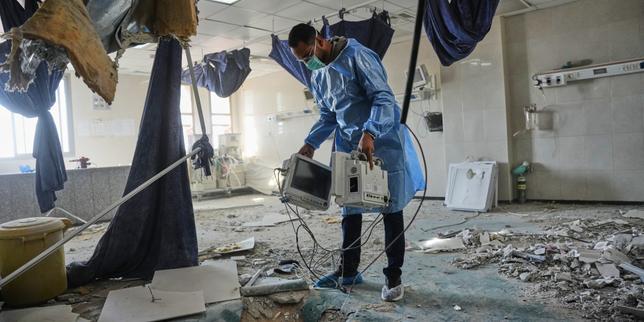
Military operations inside densely populated urban environments create a structural collision between tactical objectives and international humanitarian law, particularly when medical facilities become contested operational zones. In Gaza, recurring military strikes on Nasser Hospital illustrate the recurring mechanics of modern urban conflict, where accusations of dual-use infrastructure collide with the legal and physical protection of non-combatants. Understanding these incidents requires separating emotional reporting from the operational, legal, and logistical frameworks that govern warfare around protected civilian sites.
The Structural Collision of Dual-Use Infrastructure
Standard military doctrine classifies infrastructure into two distinct categories: civilian objects and military objectives. Under the Geneva Conventions, hospitals receive special protected status, meaning they cannot be targeted unless they are used outside their humanitarian function to commit acts harmful to the enemy. The operational breakdown occurs when an asymmetric force integrates command nodes, tunnel networks, or staging areas beneath or adjacent to medical complexes.
This creates a three-part operational dilemma for any conventional military force:
- The Intelligence Verification Gap: Confirming whether a hospital is actively used for military logistics requires high-confidence human intelligence or persistent signals intelligence. Remote sensor data rarely distinguishes between an ambulance transporting critical trauma patients and a vehicle moving tactical personnel.
- The Proportionality Calculus: Even when a military objective is confirmed inside a medical compound, international law requires commanders to weigh the anticipated military advantage against expected incidental civilian harm. In a functioning hospital operating beyond capacity, the collateral damage threshold is almost immediately breached.
- The Attribution Asymmetry: Non-state actors operating within civilian infrastructure face minimal institutional accountability for violating the principle of distinction, whereas state militaries bear full diplomatic, legal, and reputational liability for every kinetic strike.
When strikes occur at facilities like Nasser Hospital, the public narrative fractures along predictable lines. Medical personnel report immediate physical devastation, mass casualties, and the collapse of trauma care capacity. Simultaneously, military spokespersons release post-strike intelligence asserting that militant operatives used the facility for command and control. Neither account necessarily invalidates the other; instead, both describe different sides of the same tactical environment.
The Three Pillars of Hospital Operational Collapse
A military strike on a major medical center does not merely destroy physical walls; it triggers a cascading failure across the entire regional healthcare network. In Khan Younis, Nasser Hospital functions as the primary tertiary care hub for southern Gaza. When kinetic activity compromises its perimeter or internal wards, collapse occurs across three interconnected systems.
1. Trauma Surge vs. Bed Capacity Compression
In peacetime, a regional hospital manages predictable rates of acute trauma, chronic illness, and surgical intervention. During active urban combat, two opposing curves intersect. External violence generates a massive spike in penetrating trauma, crush injuries, and severe burns. At the exact same moment, physical damage to hospital wings, contamination of surgical theaters, and the evacuation of staff force a sharp contraction in usable bed capacity.
This compression forces triage protocols to shift from standard emergency medicine to battlefield disaster triage. Patients who would survive under normal clinical conditions are deprioritized because operating rooms lack sterilization equipment, anesthesia, or post-operative intensive care beds.
2. Supply Chain Severing and Utility Failure
Modern medicine relies entirely on continuous external inputs: electricity, clean water, medical oxygen, and pharmaceuticals. Hospitals in conflict zones operate as closed islands once surrounding road networks become active combat zones.
- Power Generation: Without grid electricity, hospitals rely on diesel generators. When fuel deliveries are delayed by checkpoints or active firefights, intensive care units lose ventilator function, and blood banks lose refrigeration.
- Water and Sanitation: Damage to municipal water pipes forces medical staff to ration water for surgical scrubbing and wound irrigation. Unsanitary conditions accelerate secondary bacterial infections, turning survivable shrapnel wounds into fatal sepsis cases.
- Oxygen Supply: Liquid oxygen plants require specialized maintenance and regular replenishment. Once depleted, surgical operations must halt entirely, regardless of how many surgeons remain on site.
3. The Displacement Multiplier Effect
Hospitals in active war zones inevitably transform into makeshift displacement camps. Civilians operate under the assumption that international law guarantees physical safety within hospital walls. Consequently, thousands of displaced persons occupy courtyards, hallways, and stairwells.
This population influx degrades hospital operations from the inside. Overcrowding impedes the movement of stretchers between emergency intake and operating theaters. Sanitation systems designed for several hundred patients fail under the load of ten thousand civilians, triggering outbreaks of communicable diseases such as cholera, hepatitis, and acute respiratory infections. When a strike hits the perimeter of an overcrowded hospital, the casualty count multiplies because munitions impact a densely packed civilian crowd rather than a dispersed clinical staff.
Evidentiary Standards and the Information Battlefield
Following any strike on a protected medical facility, a secondary conflict erupts over verification and legal culpability. The core problem lies in the mismatch between the speed of information dissemination and the slow pace of forensic verification.
Initial reports emerge from inside the hospital within minutes, driven by smartphone footage showing structural damage, injured medical workers, and panicked civilians. These visuals establish an immediate, visceral baseline of human cost. Military responses typically follow hours or days later, relying on aerial surveillance footage, intercepted communications, or weapon cache photographs that are often heavily redacted to protect intelligence sources.
Evaluating competing claims requires applying strict evidentiary criteria rather than defaulting to institutional trust:
- Munition Identification: Forensic analysis of blast patterns and shrapnel fragments determines whether damage resulted from an aerial bomb, an artillery shell, a tank round, or a misfired rocket launched from within the territory. High-explosive aerial munitions produce distinct cratering and structural collapse compared to smaller kinetic projectiles.
- Warning Protocols: Under international humanitarian law, even if a hospital loses its protected status due to military use, the attacking force must issue a specific warning setting a reasonable time limit for evacuation before launching an attack. Verifying whether warnings were transmitted, received, and practically executable is central to determining legal compliance.
- Chain of Custody for Evidence: Post-raid discoveries of weapons inside hospital buildings carry evidentiary weight only when documented by independent third-party observers or verified through unedited, continuous-shot video with verifiable metadata.
Without independent access for international investigators and forensic munitions experts, definitive legal accountability remains elusive. Both sides operate within an information ecosystem where narrative dominance is treated as a strategic asset equal in value to territorial control.
The Strategic Cost Function of Kinetic Strikes on Protected Sites
From a purely analytical standpoint, targeting militants inside a functioning hospital carries a severe negative return on investment for a conventional military force, except in scenarios involving imminent, catastrophic threats to troops.
The tactical gain of eliminating a small tactical cell or destroying a localized communications relay is temporary. Asymmetric organizations are designed for rapid regeneration; mid-level commanders are replaced within days, and basic weaponry is easily relocated.
Conversely, the strategic costs imposed by striking a hospital are permanent and compounding:
- Diplomatic Erosion: Visual evidence of damaged hospitals and wounded medical staff accelerates diplomatic isolation, prompting allies to restrict arms transfers, impose conditions on military aid, or support unfavorable resolutions in international bodies.
- Legal Exposure: Each documented incident involving a protected medical facility becomes primary evidence in international legal proceedings, exposing political and military leaders to long-term prosecution risks under universal jurisdiction statutes.
- Radicalization and Recruitment: Destroying core civilian infrastructure generates deep generational grievance among the local population, ensuring a steady supply of recruits for the adversary and undermining any post-conflict stabilization strategy.
The operational reliance on kinetic strikes around medical complexes indicates a failure of containment and isolation tactics. When conventional forces lack the intelligence precision or ground-level control required to surgically extract combatants without disrupting medical operations, the default reliance on standoff firepower guarantees civilian casualties and strategic blowback.
Operational Protocols for Mitigating Medical Infrastructure Collapse
Preventing the repeated destruction of medical facilities in asymmetric urban conflicts requires shifting away from reactive kinetic engagement toward pre-emptive structural safeguards. Neither military necessity nor humanitarian protection can be preserved through ad-hoc battlefield decisions once combat reaches the hospital gates.
Establish Verified Deconfliction Corridors
Military command structures and international humanitarian agencies must maintain real-time, redundant communication channels dedicated exclusively to hospital operations. Deconfliction cannot rely on static map coordinates shared at the start of a campaign. It requires continuous tracking of ambulance movements, fuel convoys, and staff rotations, backed by strict rules of engagement that prohibit firing near verified medical perimeters without multi-tiered command authorization.
Deploy Neutral Third-Party Verification Teams
To break the cycle of dual-use accusations, international bodies such as the International Committee of the Red Cross or United Nations monitoring missions must be granted permanent, unimpeded access to major hospitals in conflict zones. Continuous presence by neutral observers serves a dual purpose: it deters militant groups from using hospital basements for military staging, and it provides immediate, credible verification to military commanders that the facility remains strictly civilian.
Decentralize Trauma Care Capabilities
Concentrating all advanced surgical and intensive care capacity into single mega-facilities like Nasser Hospital creates catastrophic single points of failure. Humanitarian medical organizations must transition toward modular, dispersed field hospitals positioned outside dense urban cores. Smaller, mobile surgical units are easier to supply, simpler to evacuate, and far less attractive as cover for asymmetric combatants.
Enforce Strict Evidentiary Transparency
When a military force asserts that a protected medical site has lost its legal immunity due to enemy activity, it must immediately release verifiable, unedited intelligence supporting that claim prior to or immediately following any operation. Withholding evidence behind blanket security classifications destroys institutional credibility and cedes the strategic narrative entirely to visual documentation of civilian suffering.
The survival of medical infrastructure in urban warfare depends on enforcing absolute separation between military logistics and clinical care. Until international enforcement mechanisms impose severe, immediate consequences on any actor that compromises hospital neutrality—whether by militarizing the interior or shelling the exterior—facilities like Nasser Hospital will remain caught in the crossfire of modern asymmetric conflict.