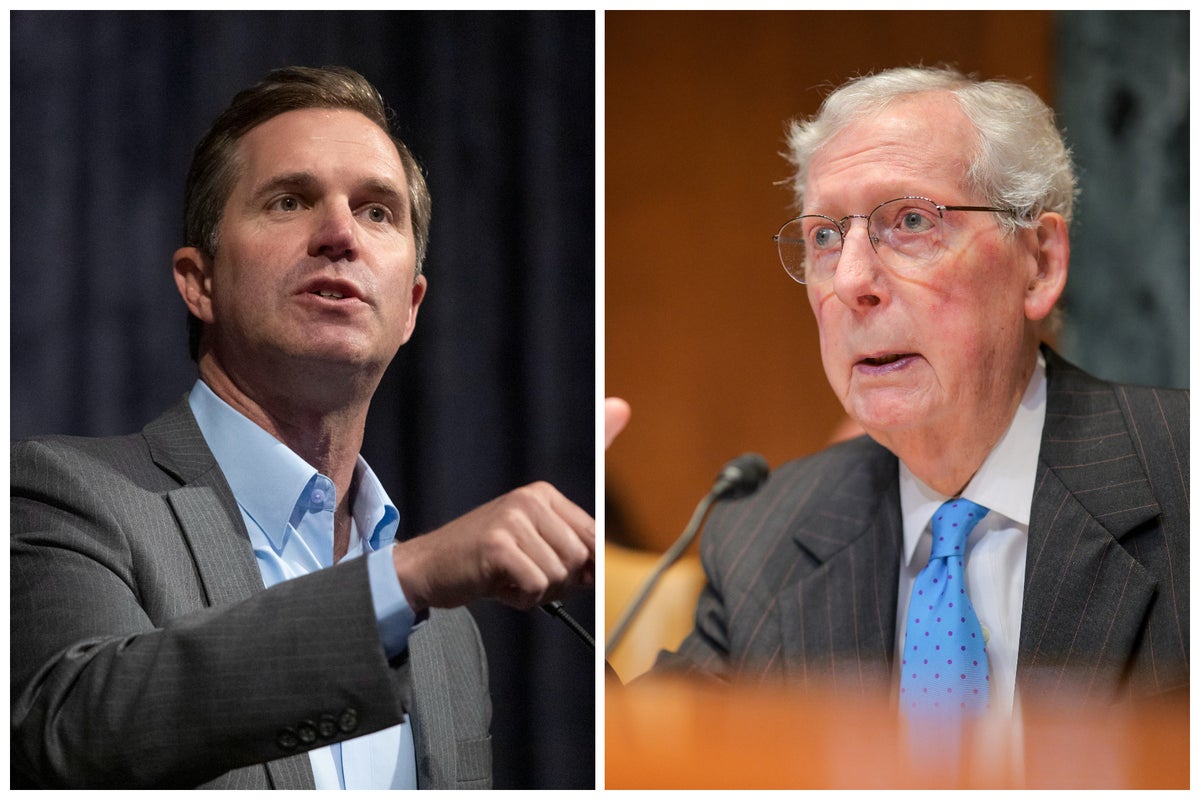
The prolonged absence of a sitting United States senator creates an immediate operational deficit within the federal legislative apparatus. When Senator Mitch McConnell entered a rehabilitation facility following a mid-June fall and subsequent pneumonia diagnosis, his departure from Capitol Hill initiated a high-stakes constitutional and political stress test. Kentucky Governor Andy Beshear's formal escalation—demanding verifiable proof of cognitive and physical capacity or an immediate resignation—shifts the discourse from partisan posturing to structural accountability. This scenario exposes the inherent friction between individual medical privacy rights and the objective execution of public duties within a tightly divided legislature.
The Cost Function of Extended Legislative Vacancies
In a legislative body where control hinges on narrow margins, the physical absence of a single member disrupts the arithmetic of governance. The cost function of this vacancy operates across two distinct vectors: floor throughput and committee velocity.
- The Floor Deficit: With dozens of recorded votes missed since the initial hospitalization, the margin for error in passing legislation or confirming appointments narrows to zero. Leadership must either stall contentious measures or negotiate absolute attendance uniformity from the remaining caucus members.
- The Information Asymmetry: Information regarding the senator's actual functional capacity remains bottlenecked within a tight circle of staff and family. Static photographs and brief written bulletins issued by the Office of the Attending Physician fail to provide the quantitative or qualitative metrics required to assess cognitive processing and speech capabilities.
This creates a vacuum where speculation replaces data. The public-private boundary in elected office is governed by an implicit social contract: the surrender of personal privacy in exchange for verified representation. When that transparency fails, institutional trust erodes proportionally to the duration of the silence.
Institutional Mechanics and Succession Constraints
The friction between state executive authority and federal legislative tenure is compounded by statutory changes enacted prior to this crisis. Understanding the mechanics of potential succession clarifies why this political standoff carries high stakes for both parties in Kentucky.
Historically, state governors possessed unilateral authority to appoint an interim senator upon a vacancy. However, legislative modifications in Kentucky altered this framework. The current legal architecture mandates a special election process governed by strict statutory timelines, removing the governor's discretion for an immediate direct appointment. Consequently, an abrupt resignation does not translate to an immediate partisan replacement; it triggers a prolonged electoral contest that alters the calculus for party leadership.
Senate Majority Leader John Thune faces a corresponding institutional dilemma. Operating under a dual pressure to protect caucus solidarity and maintain procedural integrity, the leadership must weigh whether to initiate internal inquiries into a senior member's status. Demanding transparency from a caucus stalwart risks internal fracture, yet maintaining total opacity invites external challenges from state executives who control the constitutional interface between the electorate and federal seats.
The Principal-Agent Problem of Aging Leadership
The tension surrounding McConnell's status highlights a classic principal-agent problem within representative democracies. The voters and the state constitute the principal, while the elected official acts as the agent. When the agent becomes physically incapable of communicating decisions or performing analytical tasks, the feedback loop breaks down.
Medical privacy protections, designed to shield private citizens from unwarranted intrusion, conflict with the operational transparency demanded of public fiduciaries. An ordinary employee absent from a workplace for over forty days without verifiable status updates faces immediate termination under standard organizational policies. Elected offices lack an equivalent automated mechanism, relying instead on voluntary resignation or cumbersome congressional censure and investigation procedures.
The reliance on minimalist updates—such as static imagery alongside family members—serves as a poor proxy for operational fitness. These artifacts manage public perception rather than demonstrate legislative capability. They offer no insight into the senator's capacity to process complex statutory text, debate policy on the floor, or negotiate legislative compromises.
To resolve the operational deadlock, institutional frameworks must establish objective thresholds for functional capacity. Relying on political pressure from opposing state executives or market-driven speculation indices creates unnecessary volatility. The path forward requires institutionalizing mandatory, independent medical evaluations for prolonged absences exceeding thirty days, ensuring that legislative power remains directly tethered to verifiable human agency rather than automated proxy voting or indefinite administrative limbo.


