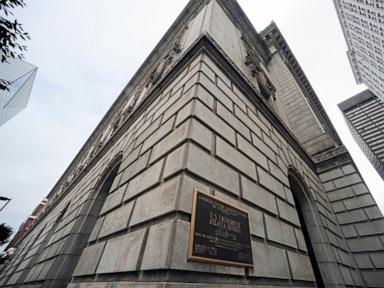
The structural integrity of federal election litigation depends entirely on the quantifiable mitigation of judicial bias. When the United States Department of Justice (DOJ) moved for the formal recusal of U.S. District Judge Eleanor Ross from the Georgia election records lawsuit (DOJ v. Raffensperger), it exposed a critical structural vulnerability at the intersection of municipal political networks and federal judicial oversight. The motion is not merely a tactical maneuver; it is a calculated application of 28 U.S.C. § 455(a), which mandates that any judge must disqualify themselves in any proceeding in which their impartiality might reasonably be questioned.
The core dispute in DOJ v. Raffensperger centers on the federal government’s demand for comprehensive, statewide voter registration lists from Georgia Secretary of State Brad Raffensperger. The state has blocked the release, citing statutory protections over voters' confidential personal data and asserting that the federal government has failed to satisfy the necessary legal prerequisites. By introducing a motion for recusal based on Judge Ross’s documented attendance at an event celebrating Fulton County District Attorney Fani Willis, the DOJ has fundamentally altered the litigation timeline and heightened the systemic risks of the case. Recently making waves in this space: The Clock in Washington and the Shadows in Tehran.
The Tripartite Framework of Conflict Analysis
Evaluating the validity of this recusal motion requires dissecting the overlap between local prosecuting circles and the federal bench. This relationship can be broken down into three operational dimensions:
1. Structural History and Professional Overlap
Judge Ross spent over a decade operating within the institutional architecture of Atlanta’s state and federal prosecution offices. Crucially, her tenure in the Fulton County District Attorney’s Office directly overlapped with that of Fani Willis before Willis assumed the role of District Attorney. In institutional psychology, shared organizational history establishes a baseline of mutual professional alignment. When a former colleague becomes the focal point of highly politicized national litigation, the historical connection compromises the perceived independence of the judicial arbiter. Further information regarding the matter are explored by TIME.
2. The Mechanics of the Shared Venue Event
The physical parameters of the event in question complicate the defense of judicial neutrality. Judge Ross attended a venue hosting a campaign victory celebration for Fani Willis. While the judge's formal defense relies on a spatial distinction—stating she attended a private mixer to visit former colleagues that was technically partitioned from the primary political victory party—the shared venue model fails the "objective reasonable observer" standard. In political and legal systems, proximity operates as a proxy for alignment. The distinction between an adjacent private mixer and the main political event is structurally insufficient to dissolve the perception of a shared political ecosystem.
3. The Shadow of Parallel Disciplinary Action
The recusal motion occurs in the immediate wake of an internal investigation by the Judicial Council of the 11th Circuit, which culminated in a private reprimand affirmed by the Committee on Judicial Conduct and Disability of the Judicial Conference of the United States. The underlying disciplinary case involved multiple infractions, including undisclosed courthouse conduct and initial false denials. While the DOJ explicitly noted that these broader behavioral infractions are not the substantive basis of the current motion, their existence severely degrades the judge's institutional capital. It creates a secondary vulnerability: a jurist already compromised by a formal disciplinary record lacks the institutional insulation required to withstand the intense public scrutiny of an election records dispute.
The Strategic Cost Function of Delay
The immediate operational casualty of the recusal motion is the litigation schedule. Judge Ross had scheduled a critical evidentiary hearing. The filing of the recusal motion creates an immediate procedural bottleneck, forcing a postponement of substantive arguments on the voter rolls.
In complex litigation, time functions as a high-stakes resource with asymmetrical payoffs. For the federal government, a delay in acquiring the voter rolls disrupts the data validation pipelines required for broader civil rights and voting rights enforcement strategies. For the state of Georgia, prolonged litigation acts as a buffer, preserving the status quo of state-level data control through the mid-term cycle. The mechanism of delay can be modeled as an operational cost function:
$$C(d) = f(I_t, P_s)$$
Where:
- $C(d)$ represents the net strategic cost of litigation delay.
- $I_t$ represents the institutional erosion over time caused by unresolved questions of judicial integrity.
- $P_s$ represents the degradation of evidentiary value and political stability as election cycles advance.
The systemic consequence of this bottleneck is that the merits of the data access dispute—whether the DOJ has a statutory right to the underlying voter lists under federal law—are entirely eclipsed by the threshold question of forum integrity.
Recusal Legalities: The "Reasonable Observer" Standard
The DOJ’s legal architecture rests on a specific clause within federal recusal jurisprudence: the perspective of the objective, reasonable observer. Under this doctrine, actual subjective bias is not required to trigger disqualification. The standard is entirely external and transactional.
| Dimension | Subjective Standard | Objective Standard (DOJ Position) |
|---|---|---|
| Evidentiary Threshold | Requires direct proof of animus or pre-judgment by the jurist. | Requires a showing that external facts undermine public confidence. |
| Spatial Analysis | Accepts the physical separation of the private mixer within the venue. | Views the choice to enter the politically charged venue as a systemic endorsement. |
| Systemic Impact | Focuses on the specific rulings within the Raffensperger docket. | Focuses on the precedent of allowing a disciplined judge to rule on an intersecting case. |
The DOJ’s brief articulates this friction with clinical precision: a judge who participates in a space dedicated to celebrating a highly partisan local prosecutor—whose fame derives from prosecuting a major political figure—cannot maintain the appearance of neutrality when presiding over a federal case that directly touches the mechanics of that same electoral system. The friction is structural, not personal.
Strategic Forecast and Judicial Alternatives
The current gridlock leaves the 11th Circuit with an narrow set of operational paths forward. Judge Ross can voluntarily step down, passing the docket to a colleague within the Northern District of Georgia, or she can deny the motion, triggering an immediate interlocutory appeal to the 11th Circuit Court of Appeals.
The optimal strategic play for the court's leadership is an immediate, voluntary reassignment of the case. Resisting the recusal motion guarantees an extended appellate sideshow that will permanently stain the ultimate ruling on the voter records, regardless of which side wins. By reassigning the case to a jurist completely disconnected from the Atlanta prosecutorial network, the court can isolate the core legal question—the boundaries of federal access to state voter data—from the toxic variables of regional political alignment and judicial misconduct. The preservation of institutional authority requires sacrificing individual judicial assignment.