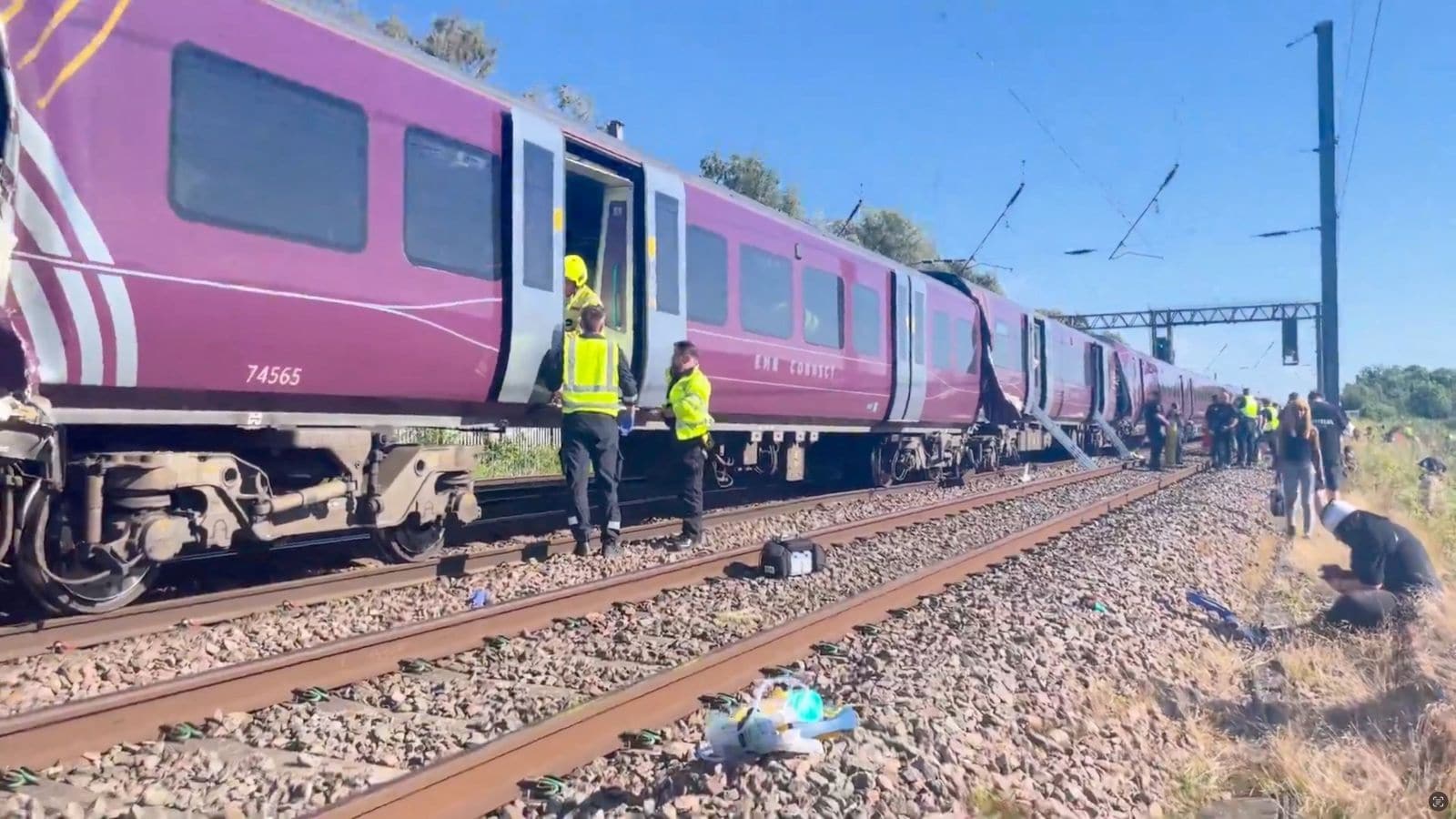
The safety architecture of modern rail networks relies on a series of nested redundancies designed to isolate and neutralize individual mechanical and human failures. When a head-on collision occurs within a system engineered specifically to prevent them, it is rarely the result of a single catastrophic anomaly. Instead, it represents a compounding sequence of systemic vulnerabilities where infrastructure maintenance, mechanical reliability, and human-machine interface protocols fail simultaneously. The October 2024 collision near Talerddig on the Cambrian Line in Wales provides a definitive case study in how low-adhesion conditions can degrade mechanical braking performance and expose latent gaps in operator training.
The Friction Equation and Environmental Degradation Optimization
Rail operations depend on an exceptionally narrow contact patch between steel wheels and steel rails. This interface requires a predictable coefficient of friction to facilitate both acceleration and deceleration. During autumn, this interface degrades severely due to the compression of fallen leaves into a microscopic, chemically complex Teflon-like film. This film isolates the wheel from the rail, causing a phenomenon known as wheel slide during braking.
When a train enters a low-adhesion zone, standard braking applications become ineffective. The primary defense mechanism against this environmental variable is a dual-layered friction-enhancement strategy:
- Automated Adhesion Management: Onboard systems detect a discrepancy between the rotational speed of the wheels and the actual linear speed of the train. Upon detection, an automated system dispenses a precise flow of silica sand directly ahead of the leading wheels to break the leaf film and restore friction.
- Manual Emergency Intervention: In the event of automated failure or extreme deceleration deficits, a secondary manual system allows the operator to deploy sand at an elevated volume via a dedicated cab control.
The failure at Talerddig demonstrated a complete breakdown of this defense-in-depth model.
The Mechanical Cascade: Automated Sanding Latencies
The investigation by the Rail Accident Investigation Branch (RAIB) revealed that the westbound Class 158 train failed to stop within its designated passing loop because its automated sanding system was non-functional at the critical moment of braking.
An analysis of the physical components post-accident identified a multi-layered mechanical failure mode within the leading vehicle's sanding apparatus:
[System Input: Low Adhesion Detected]
                  │
                  ▼
[Automated Command Sent to Sander]
                  │
                  ▼
┌─────────────────┴─────────────────┐
│     Mechanical Failure Modes      │
├───────────────────────────────────┤
│ 1. Blocked Sanding Hoses          │
│ 2. Electrical Faults              │
│ 3. Misaligned Flow-Rate Plates    │
└─────────────────┬─────────────────┘
                  │
                  ▼
[Zero Sand Delivery to Rail Interface]
                  │
                  ▼
[Uncontrolled Wheel Slide Continues]
This mechanical bottleneck meant that as the train initiated its approach to the Talerddig passing loop, the onboard automated defenses were incapable of executing their function. The train overshot its intended stopping point by approximately 1,080 meters, re-entering the single-track mainline where it collided head-on with an oncoming service.
Cognitive Blindspots and Human-Machine Interface Failure
With the automated system compromised, the final barrier to collision shifted entirely to human intervention. The train was equipped with a manual emergency sanding system, activated via a yellow plunger in the driver's cab. Testing confirmed that this manual system was fully functional and would have delivered sufficient sand to halt the train within the safety margins of the passing loop.
The driver did not deploy this system. Post-incident testimony and operational analysis revealed a stark disconnect between technical system availability and operator cognitive readiness. The driver stated that utilizing the manual emergency sander did not occur to them during the emergency descent.
This operational omission stems from distinct systemic shortcomings:
Training Deficiencies and Familiarity Gaps
The operator could not recall receiving specific, actionable training on the manual emergency sanding plunger. Although certified as fully compliant with standard competency assessments, the driver had never executed a manual sand deployment in a live, high-stress scenario.
Operational Ambiguity
A subsequent survey of peers within the same operating company exposed a widespread lack of clarity regarding the precise operational thresholds that mandate manual sanding intervention. The rulebook dictated use "when a train is unable to stop in the usual distance," a definition that introduces subjective judgment during a high-speed, escalating crisis.
Kinesthetic Misjudgments
The driver applied a discontinuous braking profile—braking, coasting, and then braking again. This pattern suggests an initial belief that the vehicle was shedding velocity adequately, failing to realize that the wheel slide protection system was cycling without achieving actual deceleration.
Infrastructure and Track-Side Maintenance Volatility
The mechanical and human failures onboard the train were further exacerbated by track-side infrastructure deficiencies. Managing low adhesion is a shared responsibility between the rolling stock operator and the infrastructure manager. On the Cambrian Line, two critical track-side mitigation tools failed to perform optimally.
First, track-side Traction Gel Applicators—devices designed to automatically dispense adhesion-enhancing compounds onto the rail head as trains pass—were found to be non-operational in the vicinity. This removed a vital layer of passive friction management that could have mitigated the severity of the leaf film.
Second, although Rail Head Treatment Trains had serviced the line recently, the rate of leaf-fall and subsequent film accumulation outpaced the treatment frequency. The physical profile of the line features a steep descending gradient of 1 in 56, meaning gravity actively compounded the deceleration deficit caused by the low friction coefficient.
Strategic Operational Directives for Fleet Managers
To prevent similar multi-system failures, rail operators must move past a compliance-only mindset and implement rigorous, data-driven modifications across maintenance and training domains.
Fleet maintenance protocols must treat sanding systems as safety-critical infrastructure rather than secondary components. This requires implementing end-of-line pneumatic flow testing during routine inspections to detect internal hose blockages before trains enter service during high-risk seasons.
Simultaneously, training frameworks must transition to high-fidelity simulator models that replicate extreme low-adhesion environments. Drivers must be conditioned to treat the manual emergency sander not as an obscure backup, but as an immediate, muscle-memory response the moment an automated wheel slide protection system fails to achieve targeted deceleration vectors. Rulebooks must replace subjective definitions of stopping distances with hard, time-based parameters to eliminate cognitive hesitation during a critical overshoot vector.