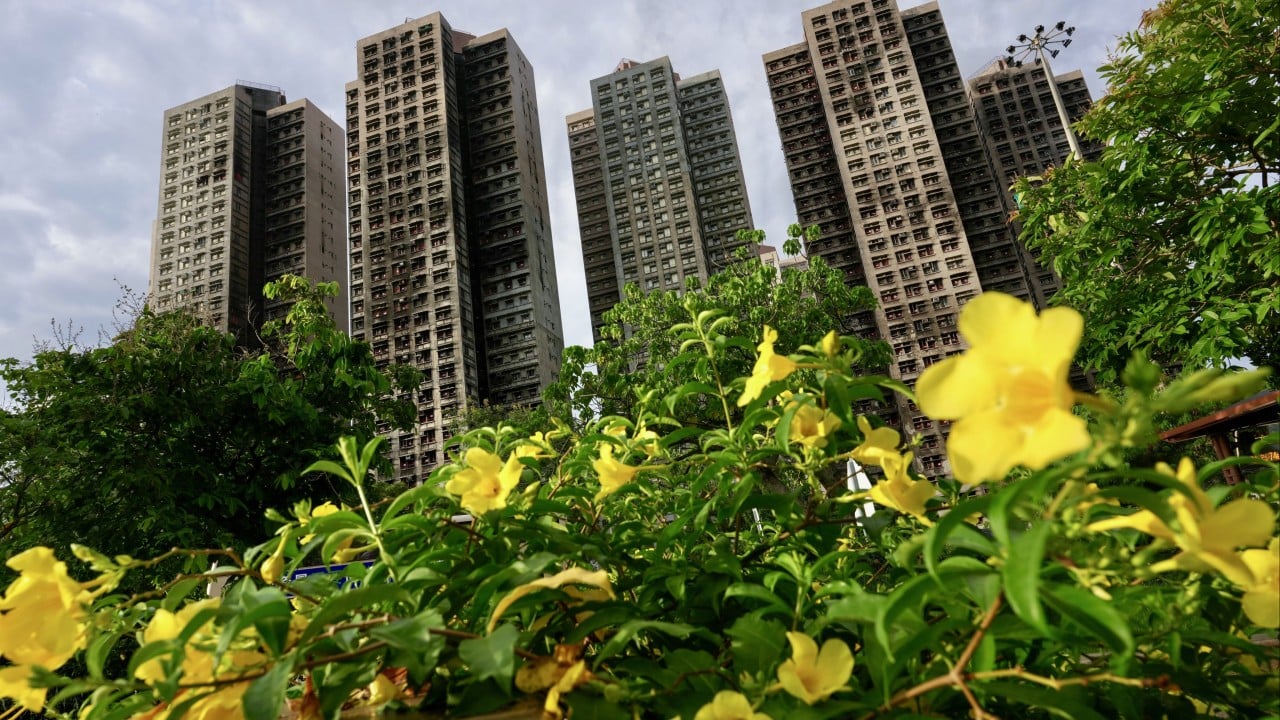
The catastrophic fire at the Wang Fuk Court apartment complex in Tai Po, Hong Kong—which claimed 168 lives and consumed seven residential towers—was not an isolated operational accident. It represents a structural failure driven by calculated regulatory arbitrage, collusion, and institutional blind spots. When private economic incentives align to exploit gaps in public enforcement, safety ceases to be an engineering parameter and instead becomes a variable optimized for cost reduction.
An evaluation of the ongoing independent committee inquiry reveals that the disaster was the predictable outcome of three intersecting systemic failures: structural corruption in procurement, deliberate material non-compliance, and the breakdown of institutional oversight mechanisms. If you enjoyed this post, you might want to read: this related article.
The Procurement Bottleneck: Collusion and Information Asymmetry
The failure of the Wang Fuk Court infrastructure began during the tendering phase. The renovation project, valued at over 300 million Hong Kong dollars ($38 million), was compromised by a coordinated bid-rigging mechanism designed to distort market competition.
The mechanism operated on two vectors of deception: For another look on this story, check out the recent coverage from TIME.
- Concealment of Material Risk: The project consultant, Will Power Architects Company, and the main contractor, Prestige Construction & Engineering Co., conspired to withhold historical litigation records of the contracting firm from the property owners. This created an acute information asymmetry, denying the asset owners the ability to price counterparty risk accurately.
- Artificial Score Inflation: Procurement scoring matrices were systematically manipulated within the tender analysis report to guarantee the selection of the preferred contractor.
When procurement systems allow bad actors to bypass competitive filtration, the selected contractor operates under immediate financial pressure to recover the implicit costs of securing the collusive bid. This structurally guarantees subsequent cost-cutting during the execution phase.
The Engineering Hazard: Accelerated Fire Propagation
The physical destruction of the complex demonstrates how marginal cost-saving decisions can compound into exponential physical risk. The inquiry established that the rapid transit of the fire across seven high-rise blocks was driven by specific material and structural alterations.
[Ignition: Disposed Cigarette]
       │
       ▼
[Non-Fire-Retardant Scaffolding Netting] ───► (Rapid Vertical & Lateral Vectors)
       │
       ▼
[Expanded Polystyrene Window Insulation] ───► (Thermal Accelerant)
       │
       ▼
[Removed Staircase Windows] ───────────────► (Chimney Effect / Internal Core Breach)
The Facade Fuel Load
Contractors deployed non-fire-retardant safety netting across the extensive bamboo scaffolding network enveloping the buildings. Leading counsel for the committee noted that utilizing standard fire-retardant materials would have self-extinguished the initial ignition point. Instead, the cheap netting provided a continuous vertical and horizontal fuel vector. This was exacerbated by expanded polystyrene (Styrofoam) foam panels installed over apartment windows, which acted as a high-energy thermal accelerant.
Compartmentalization Failure
To facilitate ease of movement for labor, workers systematically removed structural windows within the emergency stairwells. This choice destroyed the internal compartmentalization of the buildings. When the exterior facade ignited, these open apertures created a high-velocity chimney effect, drawing toxic smoke and extreme heat directly into the primary escape routes.
Active System Deactivation
Simultaneously, the main fire alarms and localized water hose reels were completely deactivated for the duration of the renovation. By disabling active suppression systems while vastly increasing the external fuel load, the operators transformed a routine building envelope renovation into an un-containable hazard.
Institutional Friction and the Illusion of Oversight
A critical vulnerability exposed by the Tai Po inquiry is the failure of the regulatory state's enforcement architecture. The Hong Kong Labour Department executed 16 independent site inspections at Wang Fuk Court between July 2024 and the week prior to the November 2025 blaze. Despite this high frequency of physical presence, the systemic risks remained unmitigated.
This institutional blindness is a function of siloed regulatory mandates:
- Scope Disconnect: Inspections focused tightly on standard occupational safety measures, such as fall protection for workers at heights. The structural integrity and flammability of the massive volume of plastic netting and foam sheets on-site were omitted from routine verification.
- The "Rubber Stamp" Phenomenon: Certifying professionals and site engineers signed off on faked compliance reports without performing rigorous on-site validation. The regulatory model relied on an honor system of certified self-regulation, which breaks down entirely when confronted with active criminal collusion.
- Bureaucratic Shunting: Property residents repeatedly filed formal complaints regarding on-site fire hazards, worker smoking behavior, and procurement anomalies to the Independent Commission Against Corruption (ICAC), the Labour Department, and the Home Affairs Department. These warnings were systematically dismissed as internal commercial disputes or bounced across department boundaries due to a lack of a centralized risk ownership framework.
Systemic Reform Protocols
Reclaiming the safety of urban high-density infrastructure requires shifting from reactive penalties to proactive, structurally resilient frameworks.
First, the procurement of large-scale residential works must be migrated to open-source, blockchain-verified tender platforms monitored by independent third-party auditors. This eliminates information asymmetry by making historical litigation, corporate ownership webs, and scoring matrices public and unalterable.
Second, municipal building departments must end the practice of self-certified compliance for high-risk structural alterations. Any project utilizing external scaffolding over a defined height threshold must trigger mandatory, cross-departmental inspections that verify active suppression availability and material flame-retardancy profiles.
Finally, citizen whistleblowing pathways must feed into an integrated risk command center. When a resident notes a life-safety violation, it cannot be categorized as a civil or administrative side-matter; it must trigger an automatic, immediate enforcement halt until technical compliance is empirically verified.