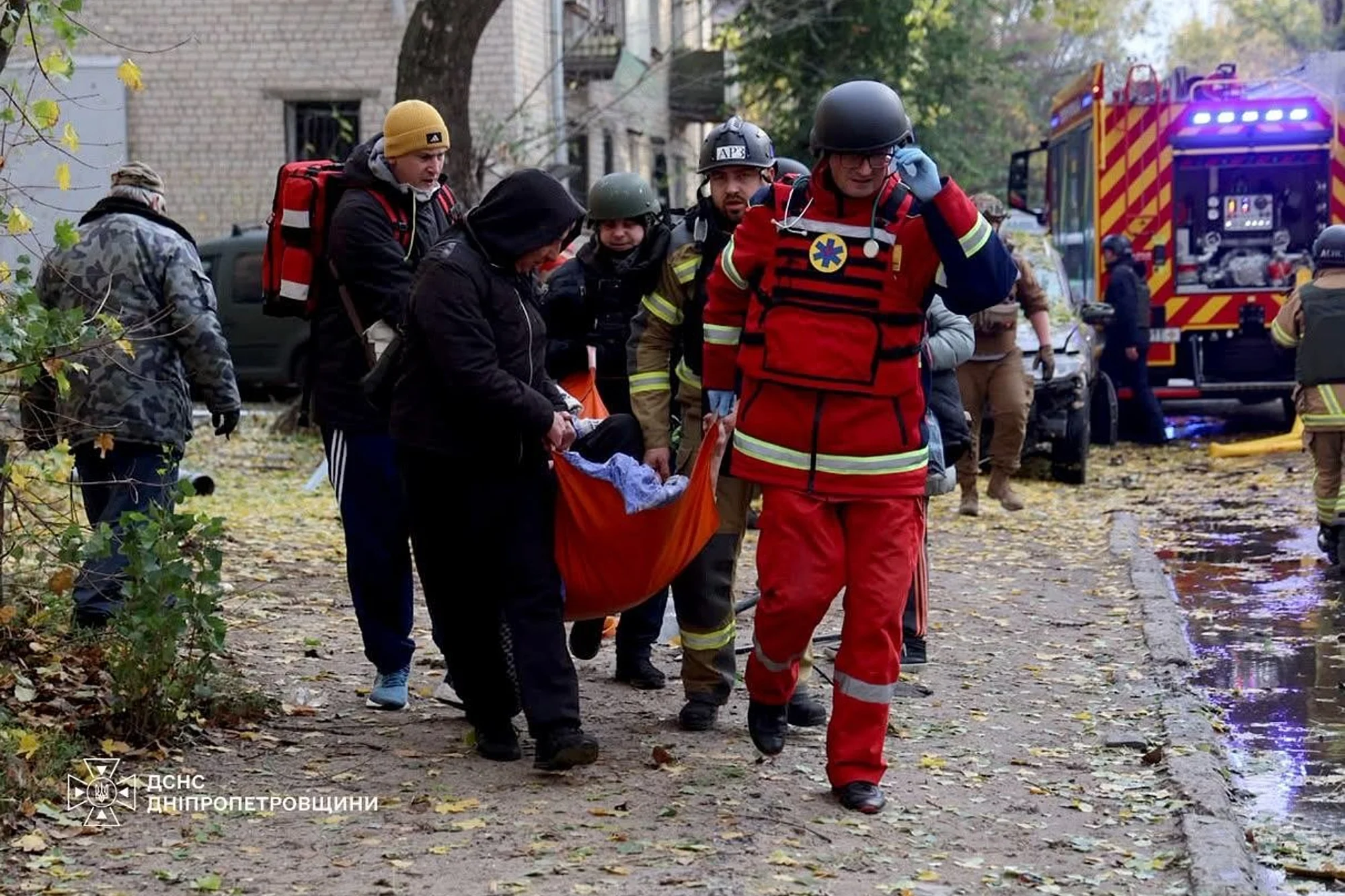
Reporting on mass casualty events in active conflict zones routinely stops at raw casualty tallies—such as a confirmed death toll of 29 alongside 48 missing individuals—without explaining the operational mechanics behind those numbers. When a kinetic strike hits a humanitarian distribution hub, the disparity between confirmed fatalities and missing persons is neither an intelligence failure nor a statistical anomaly. It is the direct mathematical output of blast physics, structural collapse dynamics, and the severe operational constraints of urban search and rescue under persistent aerial threat. Understanding how these strikes unfold requires analyzing three intersecting variables: the vulnerability profile of static aid hubs, the mechanics of structural entrapment, and the latency of emergency response systems.
The Structural Vulnerability of Humanitarian Distribution Hubs
Humanitarian aid sites operate under a fundamental operational contradiction. To maximize distribution efficiency for displaced or besieged populations, logistics planners require high-capacity, easily accessible structures with large floor plates—typically municipal warehouses, school gymnasiums, or repurposed industrial facilities. These architectural profiles are optimized for pedestrian flow and pallet storage, not kinetic survivability.
From a structural engineering standpoint, these facilities rely heavily on long-span roof trusses and unreinforced masonry or lightweight steel cladding. When exposed to the overpressure wave of a high-explosive warhead or ballistic missile, long-span roofs fail catastrophically. Unlike compartmentalized residential buildings, where load-bearing interior walls can create localized survival voids, open-plan distribution centers suffer progressive pancake collapses. The entire roof assembly shears from its perimeter supports and drops intact onto the floor plate below.
This structural failure mode directly dictates the casualty ratio:
- High Density at Peak Hours: Aid distribution follows predictable schedules to manage crowds and prevent looting. This concentrates non-combatants in a single unfortified footprint during narrow operational windows, maximizing the lethal radius of a single munition.
- Secondary Fragmentation: Commercial storage racks, stacked pallets, and glass facades convert the primary blast wave into thousands of high-velocity secondary projectiles, significantly expanding the casualty zone beyond the immediate crater.
- Thermal and Chemical Hazards: Aid sites frequently store diesel generators, fuel reserves for transport fleets, and shrink-wrapped plastic packaging. Post-strike fires rapidly consume oxygen within structural voids, drastically reducing the survival window for trapped individuals.
The Mechanics of the Missing-to-Confirmed Ratio
In the immediate aftermath of a strike resulting in dozens of confirmed dead and nearly fifty unaccounted for, the "missing" category represents an active operational backlog rather than an unverified rumor. Several compounding bottlenecks prevent rapid reconciliation of these numbers.
1. The Search and Rescue Suppression Loop
Standard urban search and rescue protocols rely on heavy lifting equipment—cranes, excavators, and hydraulic cutters—to breach reinforced concrete slabs and twisted steel trusses. In an active theater, deploying heavy machinery and high-intensity lighting at a strike site creates an immediate thermal and visual signature. Rescue teams must frequently suspend heavy extraction operations due to the threat of "double-tap" strikes—secondary attacks timed to hit first responders and medical personnel arriving at the scene. Without heavy machinery, rescuers are forced to rely on manual debris clearance, slowing extraction rates from hours to days.
2. Forensic Identification Latency
When high-explosive munitions detonate inside enclosed structures, the resulting thermal energy and blast overpressure cause severe trauma that precludes visual identification. Confirming a fatality under international forensic standards requires DNA profiling, dental record matching, or fingerprint recovery. In conflict zones where municipal infrastructure is degraded and family members may also be displaced or deceased, establishing a reference sample chain takes weeks. Until positive identification is logged, victims remain classified as missing, creating a persistent lag between physical recovery and official mortality statistics.
3. Baseline Registry Deficits
Unlike military units, which maintain strict personnel manifests, humanitarian aid sites serve fluid civilian populations. Many recipients lack physical identification documents, having lost them during displacement, or avoid formal registration due to security concerns. When a strike occurs, authorities cannot cross-reference survivors against a closed roster. Instead, the missing count is assembled dynamically through decentralized family inquiries, mobile phone tracking, and eyewitness accounts of who was present in the queue prior to detonation. This introduces both undercounting (individuals with no surviving relatives to report them) and temporary overcounting (individuals who fled the scene injured and were admitted to unlinked medical facilities).
Triage Failure and Secondary Mortality
The confirmed death toll in the first 24 hours reflects immediate blast trauma, but the final mortality rate is heavily influenced by the degradation of the local medical chain. A single mass casualty incident yielding nearly eighty combined dead and missing overwhelms regional healthcare capacity designed for peacetime trauma loads.
Blast injuries present complex, multi-system trauma patterns—specifically primary blast lung, traumatic brain injury, and crush syndrome. Crush syndrome occurs when prolonged compression of muscle tissue releases myoglobin and potassium into the bloodstream once the weight is lifted. Without immediate intravenous fluid resuscitation and access to renal dialysis, rescued victims suffer fatal cardiac arrhythmias within hours of extraction. When regional hospitals are operating on backup generators with depleted blood banks and severed supply lines, survivable injuries routinely convert into delayed fatalities, steadily driving the confirmed death toll upward as the missing list shrinks.
Operational Shifts for Humanitarian Logistics
Continuing to operate centralized, static distribution hubs in contested airspace guarantees recurring mass casualty events. The traditional model of transparent, high-visibility aid sites relies on all belligerents adhering to International Humanitarian Law and respecting protective emblems. Where those norms have collapsed, humanitarian agencies must transition from visibility-based protection to dispersion-based survivability.
- Decentralized Micro-Distribution: Replace single large-scale warehouses with multiple low-profile, mobile distribution points. Utilizing smaller vehicles to deliver pre-packaged rations directly to residential neighborhoods eliminates the crowd density that makes static sites high-value targets.
- Asynchronous Scheduling: Eliminate fixed weekly distribution times. Staggering arrivals through encrypted digital vouchers or localized community coordinators prevents predictable crowd formation and denies aerial reconnaissance the time required to lock onto a stationary gathering.
- Subterranean Hardening: Where fixed storage is unavoidable, operations must move entirely below grade into reinforced basements or metro infrastructure, sacrificing loading speed for overhead blast protection.
The operational imperative for aid organizations in high-intensity conflict zones is immediate decentralization: dismantle large-scale static distribution hubs, abandon predictable scheduling, and transition entirely to mobile, dispersed, and subterranean logistics networks before the next strike converts a crowd into a casualty statistic.


