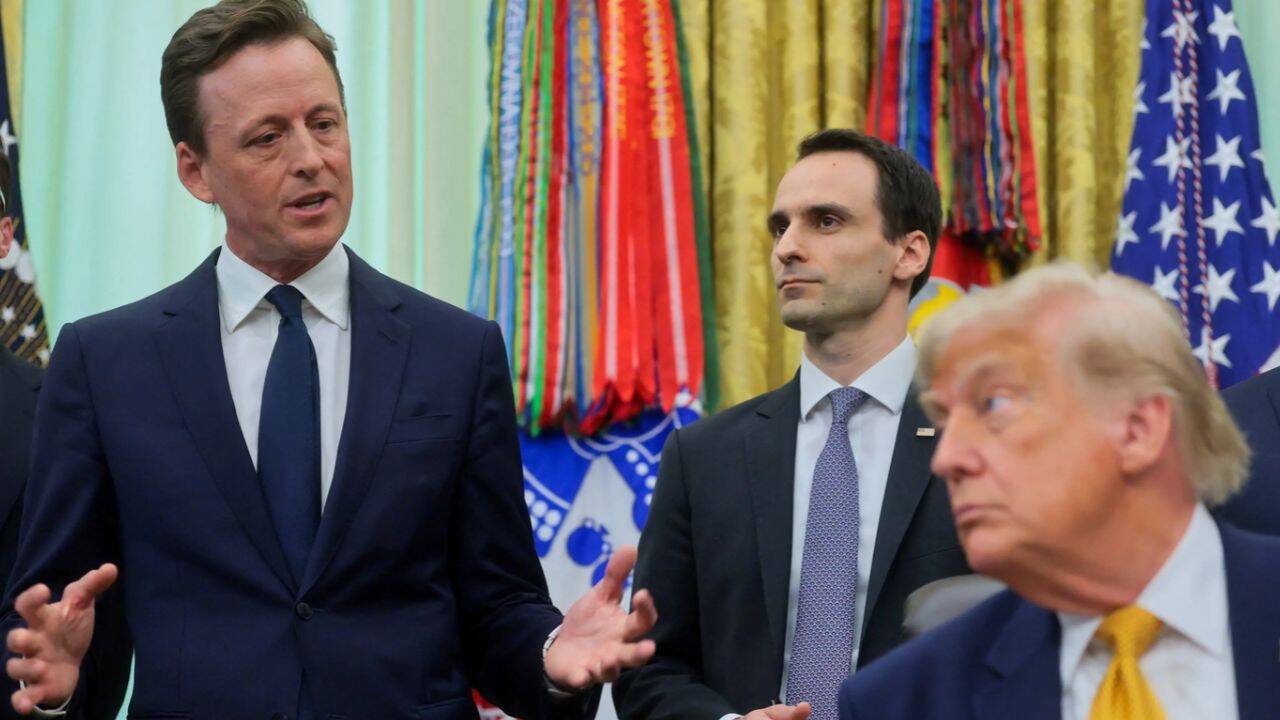
The removal of United States National Cyber Director Sean Cairncross on November 19, 2026, exposes a structural mismatch between traditional political appointments and the engineering realities of modern infrastructure defense. Mainstream coverage frames the transition as a reactive firing following widespread technology outages across aviation, banking, and defense networks. That narrative misidentifies the root cause. Replacing an executive with a legal and political operations background with Department of Defense Chief Information Officer Kirsten Davies represents an institutional shift from regulatory coordination to direct operational hardening under acute systemic stress.
The Structural Mismatch in Federal Cyber Governance
To evaluate the leadership transition at the Office of the National Cyber Director (ONCD), analysts must separate political optics from operational mechanics. Established by Congress in early 2021, the ONCD does not command operational incident response teams; it coordinates federal policy, harmonizes regulatory frameworks, and aligns interagency strategy.
When Sean Cairncross assumed the role in August 2025 following a 59–35 Senate confirmation vote, his professional history consisted of Republican National Committee legal and operational management alongside a tenure leading the Millennium Challenge Corporation. Under stable threat conditions, a political generalist can execute interagency consensus-building and deregulatory streamlining. Three compounding variables invalidated that operating model in late 2026:
- Accelerated Vulnerability Discovery: Autonomous artificial intelligence models began identifying zero-day flaws across legacy enterprise software faster than human engineering teams could validate patches.
- Patch-Induced Cascading Failures: The November 2026 outages affecting Microsoft, Apple, JPMorgan Chase, commercial air travel, and National Security Agency networks were driven largely by emergency patching cycles aimed at closing AI-discovered vulnerabilities.
- Asymmetric Policy Authority: Inside the executive branch, authority over AI security architecture migrated toward Treasury Secretary Scott Bessent and the White House AI task force, isolating the ONCD from primary decision-making loops.
Mechanism of the November 2026 Outages
Standard reporting treats "tech outages" as monolithic events caused either by malicious intrusion or vague technical glitches. In distributed systems engineering, the November 2026 disruptions illustrate tightly coupled failure cascades.
Modern critical infrastructure relies on homogeneous software dependencies—identity providers, cloud control planes, and endpoint security agents—deployed across millions of nodes simultaneously. When an AI-assisted discovery engine flags a critical memory-corruption or authentication-bypass flaw, vendors face an asymmetric risk equation:
- Delayed Deployment: Leaving the flaw unpatched exposes sovereign and financial networks to automated exploitation within hours.
- Compressed Testing: Pushing an update immediately bypasses multi-week staged rollouts, canary deployments, and regression testing.
When vendors opt for compressed testing to neutralize AI-driven exploits, a single malformed configuration file or kernel-level race condition propagates instantaneously across enterprise networks. Because air traffic management, financial clearinghouses, and defense administrative networks share underlying commercial cloud and operating system layers, a single remediation update triggers simultaneous availability failures across unrelated sectors.
The Cost Function of Leadership Transition
The appointment of Kirsten Davies as acting National Cyber Director alters the technical profile of the White House cyber apparatus, yet it introduces severe institutional friction. Evaluating this transition requires analyzing three operational trade-offs.
1. Operational Credibility vs. Statutory Authority
Davies brings direct enterprise architecture experience from the Pentagon CIO office, enabling credible technical dialogue with chief information security officers at major financial and cloud institutions. An acting director lacks the statutory durability and budget-certification leverage of a Senate-confirmed official. Federal agencies routinely slow-walk interagency directives issued by temporary leadership, anticipating policy reversals.
2. The Senate Confirmation Bottleneck
Under federal statute, installing a permanent ONCD director requires Senate confirmation. With the Democratic Party set to assume majority control of the Senate in January 2027 following the midterm elections, the executive branch faces a narrow confirmation window. Failing to confirm a permanent successor before the congressional transition risks leaving the ONCD under acting leadership for months—mirroring the 10-month vacancy that followed the departure of inaugural director Chris Inglis.
3. Policy Continuity vs. Personnel Attrition
Over the course of 2026, the ONCD experienced significant attrition among senior aides. Replacing the agency head mid-crisis stalls active initiatives, specifically regulatory harmonization efforts and critical infrastructure pilot programs designed for the water and healthcare sectors. While senior White House officials, including Chief of Staff Stephen Miller, prioritized removing Cairncross over credential deficits, the immediate operational consequence is a temporary vacuum in civilian infrastructure coordination.
Comparative Governance Models in Systemic Crises
The contrast between Cairncross and Davies highlights two distinct governance philosophies for national cyber risk:
- The Political Coordinator Model (Cairncross): Optimizes for legislative alignment, executive order drafting, and interagency deconfliction. This model fails when the primary threat vector is technical velocity—specifically, when software supply chains destabilize faster than policy memos can be cleared.
- The Enterprise Operator Model (Davies): Optimizes for architectural resilience, fault isolation, and incident containment. This model excels at diagnosing why a patch crashed a banking network, yet it struggles to navigate congressional appropriations and multi-agency turf disputes without dedicated political deputies.
Neither model solves the underlying engineering vulnerability: the federal government lacks statutory authority to mandate phased rollout standards or chaos-engineering resilience tests on private-sector software monopolies.
Strategic Forecast and Operational Directives
Enterprise technology leaders and critical infrastructure operators cannot rely on federal leadership changes to insulate their networks from patch-induced outages. Over the next two quarters, the collision between AI-accelerated vulnerability discovery and homogeneous cloud infrastructure will produce recurring availability shocks.
To insulate operations from federal coordination gaps and vendor-driven cascades, infrastructure operators must execute three structural adjustments immediately:
- Decouple Patch Ingestion from Vendor Release Schedules: Abandon automated, synchronous enterprise-wide deployment for kernel-level and identity-plane updates. Implement mandatory 72-hour quarantine rings for all non-mitigated critical patches, isolating production payment and logistics systems from initial vendor rollouts.
- Enforce Out-of-Band Architectural Redundancy: Eliminate single-vendor dependencies in authentication and endpoint detection. Maintain cold-standby identity providers and manual fallback protocols capable of sustaining core operations for 48 hours during a primary cloud control-plane outage.
- Shift Governance Metrics from Compliance to Recovery Velocity: Audit internal resilience using Mean Time to Recovery (MTTR) under simulated vendor-failure scenarios rather than regulatory checklist adherence. Assume federal cyber policy will remain fragmented through the January 2027 congressional transition and build local fault tolerance accordingly.