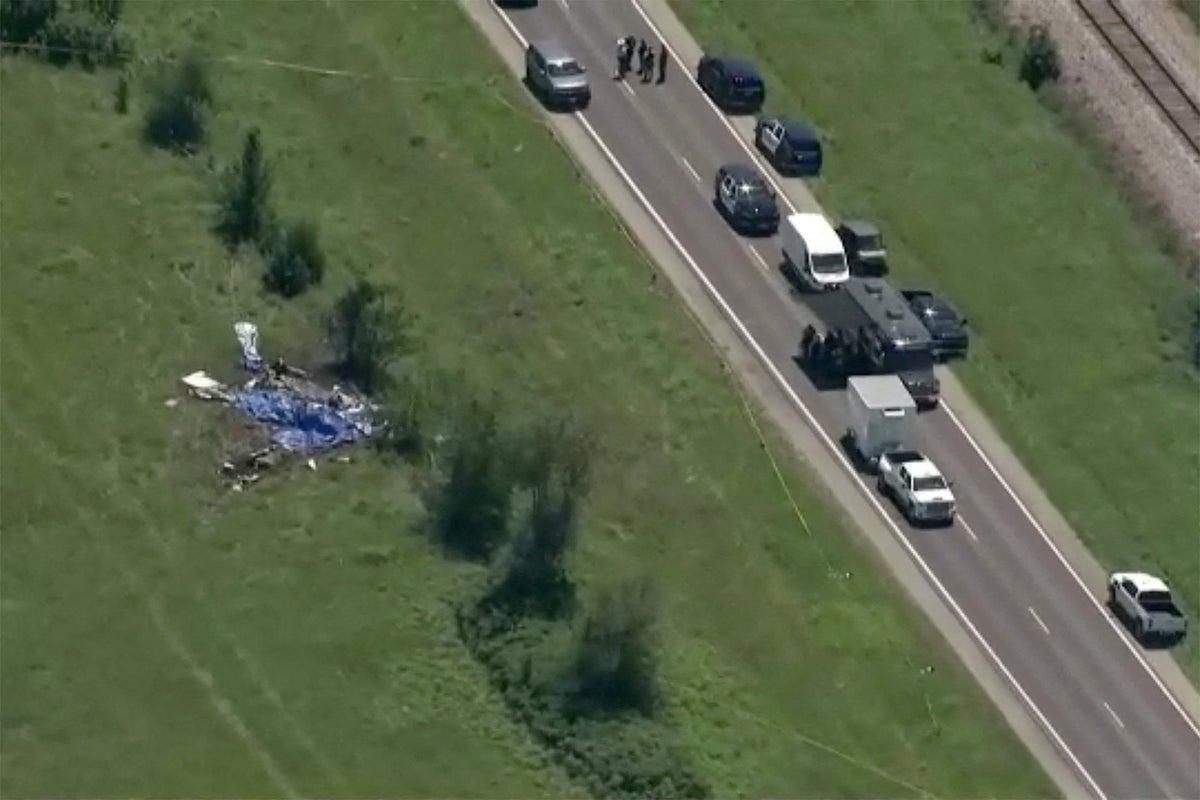
The fatal crash of a Pacific Aerospace 750XL turboprop in western Missouri on June 14, 2026, which resulted in 12 fatalities, exposes a systemic asymmetry in aviation safety. While the commercial airline industry operates under predictive, data-driven oversight, the commercial skydiving sector survives in a regulatory dead zone. The core vulnerability is not the inherent risk of jumping from an aircraft, but a structural economic and regulatory framework that permits high-cycle, high-stress flight operations to run on minimal maintenance scrutiny.
To evaluate how these systems fail, one must analyze the operational profile of a skydiving aircraft. Unlike regional commuter planes that fly prolonged, stable cruise profiles, a skydiving aircraft operates on a brutal, short-cycle cost function.
A standard mission profile consists of a maximum-power takeoff, a rapid climb to altitude (typically 10,000 to 14,000 feet), a rapid deceleration to drop speed, a swift egress of passengers which radically alters the aircraft's center of gravity, and a steep, high-speed descent back to the runway. This cycle is repeated up to 10 or 15 times a day during peak season.
This extreme operational profile accelerates mechanical fatigue through three distinct vectors:
- Thermal Shocking: Turboprop and piston engines undergo rapid heating during the maximum-power climb, followed by immediate cooling during high-speed, low-power descents. This thermal cycling accelerates metal fatigue, component warping, and premature seal failure.
- Structural Structural Cycles: The continuous pressurization, aerodynamic loading, and unloading of the airframe stress spar attachments, wing roots, and control surfaces far faster than standard flight hours reflect.
- Dynamic Center-of-Gravity Shifts: The sudden movement and exit of 10 to 20 divers creates instantaneous aerodynamic and structural imbalances that require immediate, aggressive compensation by the pilot and control surfaces.
The fundamental breakdown occurs because Federal Aviation Administration (FAA) oversight fails to scale with these operational stressors. Commercial airlines and on-demand charter operators are governed under Title 14 of the Code of Federal Regulations (CFR) Part 121 and Part 135, respectively. These parts mandate continuous airworthiness maintenance programs, mandatory safety management systems, and stringent pilot duty-time limitations.
By contrast, most commercial skydiving operations utilize a regulatory loophole. They operate under 14 CFR Part 91, the general operating and flight rules designed for non-commercial, private recreational pilots. Because the passengers pay the skydiving center for the jump experience rather than "air transportation" from point A to point B, the flight itself is classified as a private operation.
This creates a severe regulatory arbitrage window. Under Part 91, aircraft do not undergo the regular, intense scrutiny of an air charter service. Maintenance schedules default to standard 100-hour or annual inspections, which are structurally insufficient for detecting the micro-fissures and thermal degradation caused by repetitive skydiving cycles.
National Transportation Safety Board (NTSB) historical data underscores this systemic failure. A formal NTSB review of 32 skydiving aviation accidents highlighted recurring deficiencies in operator maintenance, substandard inspection quality, and inadequate pilot training programs.
Consider the 2019 crash of a skydiving aircraft in Hawaii that claimed 11 lives. The subsequent NTSB investigation revealed that the aircraft's wing had suffered structural twisting in a prior incident years before. The operator failed to execute standard structural repairs, and routine FAA-mandated Part 91 inspections repeatedly failed to detect the compromised left wing before structural failure occurred.
The initial telemetry and eyewitness accounts from the June 2026 Missouri crash point toward a classic aerodynamic bottleneck: an uncompensated engine power loss during the initial climb, followed by a critical stall. Eyewitnesses reported a sharp left turn immediately after takeoff, a loss of forward airspeed, a nose-down pitch, and an immediate post-impact fire.
When an engine fails or loses significant power shortly after takeoff, the pilot faces a shrinking envelope of survivable options, governed by a rigid physics function.
$$V_{S} \propto \sqrt{\frac{W}{S}}$$
Where $V_{S}$ is the stall speed, $W$ is the aircraft weight, and $S$ is the wing surface area. A fully loaded Pacific Aerospace 750XL carrying 12 individuals operates near its maximum gross weight, driving the stall speed to its upper limit.
When power drops, forward velocity decays instantly. If a pilot attempts a sharp turn back toward the airfield or a nearby road without sufficient airspeed, they induce an asymmetric stall. The inner wing loses lift before the outer wing, causing the aircraft to roll sharply, drop its nose, and enter an unrecoverable spin at low altitude.
Compounding this physics constraint is the human factor. Pilots hired by skydiving operations are frequently low-time commercial aviators building flight hours to meet the 1,500-hour requirement for major airlines. They are trained to fly the plane, but they lack the deep, muscle-memory experience required to manage a critical power loss at low altitude under high-weight conditions.
The industry reliance on United States Parachute Association (USPA) statistics creates a false sense of security. The USPA frequently reports exceptional safety metrics, such as a low civilian fatality rate per millions of jumps completed nationwide. However, this metric is highly misleading. It aggregates two completely different risk categories:
- In-Air Skydiver Error: Canopy collisions, improper flare timing, and emergency deployment failures. These account for the vast majority of individual skydiving fatalities and are driven by human error under active parachutes.
- Aviation Systemic Failure: Structural airframe failures, engine maintenance neglect, and pilot stall-spin errors during the transport phase.
By blending these numbers, the extreme structural risk of the transport aircraft is obscured by the relative safety of modern parachute technology. A passenger may wear a meticulously packed reserve parachute, but if the transport aircraft suffers an engine failure and asymmetric stall at 300 feet over the runway threshold, the parachute is completely useless due to insufficient deployment altitude.
Mitigating this risk requires a structural shift away from voluntary industry guidelines toward mandatory operational frameworks. Operators must transition from reactive, calendar-based maintenance to predictive maintenance tracking. This involves tracking cycles and thermal profiles rather than just cumulative flight hours.
Regulatory agencies must eliminate the Part 91 exemption for commercial skydiving ventures. If an entity accepts money to lift civilians into the national airspace, the operation must be bound to the airworthiness and inspection standards of a Part 135 commercial operator. Until the regulatory framework closes the arbitrage gap between private recreation and commercial exploitation, high-cycle fleet fatigue will continue to outpace the antiquated inspection regimes designed to catch it.