The ink on a campaign poster dries long before the first drop of fuel hits a jet engine.
For months, the promises hung in the air like a thick, comforting fog. They were repeated in crowded stadiums, broadcasted into living rooms, and clipped into digestible soundbites for late-night scrolling. The message was unmistakable, delivered with the absolute certainty of a man who claimed he could bend geopolitical history to his whim through sheer force of personality. No more endless entanglements. No more American blood spilled in sands halfway across the world. No new wars. If you found value in this piece, you might want to check out: this related article.
It was a beautiful, intoxicating narrative. It sold hope to families who had spent the last two decades watching their daughters and sons deploy to distant deserts.
But words spoken under the warm glow of arena lights have a strange habit of evaporating when confronted by the cold reality of the Situation Room. For another perspective on this event, check out the recent update from Associated Press.
When the news broke that American drones had struck a high-ranking Iranian military target, the sudden shift in gravity felt violent. The world held its breath, waiting for the inevitable escalation, waiting for the other shoe to drop. And when the man who had built his brand on the promise of global tranquility stood before the microphones to explain the sudden burst of violence, the narrative didn't just bend. It broke.
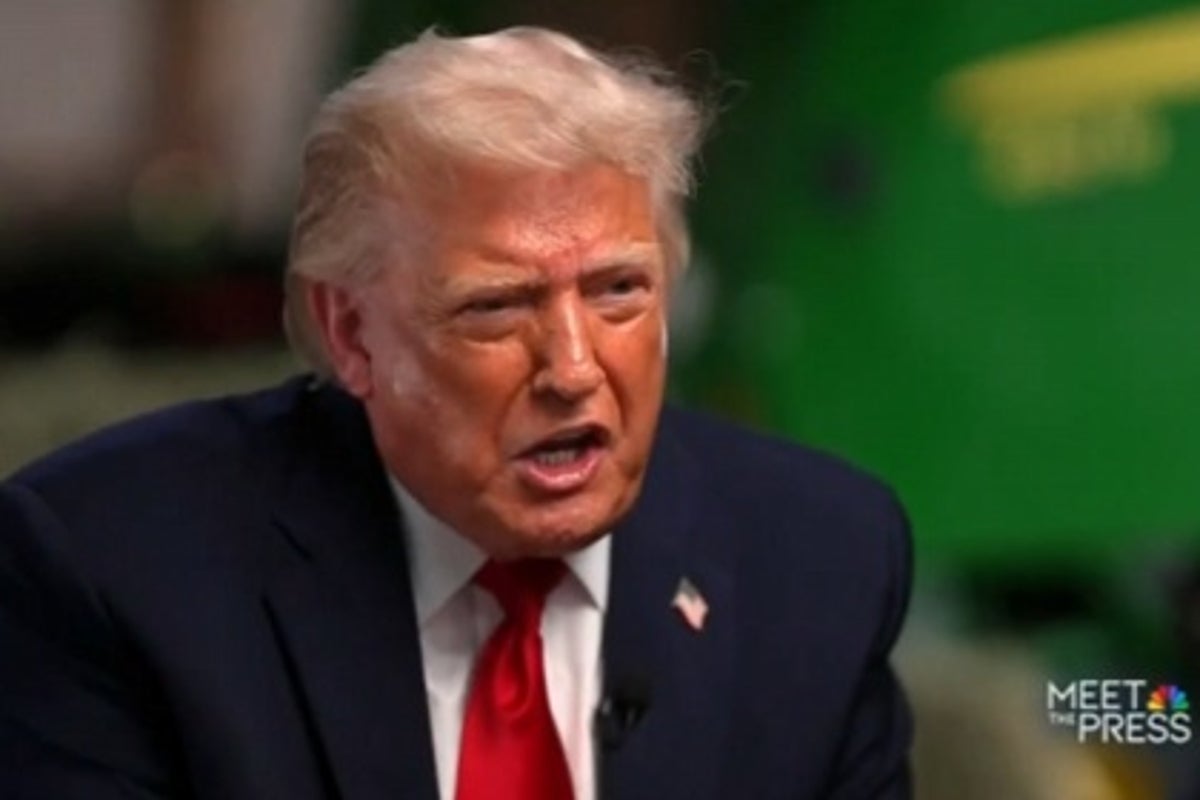
He didn't apologize. He didn't signal a mistake. Instead, he rewrote the past in real-time, looking into the cameras and declaring that he had never actually promised a world without conflict.
The Illusion of the Absolute
Politics is a game played with mirrors, where what you think you heard is rarely what was actually said. We live in a culture that craves certainty. We want leaders who speak in absolutes because nuance is terrifying. It is far easier to sleep at night believing that a single leader can simply order peace into existence than it is to acknowledge that the global stage is a chaotic, unpredictable web of ancient grudges, shifting alliances, and sudden crises.
Consider the hypothetical position of a young intelligence analyst sitting at a desk in Langley, Virginia. Let’s call her Sarah. Sarah doesn't care about campaign slogans. She doesn't watch the rallies. Her world is measured in satellite imagery, intercepted communications, and raw data. For months, she watches a specific Iranian commander move across the Middle East like a piece on a chessboard, orchestrating shadow movements, planning disruptions, and threatening American assets.
To the public, peace is the absence of headlines. To Sarah, peace is a fragile, exhausting daily negotiation.
When the commander’s itinerary aligns in a way that creates a fleeting window of vulnerability, the decision shifts from the realm of political philosophy to the brutal mathematics of national security. The intelligence suggests an imminent threat. The options on the table are all bad; they range from passive vulnerability to active escalation.
This is where the grand rhetoric of the campaign trail collides head-on with the cold geometry of governance.
When the order is given and the missiles find their mark, the immediate reaction is a collective whiplash. The public, still operating under the impression that a promise of "no new wars" meant a total cessation of hostilities, is left scrambling for answers. How did we get here? Wasn't this exactly what we were told would never happen?
The defense offered from the podium was a masterclass in semantic re-engineering. The argument was simple: defending American interests through decisive, isolated action is not the same as starting a war. In fact, the administration argued, a swift strike is often the only way to prevent a wider conflagration.
It is a logic that makes perfect sense inside the Pentagon, but sounds entirely hollow to a public conditioned on black-and-white promises.
The Grammar of Conflict
We have fundamentally misunderstood how modern conflict works. We still view war through the lens of twentieth-century history books—massive troop movements, formal declarations, clear frontlines, and definitive treaties signed on the decks of battleships.
That world is gone.
Today, conflict is a spectrum of gray. It is cyber warfare, economic sanctions, proxy skirmishes, and targeted assassinations. It is entirely possible to remain technically at peace while engaging in acts of extreme violence. This ambiguity is highly useful for leaders. It allows them to claim they are keeping their promises on a macro level while violating the spirit of those promises on a micro level.
Imagine a father sitting at a kitchen table in Ohio. His son is an infantryman stationed in the region. When the father hears the phrase "no new wars," he interprets it through a deeply personal lens: my boy is coming home safe. He doesn’t care about the academic distinction between an act of war and a targeted counter-terrorism operation. To him, the smoke rising from an explosion in Baghdad feels like the prelude to a nightmare.
When the President later claims he never promised absolute pacifism, the father realizes he was reading a different dictionary than the one used in Washington.
The shifting justification is a window into the psychology of power. Admission of a mistake is viewed as a fatal vulnerability in modern politics. Therefore, when reality contradicts a previous stance, the only viable survival strategy is to alter the historical record. The goal is to convince the listener that their own memory is flawed, that they misunderstood the original premise, or that they lack the sophisticated understanding required to see the consistency in the contradiction.
It is a form of institutional gaslighting that leaves the citizenry feeling unmoored.
The Weight of the Invisible Stakes
The true cost of this rhetorical flexibility isn't paid in political capital or polling numbers. It is paid in the erosion of public trust.
When everything is subject to reinterpretation, words lose their meaning. A promise becomes nothing more than a temporary placeholder, a tool used to capture attention and secure votes, designed to be discarded the moment it becomes inconvenient. If a leader can redefine what a "war" is, they can redefine what "peace" means as well.
The geopolitical stage responded to the strike with predictable volatility. Markets fluctuated, allies expressed quiet anxiety, and adversaries calculated their next moves in the shadows. But the most profound shift occurred domestically, within the collective psyche of a nation trying to reconcile the image of a non-interventionist leader with the reality of an escalating military footprint.
The defense of the action relied heavily on the concept of deterrence. The theory goes that by striking a devastating blow, you signal to your enemies that your desire for peace should not be mistaken for weakness. It is a classic doctrine, practiced by empires for millennia.
But deterrence requires a high level of predictability. It requires both sides to understand the rules of the game. When a leader's public statements are constantly in flux, the risk of miscalculation skyrockets. If the enemy cannot tell the difference between a campaign bluff and a genuine red line, they may push too far, forcing a hand that never wanted to be played.
The justification offered for the action in Iran wasn't just a defense of a specific military strike. It was an assertion of executive supremacy over reality itself. It was an admission that when the cameras are off and the doors are shut, the promises made to the populace are subordinate to the immediate, shifting demands of global power.
The drone strike took only a few moments to execute. The reverberations of that moment, and the linguistic gymnastics used to defend it, will shape the nature of political accountability for a generation.
A crowd in an arena will always cheer for a simple answer to a complex problem. They will roar for the promise of safety, prosperity, and peace. But the true test of a leader is not found in the volume of the applause. It is found in the quiet, agonizing moments when they must decide whether to sacrifice their narrative to save lives, or sacrifice the truth to save their narrative.
The drones fly. The missiles strike. The podium is wiped clean for the next press briefing. And somewhere, a family looks at a television screen, wondering if the words that comforted them just months ago ever meant anything at all.